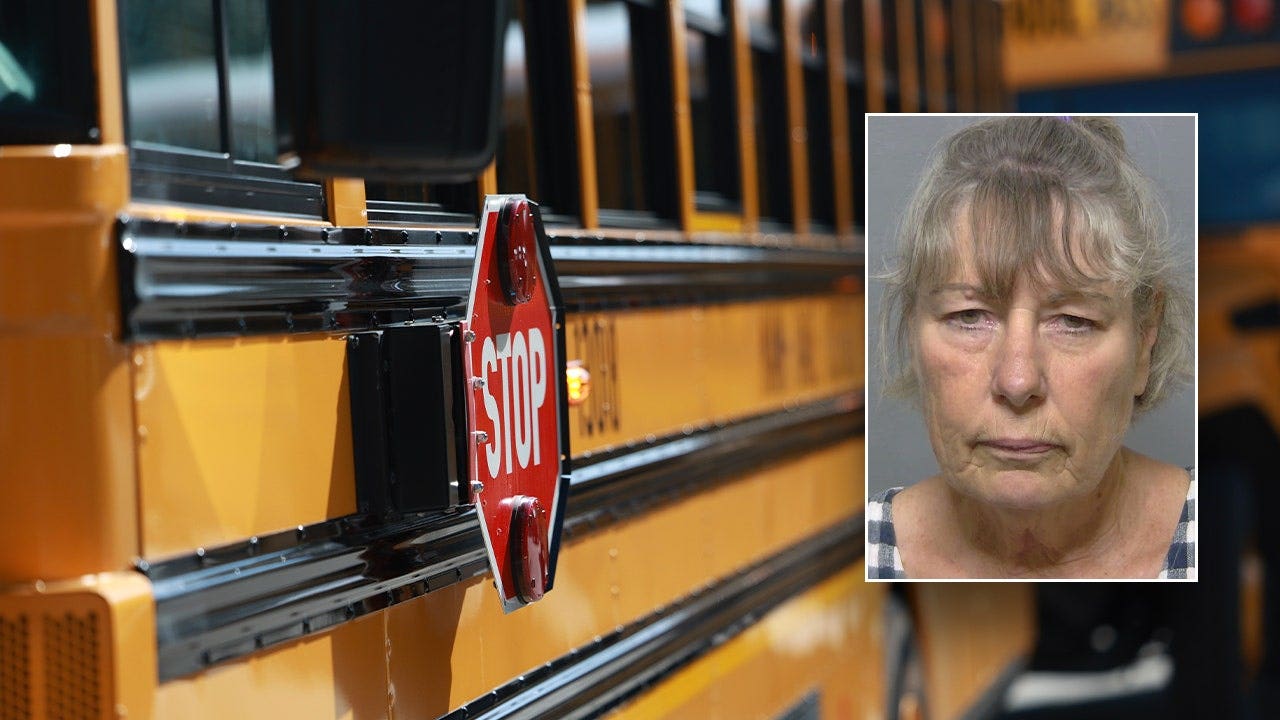
In a harrowing incident that underscored the dangers of railroad crossings, a Florida school bus driver was charged with nearly 30 counts of child neglect and reckless driving after a freight train clipped the vehicle while it carried 29 students and an aide across the tracks in Sumter County. The close call occurred earlier this month, with no injuries reported, but officials described it as a matter of mere inches from potential disaster. Yvonne Hampton, who had been employed by the Sumter County School District since 2015, was arrested following the event, which took place near an intersection where a stalled car reportedly complicated the driver's maneuvers.
Sumter County Superintendent of Schools Logan Brown addressed the incident in a video statement posted to Facebook on April 6, emphasizing the gravity of the situation. "The trust that our families place in us to transport their children safely is something we take extremely seriously," Brown said. "Anyone who jeopardizes that trust will not work in the Sumter County School District." According to district officials, Hampton chose to step down from her position rather than face termination, a decision that came swiftly after the bus was inspected and the students were safely transferred to another vehicle.
The sequence of events unfolded on a routine school route when Hampton approached a railroad crossing. According to the arrest report obtained by investigators, Hampton told police that a car ahead of the bus had stopped at the intersection, forcing her to wait. As the car began to move, she proceeded across the tracks to the other side, but the vehicle halted again, leaving the bus partially on the rails. "The defendant said she then had to stop right where the bus was parked," the report stated. "The defendant said that the car finally left, and she pulled up more but, it was not enough."
Hampton maintained to officers that she never intentionally stopped on the tracks. "Upon asking the defendant if at any time she stopped on the tracks, the defendant replies, 'no,'" the arrest record noted. She explained that as she moved over the tracks, the railroad crossing warning system activated, prompting her to continue forward because the bus was already committed to the crossing. Once the obstructing car cleared, she advanced as far as possible, but it was too late to fully avoid the oncoming CSX freight train. The train struck the rear corner of the bus, shearing off a portion but sparing the passengers inside.
Video evidence reviewed by authorities painted a different picture, leading to the charges. "Based on the video evidence, it is clear the defendant made the decision to cross the railroad tracks after she saw the railroad warning system activate; thus, through culpable negligence, the defendant neglected each child and exposed the adult bus aid to possible injury," the arrest report concluded. This assessment formed the basis for the 29 counts of child neglect—one for each student—and an additional count related to the aide, alongside the reckless driving charge. The incident highlighted longstanding concerns about driver training and awareness at rail crossings, where school buses are particularly vulnerable due to their size and the precious cargo they carry.
From the students' perspective, the ordeal was terrifying. In an interview on ABC's "Good Morning America," 12-year-old Cheyenne Gant, one of the passengers, recounted the moments of panic inside the bus. "She like stopped on the tracks specifically and then didn't move whenever we were all yelling, 'Train!' And it was very scary in the moment," Gant said, speaking alongside her mother. The girl's account contrasted with Hampton's explanation to police, illustrating the fear that gripped the children as the warning signals blared and the train's horn sounded in the distance. No conflicting reports emerged from other students, but the single interview provided a firsthand glimpse into the chaos aboard the vehicle.
Superintendent Brown elaborated on the near-miss in his video, noting how precarious the situation truly was. "When you really understand how close this was, it's sobering. A matter of six inches is the difference in all of this, and it could have been an extremely catastrophic situation," he said. The district's response was immediate: The bus was taken out of service for a thorough safety check, and counseling services were offered to the students and their families to address any trauma from the event. Brown praised the quick actions of first responders who arrived at the scene to ensure everyone's safety.
The backdrop to this incident includes broader national discussions on school transportation safety, especially at railroad crossings. According to federal data from the National Highway Traffic Safety Administration, school buses are involved in thousands of accidents annually, though fatalities remain rare due to their robust construction. However, collisions with trains are among the most lethal scenarios, with Operation Lifesaver, a nonprofit focused on rail safety, reporting that more than 3,000 such crashes have occurred in the U.S. since 1972, resulting in hundreds of deaths. In Florida alone, several high-profile incidents in recent years have prompted state lawmakers to review crossing protocols and driver certification requirements.
Hampton's court appearance on Tuesday, April 9, marked a pivotal moment in the legal proceedings. A judge set her bond at $30,000, which she posted shortly thereafter, according to court records. As she exited the Sumter County jail, reporters from local Fox affiliate Fox 35 Orlando approached her with questions about the incident, but Hampton did not respond, walking briskly to a waiting vehicle. Her attorney has not yet commented publicly on the charges, leaving open the possibility of a defense centered on the complicating factor of the stalled car and the activation timing of the crossing gates.
Investigators from the Sumter County Sheriff's Office, in coordination with CSX Transportation representatives, continue to examine the scene and review additional footage from nearby surveillance cameras. The rail company confirmed that the train's crew applied emergency brakes upon spotting the bus, which helped mitigate the impact. No citations were issued to the driver of the obstructing car, as preliminary findings suggested it was an inadvertent blockage rather than intentional negligence. This aspect of the story introduces a layer of shared responsibility, though authorities have focused their charges solely on Hampton's decisions.
The Sumter County School District, serving over 25,000 students across rural and suburban areas northwest of Orlando, has faced scrutiny in the past for transportation issues, including delays and mechanical failures. This latest event has reignited calls from parents for enhanced safety measures, such as mandatory GPS tracking on buses and more rigorous pre-trip inspections. Community meetings are scheduled for next week, where Brown and district officials plan to discuss preventive steps, potentially including additional training on rail crossing protocols.
Broader implications extend to policy discussions at the state level. Florida's Department of Education has been pushing for updated guidelines on school bus operations near active rail lines, especially in areas like Sumter County where freight traffic has increased with industrial growth. Advocacy groups, including the National Association of School Transportation Officials, have urged for federal funding to install advanced warning systems at high-risk crossings. While this incident avoided tragedy, it serves as a stark reminder of the vulnerabilities in daily school commutes.
As the case against Hampton proceeds through the court system, with an arraignment tentatively set for late April, the focus remains on accountability and prevention. The district's firm stance against compromising student safety, as articulated by Brown, resonates with parents who entrust their children to public transportation each day. For now, the 29 students involved have returned to their routines, but the echoes of that close call linger, prompting a collective reevaluation of how to protect the most vulnerable road users.
In related news, similar incidents elsewhere underscore the pattern. Just weeks ago, a Pennsylvania bus driver faced charges for endangering elementary students while allegedly intoxicated, highlighting ongoing challenges in screening and monitoring transport staff. Meanwhile, a tragic school bus crash in Tennessee last month claimed at least two young lives, described by officials as "a parent's worst nightmare." These events collectively fuel demands for systemic reforms to safeguard children on their way to and from school.