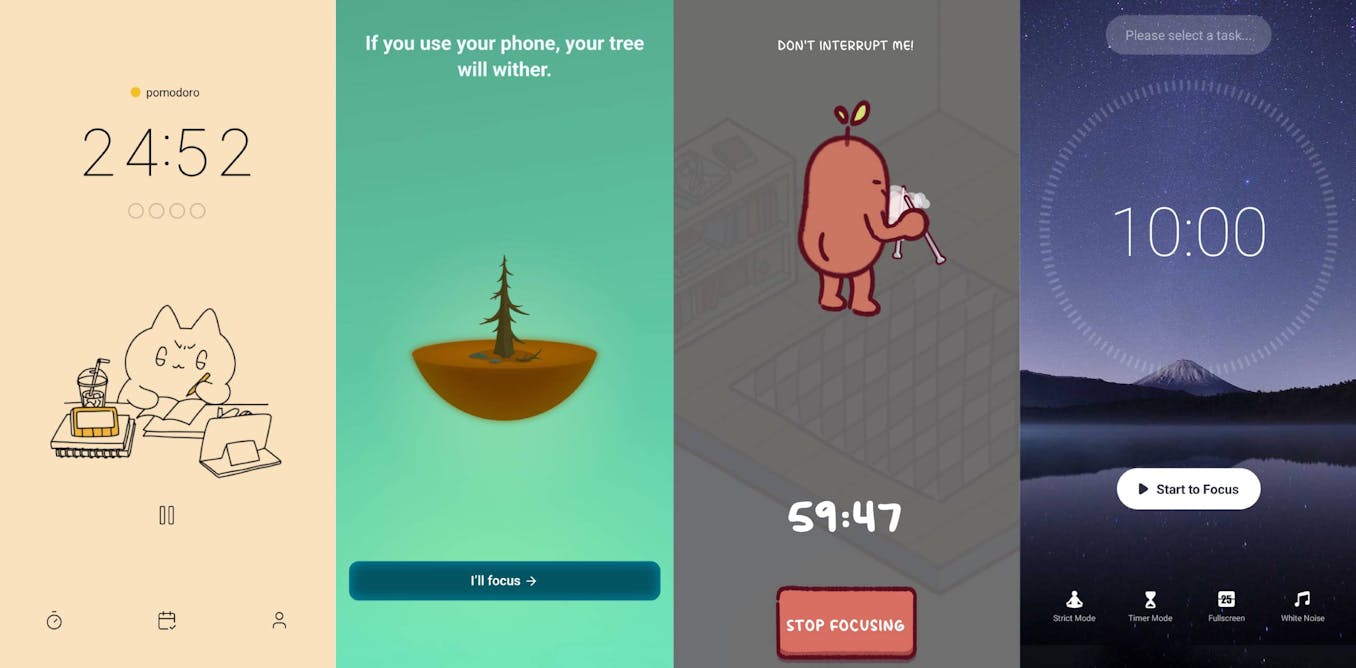
In an age where smartphones constantly vie for our attention, a new wave of productivity apps is promising to help users reclaim their focus. These so-called focus apps, which employ timers, blockers, and even virtual companions, have surged in popularity amid growing concerns over digital distractions. One standout, Focus Friend, briefly dethroned ChatGPT as the most downloaded app on the App Store in its debut month of August 2024, according to App Store data.
The proliferation of these tools comes as many workers and students grapple with what feels like an ever-shrinking attention span. "It’s hardly a revelation that we’re living in an era of distraction and smartphone addiction," writes Dr. Amelia Smith, a psychologist at the University of Melbourne, in a recent analysis published on The Conversation. Smith's piece delves into the mechanics of focus apps, questioning their true impact on productivity in a world saturated with interruptions.
At the heart of the issue is the challenge of self-regulation, Smith explains. Staying focused often falters when tasks become boring, stressful, or tedious, prompting users to seek relief through their phones. "Our phones interrupt us, hijack our attention, and tempt us into scrolling," she notes. Even the device's mere presence can undermine concentration, turning it into a default coping mechanism that derails important work.
Contrary to popular belief, scientific literature does not support the idea that humanity's overall capacity to focus has declined in recent years, according to Smith. Instead, modern habits like multitasking and frequent digital notifications are heightening demands on attention for certain individuals. "The research does, however, suggest that certain technology habits (especially multitasking and constant digital interruptions) are associated with greater distractibility for some people," she writes. This environment has paved the way for innovative solutions like focus apps to gain traction.
Focus apps represent a blend of technology and behavioral psychology, often incorporating gamification—applying game-like elements to everyday tasks—to encourage sustained effort. Among them, Focus Friend has captured widespread attention with its whimsical approach. Users set a focus timer, during which a virtual bean character knits quietly in the background. If the user accesses pre-selected distracting apps, the knitting unravels, leaving the bean visibly upset. Successful sessions reward players with digital items like socks, scarves, and room decorations for their bean's virtual space.
The app's appeal lies not just in its cuteness but in its strategic use of psychological principles, Smith observes. It employs incentives through immediate, tangible rewards, such as upgrading the bean's environment after completing a session. This taps into "reward substitution," where the drudgery of deep work is exchanged for instant gratification, like watching the bean's world flourish.
Commitment and consistency are also key mechanics. Starting the timer acts as a personal pledge, fostering a desire to maintain streaks and avoid disruptions. Over time, customizing the bean's room invokes the IKEA effect, where individuals value creations they've invested in more highly. "The more you customise and invest in the space, the more motivated you become to protect it by continuing to focus," Smith explains.
Despite the buzz, evidence on the effectiveness of focus apps remains sparse. A study reviewed by Smith examined various apps aimed at curbing mobile phone use and found that gamified options, while popular among users, were infrequently used and outperformed by simpler tactics like switching a phone to grayscale mode. No peer-reviewed research specifically targets Focus Friend, though its 4.8-star rating on the App Store and glowing user testimonials indicate high enjoyment. Smith cautions, however, that "enjoyment alone does not correlate with increased focus or productivity."
User experiences vary, with some praising the app's motivational nudge. In online forums and app reviews from August 2024 onward, individuals have shared stories of completing long-overdue tasks, like writing reports or studying for exams, thanks to the bean's encouraging presence. One reviewer, quoted in a tech blog roundup, said, "It's like having a little friend cheering you on—suddenly, checking Instagram doesn't feel worth the sad bean face." Yet, others report abandoning the app after initial novelty wears off, echoing the study's findings on low sustained usage.
Beyond Focus Friend, the market teems with similar tools. Apps like Forest, which grows virtual trees during focus periods, and Freedom, which blocks sites across devices, have been staples for years. These predecessors set the stage for newer entrants, but experts like Smith emphasize that no app is a panacea. The rise coincides with broader trends: a 2023 Pew Research Center survey found that 72% of U.S. adults feel overwhelmed by constant connectivity, fueling demand for digital wellness solutions.
For those considering focus apps, Smith offers practical guidance. Schedule dedicated sessions tied to specific tasks, and when distractions arise, acknowledge the discomfort as a natural part of productive work. "When you feel the urge to check your phone mid-session, take note of the feeling and remind yourself that discomfort is part of getting important things done," she advises. After a week, evaluate progress: "Ask: ‘is this serving me, or am I serving it?’"
Pitfalls abound, however. Focus apps do not evaluate work quality, potentially leading users to hyperfocus on trivial matters. Workarounds, such as tweaking phone settings to bypass blockers, are common and undermine the tools' intent. More fundamentally, Smith argues that apps address symptoms rather than root causes. "While a focus app can help you resist checking your phone, it can’t resolve the inner forces that pull you into distraction," she states. True improvement may require self-awareness: noticing emotions, choosing responses, and committing to priorities.
The broader implications extend to workplaces and education. As remote work persists post-pandemic—with a 2024 Gallup poll showing 56% of employees working hybrid or fully remote—employers are experimenting with focus tools in team settings. Universities, too, are incorporating app recommendations into study skills workshops. Yet, skeptics in the tech community, including developers interviewed by Wired in September 2024, warn of over-reliance on apps that gamify productivity, potentially masking deeper issues like burnout or poor task management.
Looking ahead, the evolution of focus apps could integrate more advanced AI, perhaps analyzing user patterns for personalized nudges. Developers behind Focus Friend have hinted at expansions, including multiplayer features for collaborative work sessions, in updates planned for late 2024. Meanwhile, researchers call for more rigorous studies; a forthcoming trial at Stanford University, announced in October 2024, aims to measure long-term productivity gains from gamified apps versus traditional methods.
Ultimately, in a distracted world, focus apps offer a accessible entry point for many seeking better habits. Whether they deliver lasting change depends on the user, as Smith concludes: "The key to better focus might be diagnosis, not download—that is, learning to notice what you feel, choosing how you want to respond, and making the commitment to staying focused on what matters." As adoption grows, the verdict on their efficacy will likely come from continued real-world testing and emerging science.