In a stunning turn of events for the airline industry, Spirit Airlines announced on May 2, 2026, that it was immediately winding down all operations, leaving thousands of employees jobless and passengers scrambling amid canceled flights. The low-cost carrier, known for its ultra-low fares and no-frills service, cited ongoing financial pressures as the reason for the shutdown, marking the end of 33 years in business. The closure has reignited debate over a blocked merger with JetBlue Airways, with former Biden administration aide Neera Tanden publicly questioning whether the Department of Justice's decision to halt the deal was the right move.
Spirit Airlines' announcement came without warning to many, as the company posted a statement on its website detailing the 'orderly wind-down' effective immediately. 'It is with great disappointment that on May 2, 2026, Spirit Airlines started an orderly wind-down of our operations, effectively immediately,' the statement read. It continued, 'To our Guests: all flights have been cancelled, and customer service is no longer available. We are proud of the impact of our ultra-low-cost model on the industry over the last 33 years and had hoped to serve our Guests for many years to come.' The move affected approximately 17,000 employees, who found themselves out of work overnight, according to reports from Breitbart News.
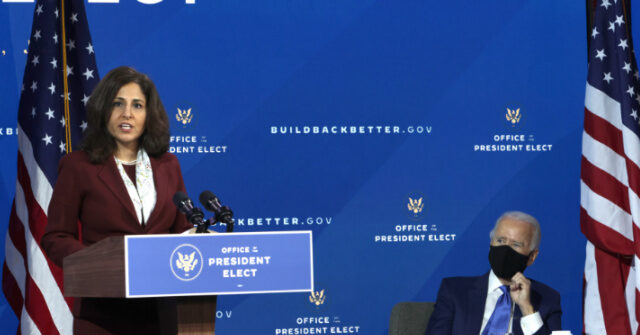
Neera Tanden, who served as a domestic policy advisor in the Biden White House and is now president of the Center for American Progress, voiced her concerns on X, formerly known as Twitter. In a post shared on Saturday, Tanden wrote, 'Given the news today that Spirit Airlines is shuttering and thousands of people are losing their jobs, I think we should honestly assess whether the Garland DoJ stopping the JetBlue merger with Spirit Airlines was the right call.' She added, 'Perhaps it was, but any analysis must consider as part of the equation the loss to so many families to decide.' Tanden's comments highlight the human cost of regulatory decisions in the competitive aviation sector.
The JetBlue-Spirit merger, first proposed in 2022, aimed to create a stronger competitor in the U.S. airline market by combining JetBlue's established routes with Spirit's budget model. Valued at $3.8 billion, the deal promised to expand Spirit's network while allowing JetBlue to challenge larger carriers like Delta and United. However, the Biden administration's Department of Justice filed a lawsuit in 2023 to block the merger, arguing it would reduce competition and lead to higher fares for consumers. Federal Judge William Alsup sided with the DOJ in January 2024, ruling that the merger violated antitrust laws, a decision upheld on appeal later that year.
Transportation Secretary Pete Buttigieg had been vocal in his opposition to the merger during its review process. In a 2023 interview with CNN, Buttigieg highlighted the Department of Transportation's role in scrutinizing the deal. According to Breitbart News, he 'bragged' about the involvement, stating that the DOT was committed to protecting consumers from potential price hikes and reduced options on popular routes. Buttigieg emphasized that the administration's focus was on maintaining a fair marketplace, though critics at the time argued the intervention overlooked the financial vulnerabilities of smaller airlines like Spirit.
Spirit Airlines had been grappling with significant challenges leading up to the shutdown. The carrier reported mounting losses in recent years, exacerbated by the lingering effects of the COVID-19 pandemic, rising fuel costs, and intense competition from other budget airlines. In 2024, Spirit filed for Chapter 11 bankruptcy protection as part of efforts to restructure its debt, but the process failed to stabilize the company. Analysts had warned that without a merger partner, Spirit's survival was in jeopardy, a prediction that proved tragically accurate.
The DOJ's stance under Attorney General Merrick Garland was framed as a defense of competition in an industry already dominated by a handful of major players. Officials argued that the merger would eliminate Spirit as a disruptive low-fare option, potentially affecting millions of price-sensitive travelers. 'This merger would mean higher fares and less choice for millions of passengers,' a DOJ spokesperson said at the time of the lawsuit filing, according to court documents. JetBlue and Spirit, in response, maintained that the combination would enhance efficiency and keep fares low, but their arguments did not sway the courts.
Tanden's critique adds a layer of introspection from within progressive circles, given her close ties to the Biden administration. As a key advisor on policy matters, her post suggests a willingness to reevaluate the broader impacts of antitrust enforcement, particularly on employment. While she stops short of outright condemnation, her call for an 'honest assessment' underscores tensions between regulatory goals and economic fallout. Labor unions representing airline workers echoed similar sentiments, with the Association of Flight Attendants-CWA expressing dismay over the job losses in a statement released hours after the announcement.
Passengers affected by the cancellations faced immediate chaos, with flights grounded across the country. Airports from New York to Los Angeles reported confusion as travelers sought alternatives, many turning to competitors like Frontier Airlines or Allegiant Air. The Federal Aviation Administration confirmed that no safety issues prompted the shutdown but advised passengers to contact their credit card companies for refunds. Spirit's decision to cease customer service left many without direct assistance, amplifying the disruption.
Looking back, the merger saga began amid a wave of consolidation in the airline industry. Similar deals, such as the 2016 acquisition of Virgin America by Alaska Airlines, had faced scrutiny but ultimately proceeded with concessions. The JetBlue-Spirit case, however, became a test for the Biden administration's aggressive antitrust agenda, influenced by broader efforts to curb corporate power. Economists offered mixed views: some praised the DOJ for prioritizing consumer protection, while others warned that blocking the merger could doom Spirit, as it did.
Breitbart News reporter Lowell Cauffiel covered the immediate aftermath, noting the swift impact on workers. '17,000 people found themselves out of work on Saturday morning,' he reported, capturing the scale of the human toll. Industry watchers speculate that the closure could prompt further regulatory reviews, especially as other low-cost carriers navigate similar headwinds. JetBlue, which abandoned the merger after the court ruling, has since focused on organic growth but declined to comment on Spirit's fate when reached by reporters.
The shutdown's ripple effects extend beyond jobs and flights. Spirit's model revolutionized budget travel, introducing ancillary fees that became industry standard and making air travel accessible to lower-income demographics. Its demise raises questions about the sustainability of ultra-low-cost operations in a post-pandemic world, where labor costs and supply chain issues persist. Aviation experts predict that the event could influence future merger approvals, with the DOT and DOJ potentially weighing employment impacts more heavily.
As investigations into the collapse continue, lawmakers from both parties have called for hearings. Senator Maria Cantwell, chair of the Senate Commerce Committee, said in a statement that the situation 'highlights the need for balanced regulation that supports innovation without sacrificing jobs.' On the House side, Representative Sam Graves echoed concerns about overreach. For now, the focus remains on supporting displaced workers through unemployment benefits and potential retraining programs announced by the Labor Department.
In the end, Spirit Airlines' closure serves as a cautionary tale in the high-stakes world of aviation mergers. While the DOJ's victory preserved competition in theory, the real-world consequences—lost livelihoods and stranded travelers—prompt a sobering reflection. As Tanden suggested, any analysis must account for the families upended, leaving policymakers to grapple with the trade-offs in an industry where decisions can ground dreams as easily as planes.