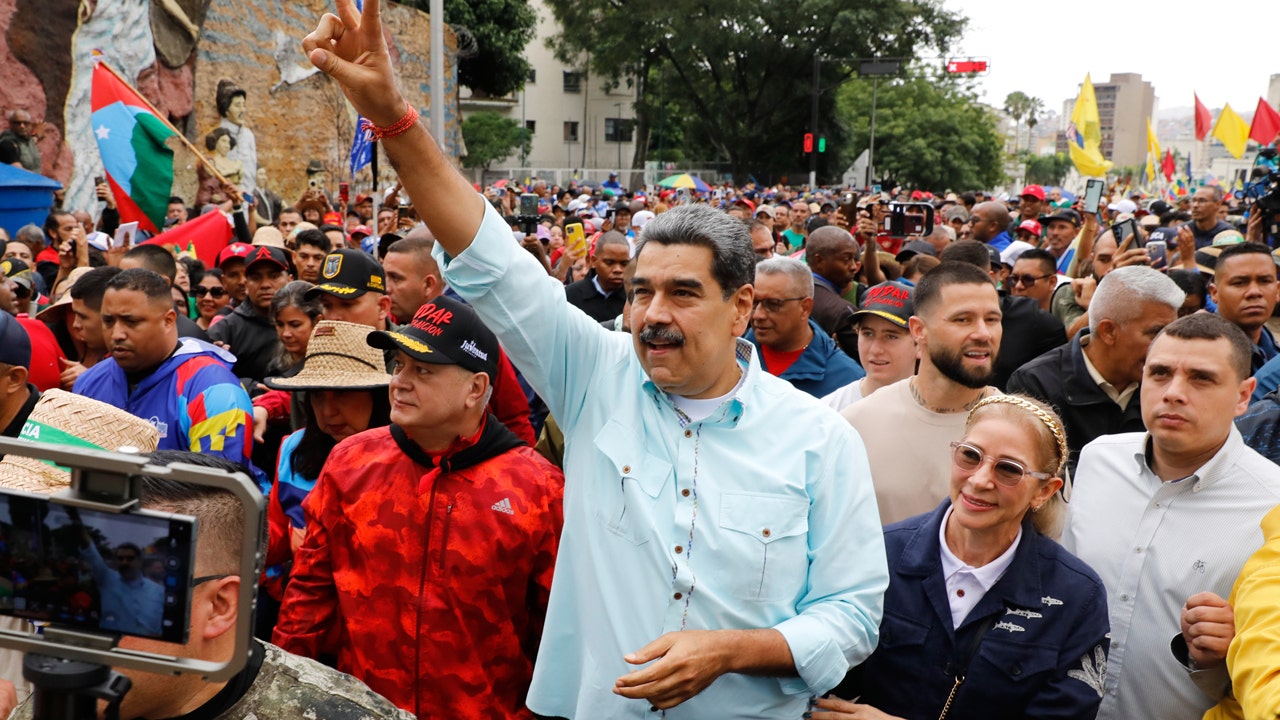
In a surprising turn amid escalating tensions in Latin America, U.S. military forces captured Venezuelan President Nicolás Maduro and his wife on Saturday, prompting varied reactions from former U.S. officials who have dealt directly with the regime. The operation, confirmed by President Donald Trump, marks a dramatic escalation in U.S. policy toward Venezuela, where Maduro has ruled amid widespread accusations of authoritarianism and economic mismanagement since 2013. Roger Carstens, the former Special Envoy for Hostage Affairs who negotiated with Maduro's government on multiple occasions, offered a nuanced perspective in an interview on CBS's "60 Minutes" that aired Sunday evening.
Carstens, who served in both the Biden administration and the first Trump administration, expressed that he was "not shocked" by the news of Maduro's capture. Speaking with correspondent Scott Pelley, Carstens pushed back against the current Trump administration's portrayal of Maduro as a violent criminal figure. "I don't think so," Carstens said when asked if he agreed with the depiction of Maduro as a "bloodthirsty drug dealer." He elaborated, acknowledging the regime's broader crimes while emphasizing his personal interactions with the leader.
"In one way I could say I'm not naïve to the crimes that were committed by the regime writ large. And if you're the president of a country you of course have responsibility for what's being happen—what's happening—in your government," Carstens told Pelley.
Carstens described his approach to negotiations as building a "very human relationship" to secure the release of Americans held in Venezuela. "On the flip side, I would say that being the person in the room with President Maduro my job was to get Americans back and that's best done by building a very human relationship. And in doing so, I didn't find him to be a bloodthirsty maniac. I found him to be— a practical person, someone who wanted to find ways to solve the problems—that was— were faced by his country," he said.
The capture occurred during what the White House described as targeted military strikes against Venezuelan targets, though details remain limited. Trump, addressing the nation from the White House on Saturday afternoon, confirmed the operation and stated that the U.S. would maintain control over Venezuela "until a legitimate leader replaces Maduro." This rhetoric echoes long-standing U.S. criticisms of Maduro's government, which has been accused of human rights abuses, election fraud, and ties to international drug trafficking.
Carstens, drawing from his classified briefings and direct dealings, also questioned the extent of Maduro's personal involvement in drug-related activities. "I think the— the country clearly touched drugs—and there's information— I always have to be very— clear that I might see certain amounts of information and there's always a treasure trove of information that I've never seen or never will see due to classification or compartmentalization. But what I witnessed was not someone who's necessarily hard-core in the drug business. And I'll be interested to see in how the prosecution goes about proving their case," he remarked.
During his tenure, Carstens was instrumental in several prisoner swaps with Venezuela. Notably, in October 2022, under the Biden administration, the U.S. exchanged seven Americans detained in Venezuela for two nephews of Maduro's wife, Cilia Flores, who had been convicted in the U.S. on drug charges. That deal, part of broader diplomatic efforts, highlighted the complex negotiations required to address the plight of U.S. citizens held abroad. Carstens' experiences underscore the pragmatic diplomacy often employed behind the scenes, even as public rhetoric from Washington remains sharply critical.
The operation has drawn sharp divides in Washington. Senator Marco Rubio, a Florida Republican and key voice on Latin American policy, defended the strikes on Sunday morning talk shows, dismissing questions about congressional approval. "This was a necessary action to protect American interests and hold accountable a dictator who has terrorized his people for years," Rubio said in an appearance on NBC's "Meet the Press." He argued that the lack of prior congressional notification was justified under executive authority for national security matters.
On the other side, Representative Marjorie Taylor Greene, a Georgia Republican known for her vocal support of Trump but occasional critiques of foreign interventions, questioned the strikes' value. In a statement released Saturday night, Greene argued that the action "doesn't serve the American people" and could entangle the U.S. in another costly overseas conflict. "We need to focus on our borders and economy, not policing every rogue regime," she said, according to her office.
U.S. Ambassador to the United Nations Michael Waltz also weighed in ahead of a scheduled Security Council meeting on Monday. In remarks to reporters outside the UN headquarters in New York, Waltz defended the capture as a "decisive step against transnational crime." "Maduro's regime has fueled instability across the hemisphere, from drug cartels to migrant crises at our southern border," Waltz stated, emphasizing the operation's alignment with international efforts to curb Venezuelan influence.
The backdrop to these events is Venezuela's protracted crisis, which began intensifying after Maduro's disputed 2018 reelection. Hyperinflation, food shortages, and political repression have driven millions to flee, with over 7.7 million Venezuelans becoming refugees or migrants by United Nations estimates as of late 2023. The U.S. has imposed sanctions on Maduro's inner circle since 2017, designating him and others as significant narcotics traffickers in 2020. Yet, diplomatic channels have persisted, as evidenced by the 2022 prisoner swap and indirect talks facilitated through countries like Turkey and Qatar.
Trump's comments on Saturday suggested a more interventionist stance than during his first term, when he recognized opposition leader Juan Guaidó as Venezuela's interim president in 2019 but stopped short of military action. "We're going to run the country until we get a real leader in there," Trump said during a press briefing, flanked by national security advisors. The White House has not released details on the capture's location, but reports indicate it took place in Caracas, the capital, during a predawn raid involving special operations forces.
International reactions have been swift and mixed. Allies like Colombia and Brazil expressed cautious support for stabilizing Venezuela, while Russia and China, longstanding backers of Maduro, condemned the operation as a violation of sovereignty. Cuban officials, who have provided medical and security aid to Maduro's government, called it an "imperialist aggression." The UN Security Council meeting, set for 10 a.m. Monday in New York, is expected to feature heated debates, with U.S. representatives prepared to justify the action under Chapter VII of the UN Charter, which addresses threats to peace.
Legal questions loom large as well. Maduro, now in U.S. custody reportedly at an undisclosed military facility, faces potential charges related to narco-terrorism and sanctions violations. Prosecutors in the Southern District of New York, which handled cases against Maduro associates, are said to be building a case drawing on evidence from DEA investigations spanning years. Carstens' comments highlight the challenges ahead: proving personal culpability in a web of state-sponsored activities.
As the dust settles, the capture raises broader questions about U.S. strategy in the region. Analysts note that while removing Maduro could pave the way for elections promised under a 2023 Barbados agreement between the regime and opposition, it risks power vacuums and factional violence. Humanitarian groups, including the International Red Cross, have urged swift aid deliveries to Venezuela, where child malnutrition rates exceed 30% in some areas according to recent UNICEF reports.
Looking ahead, the Trump administration faces pressure to outline a transition plan. Spokespeople indicated Sunday that consultations with regional partners, including the Organization of American States, are underway. For families of remaining detainees—estimates suggest up to 10 Americans still held—Carstens' reflections serve as a reminder of the human stakes. "My job was to get Americans back," he reiterated, a goal that now intersects with the geopolitical fallout from Saturday's bold move.
Fox News Digital reached out to the White House for further comment but did not receive an immediate response. As proceedings unfold, the world watches to see if this intervention brings stability or sows new seeds of conflict in South America's most troubled nation.