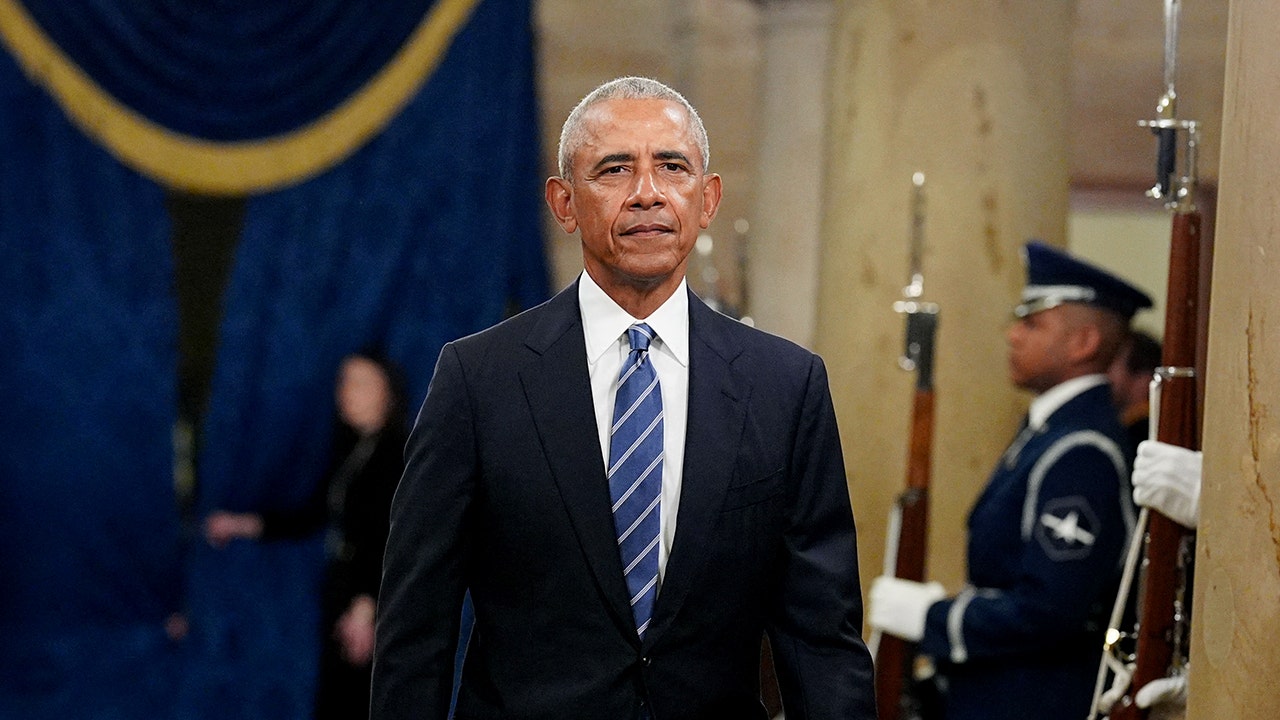
In a recent podcast appearance, actor and former Obama administration aide Kal Penn sparked discussion by declaring that former President Barack Obama would not be considered a progressive by today's standards, viewing his tenure through what he called a '2025 lens.' Penn, who served in the White House from 2009 to 2011, made the remarks on the 'Hasan Minhaj Doesn't Know' podcast on Wednesday, framing Obama's policies as a benchmark for how far the Democratic Party has progressed.
Penn, known for roles in films like the 'Harold & Kumar' series and his time as an associate director in the Office of Public Engagement under Obama, defended his former boss against criticisms from the left. 'You can't look back at 2009 with a 2025 lens and say this wasn't progressive enough,' Penn said. He argued that Obama's achievements, once seen as bold, now appear moderate because societal and political expectations have evolved.
The conversation arose amid broader reflections on the Democratic Party's direction. Penn celebrated the shift, stating, 'By a 2025 lens, Obama was not a progressive. That's how you know progress worked.' He pointed to accomplishments like the Affordable Care Act (ACA), which Obama signed into law in March 2010, as examples that were groundbreaking at the time but seem incremental now.
During Obama's presidency, the ACA faced intense opposition, even within the Democratic Party. Penn noted the challenges, saying, 'Even the Affordable Care Act at the time, even though the initial point of it was actually like a conservative model, but even then he barely got the Democratic votes to get it passed.' The legislation passed the House of Representatives on March 21, 2010, by a vote of 219-212, with no Republican support, and the Senate on December 24, 2009, by 60-39.
Penn emphasized the limitations of the presidency in pushing radical change. 'The problem with this question is that the reality was he couldn't be wildly radical, right?' he said, highlighting the narrow margins in Congress. Democrats held a 257-178 majority in the House and a 59-41 edge in the Senate at the start of Obama's term in January 2009, but losses in the 2010 midterms reduced their control significantly.
It's a good thing. It's a good luxury to be able to look back and be like that moderate, that dude who droned people and didn't get healthcare passed the way that we wanted, that's a great ability to have in 2025, because it means that things that he did get done are moderate by definition today because the needle was moved.
Penn's comments come at a time when Obama himself has weighed in on the party's progressive wing. In a July podcast interview on 'The MeidasTouch Podcast,' Obama suggested Democrats have a 'harder job' in governing than Republicans, accusing the GOP of focusing on obstruction. He also critiqued progressive rhetoric for sometimes alienating voters, particularly young men.
'I will say, as quote-unquote progressives, Democrats, progressive parents, enlightened ones, we've made that mistake sometimes in terms of our rhetoric, where it's like we're constantly talking about it, you know, what's going on with the boys instead of what's right with them,' Obama said in those remarks. This reflects ongoing tensions within the party between moderates and progressives over issues like criminal justice reform and economic policy.
Despite his overall defense, Penn acknowledged shortcomings in the Obama administration. He admitted to personal disillusionment, particularly over the failure to close the Guantánamo Bay detention facility, which Obama pledged to shutter during his 2008 campaign. Executive Order 13492, signed on January 22, 2009, aimed to close the facility within a year, but congressional resistance and logistical hurdles prevented it.
'People have a right to be disappointed. People have a right to celebrate,' Penn said, recognizing valid criticisms from both sides. His service in the White House included efforts on civic engagement and arts initiatives, but he has since become a vocal supporter of progressive causes, including his 2021 run for lieutenant governor in Pennsylvania as a Democrat.
The podcast discussion also touched on Obama's use of drone strikes, a policy that drew bipartisan criticism for its expansion of targeted killings. Under Obama, the U.S. conducted over 500 drone strikes in Pakistan, Yemen, and Somalia between 2009 and 2016, according to estimates from the Bureau of Investigative Journalism, far surpassing the George W. Bush administration's numbers.
Penn's perspective aligns with a narrative that Obama's centrism laid groundwork for bolder policies today. For instance, the ACA's expansion of insurance coverage to over 20 million Americans by 2016 set the stage for debates over Medicare for All and other universal healthcare proposals now championed by figures like Sen. Bernie Sanders of Vermont.
Obama's recent public comments have continued to navigate these divides. In a rare appearance at the Obama Foundation Summit in Chicago in November 2023, he urged Democrats to focus on economic issues affecting working-class voters rather than cultural debates. This echoes his podcast swipes at affluent liberals, where he said, 'All of us are going to be tested,' warning against complacency.
Critics from the progressive left, such as those associated with the Justice Democrats group founded in 2017, have long argued Obama compromised too much. Rep. Alexandria Ocasio-Cortez of New York, a prominent progressive, has cited Obama's tenure as a lesson in the need for grassroots pressure to achieve systemic change.
On the other side, conservative outlets have highlighted Penn's remarks to underscore perceived shifts in Democratic ideology. The Fox News article reporting on the podcast noted Obama's past criticisms of progressives for alienating voters, including young men, as part of a broader pattern of intraparty friction.
As the 2024 election cycle intensifies, these reflections on Obama's legacy could influence Democratic strategy. With President Joe Biden facing challenges from both moderates and progressives in his reelection bid, discussions about what constitutes 'progress' remain central. Penn's comments suggest a party that has moved leftward, but Obama himself has advocated for unity, as seen in his 2022 book 'A Promised Land,' where he reflects on balancing idealism with pragmatism during his eight years in office from 2009 to 2017.
Looking ahead, the Democratic National Convention in Chicago in August 2024 may amplify these debates. Whether viewing Obama through a '2025 lens' fosters progress or highlights unfinished business will likely shape voter perceptions in the coming months.