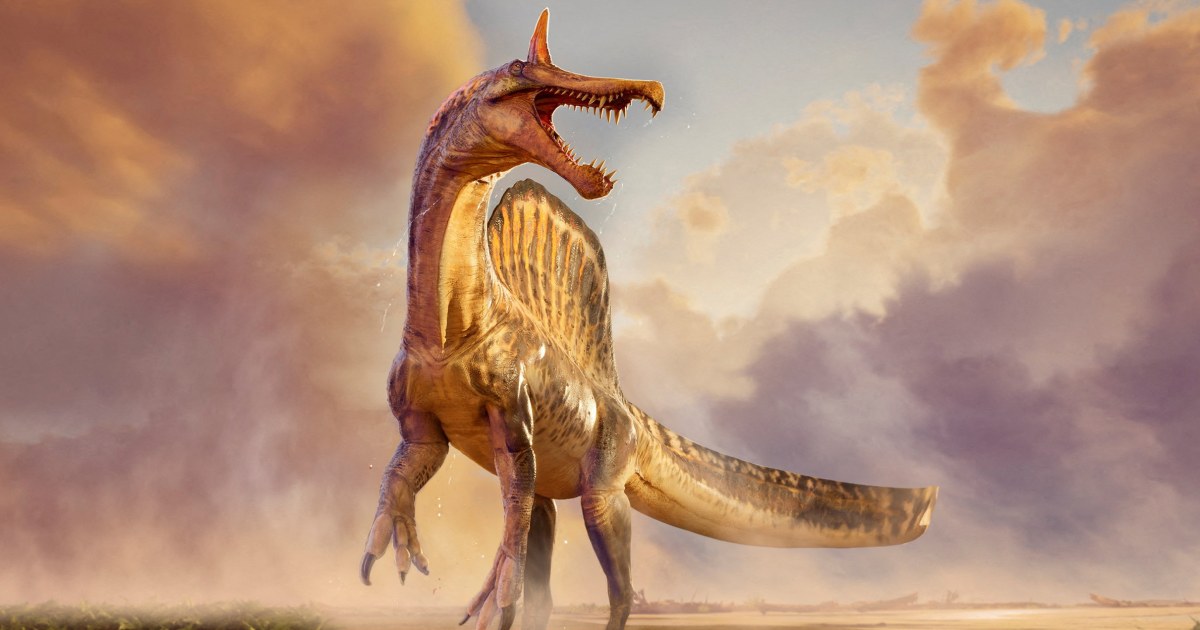
In the vast, unforgiving expanse of the Sahara Desert in Niger, a team of paleontologists has uncovered fossils that reveal a new species of one of the most enigmatic dinosaurs ever discovered. Dubbed Spinosaurus mirabilis, this massive carnivore, nicknamed the 'hell heron' for its bird-like hunting style, roamed the Cretaceous landscape about 95 million years ago. The find, announced in a study published Thursday in the journal Science, sheds new light on the behavior and habitat of these giant predators, challenging long-held assumptions about their lifestyle.
The fossils were unearthed at a remote site called Jenguebi, surrounded by towering sand dunes and fossil-rich sandstone outcrops. Researchers, led by University of Chicago paleontologist Paul Sereno, embarked on a grueling 2022 expedition from the city of Agadez. The team drove off-road through the desert for nearly three days, frequently getting stuck in the sand, before reaching the barren location roughly 300 to 600 miles inland from the nearest ancient ocean shoreline.
What they found were parts of three skulls and other bones belonging to Spinosaurus mirabilis, a species that measured about 40 feet long and weighed between 5 and 7 tons. This dinosaur featured a striking bony cranial crest rising about 20 inches high, resembling a curved scimitar sword, along with a large sail-like structure on its back and an elongated, crocodile-like snout. Its jaws were lined with large, conical teeth that interlocked like a trap, ideal for snaring slippery fish such as coelacanths in the region's rivers and shallow waters.
"It prowled a forested inland environment and strode into rivers to catch sizable fish like a modern-day wading bird — a 'hell heron,' as one of the researchers put it," the study describes, emphasizing the creature's semiaquatic adaptations. Unlike fully terrestrial dinosaurs, Spinosaurus mirabilis had retracted nostrils positioned farther back on its snout, allowing it to submerge its head underwater while still breathing. This setup enabled prolonged stalking of prey in the shallows.
The new species joins Spinosaurus aegyptiacus, the only other known member of the genus, which was first described in 1915 based on fossils from Egypt. Both species shared a general body plan, including long dorsal spines forming the iconic sail and a skull specialized for piscivory — fish-eating. However, Spinosaurus mirabilis stood out with its much larger crest, more elongated snout, teeth spaced farther apart, and longer hind limbs, suggesting enhanced adaptations for wading in inland rivers rather than open seas.
Paleontologist Daniel Vidal, a co-author of the study from the University of Chicago and Spain's Universidad Nacional de Educación a Distancia, highlighted the dinosaur's specialized dentition. "Their large conical teeth without serrations that interdigitate form a 'fish trap' that is very good at piercing and trapping slippery fish in the jaws, preventing them from sliding," Vidal said. He added, "Spinosaurus mirabilis has some of the most extreme piscivorous adaptations of any dinosaur, so we know it was better at preying upon fish than it would have been at preying upon other dinosaurs."
The discovery has reignited debates about the lifestyle of spinosaurs, which have long puzzled scientists. Fossils of Spinosaurus aegyptiacus from coastal sites in Egypt and Morocco, near the ancient Tethys Sea — a predecessor to the modern Mediterranean and Indian Ocean — led some researchers to propose that the genus was fully aquatic, akin to a diving pursuit predator in marine environments. Certain skeletal traits, such as a paddle-like tail in some reconstructions, supported this 'aquatic hypothesis.'
However, the inland location of the Spinosaurus mirabilis fossils, combined with anatomical details like its longer hind legs suited for wading, points to a different picture. The researchers argue that this species was a shallow-water predator, thriving in forested river systems far from the coast. Sereno described the find as "the coup de grâce for the aquatic hypothesis," suggesting it definitively refutes the idea of spinosaurs as open-ocean swimmers.
The crest on Spinosaurus mirabilis, made of solid bone without the air sacs seen in some other dinosaurs, was likely too fragile for combat, according to the team. Instead, they propose it served as a display structure, possibly sheathed in colorful keratin similar to a bull's horns. "It’s about love and life — attracting a mate, defending your hot feeding shallows," Sereno said. "What else could be more important?" This vivid imagery underscores how such features might have played roles in mating rituals, territorial disputes, or individual recognition among these colossal creatures.
Spinosaurus as a genus has captured the public imagination, partly due to its portrayal in the Jurassic Park film franchise as a formidable antagonist. Often overshadowed by icons like Tyrannosaurus rex, it now ranks among the largest meat-eating dinosaurs, comparable to Giganotosaurus and Carcharodontosaurus. As the only known semiaquatic dinosaur predator, its adaptations bridge the gap between land and water, offering insights into the diverse ecosystems of the Cretaceous Period in Africa.
The Jenguebi site also yielded fossils of other ancient creatures, enriching the understanding of this prehistoric world. The expedition's success came after years of planning, with the remote Sahara locality posing significant logistical challenges. "For their 2022 expedition, the researchers set out from the city of Agadez in a convoy and drove off-road through desert terrain for almost three days, often getting stuck in the sand," the study recounts, illustrating the dedication required for such fieldwork.
This discovery builds on a century of spinosaur research, which began with the fragmented remains of Spinosaurus aegyptiacus unearthed by German paleontologist Ernst Stromer in Egypt. Destroyed during World War II bombing, those original fossils spurred ongoing quests for more complete specimens. The new species, named mirabilis meaning 'astonishing' in reference to its crest, adds crucial data to the puzzle, confirming that spinosaurs were contemporaneous across different environments during the late Cretaceous.
While the inland fossils bolster the shallow-water theory, not all experts may agree immediately. Some scientists who supported the fully aquatic model, based on coastal finds and tail structures, might call for further evidence. The study authors maintain that the combined geological and anatomical evidence from Niger provides a compelling counterpoint, emphasizing the dinosaur's role as a wading giant in riverine habitats.
Looking ahead, Sereno and his team hope to continue excavations at Jenguebi and similar sites, potentially uncovering more about Spinosaurus mirabilis and its contemporaries. "It’s a dino-happening," Sereno quipped, reflecting the excitement surrounding spinosaurs' rising prominence in paleontology. As research progresses, these 'hell herons' could redefine how we visualize the ancient waterways of Africa, where 95-million-year-old forests teemed with oversized fish and the predators that hunted them.
The implications extend beyond dinosaurs, offering a window into Cretaceous climate and ecology. With its sail possibly used for thermoregulation or display, and its fish-trapping jaws, Spinosaurus mirabilis exemplifies evolutionary innovation in a world of giants. For now, the Sahara's sands guard more secrets, waiting for the next expedition to reveal them.