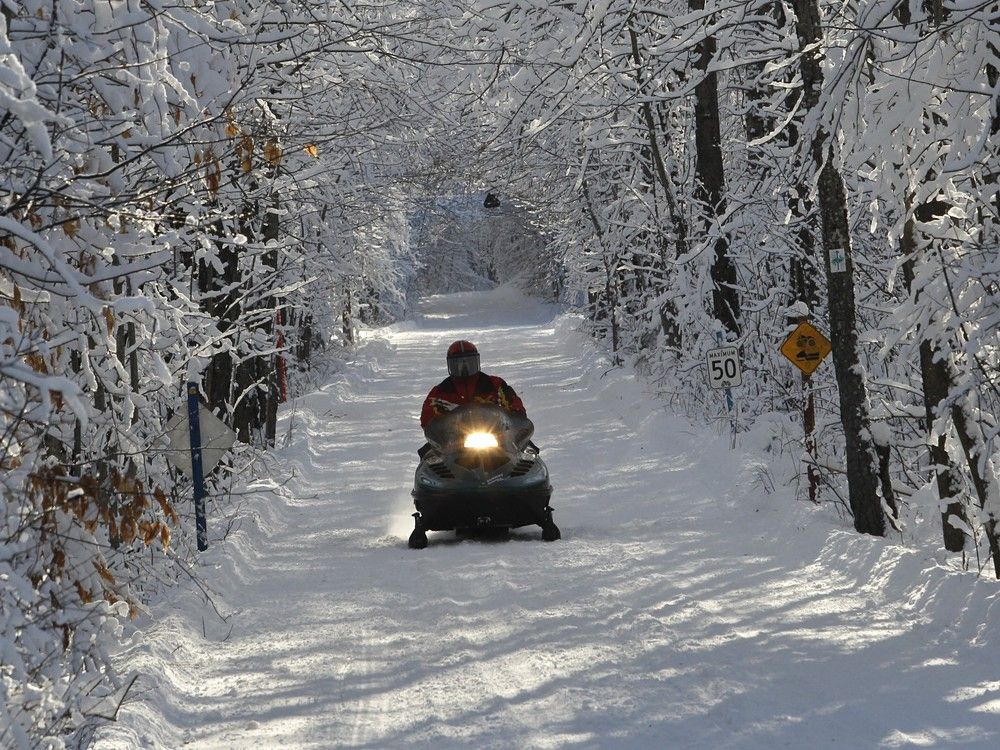
QUEBEC CITY — Four tragic snowmobile accidents claimed the lives of four people across Quebec on Saturday, marking a somber end to what had been a popular winter weekend for outdoor enthusiasts. The incidents, spanning roughly nine hours, unfolded in diverse regions from the snowy trails of the Eastern Townships to the icy expanses north of the provincial capital, according to the Sûreté du Québec (SQ). Officials are investigating each case, highlighting the inherent risks of snowmobiling in variable winter conditions.
The first fatality occurred around 12:40 p.m. in the municipality of Mont-Carmel, located in the Bas-St-Laurent region along the St. Lawrence River. A 57-year-old man was riding his snowmobile when it was struck by a pickup truck at a rural intersection, SQ spokesperson Sgt. Valérie Beauchamp confirmed in a statement to reporters. The man was pronounced dead at the scene, and the truck driver, whose identity has not been released, was uninjured but is cooperating with authorities. Investigators are examining factors such as visibility and adherence to trail rules at the crossing point.
Just a few hours later, at approximately 5 p.m., another accident in Hemmingford, a community in the Montérégie region near the U.S. border with Vermont, resulted in the death of a 47-year-old woman. Beauchamp detailed that the woman lost control of her snowmobile while navigating a marked trail, ultimately crashing into a tree. She was rushed to a nearby hospital but succumbed to her injuries there. Local emergency responders noted that the trail conditions were icy but well-maintained, though speed and operator experience remain under review.
As evening fell, a group outing on Lac La Mothe turned perilous around 6:30 p.m. near St-David-de-Falardeau, about 250 kilometers north of Quebec City in the Saguenay–Lac-Saint-Jean area. Three men riding together broke through the lake's ice, plunging into frigid waters. Two of the men, both in their 20s, managed to self-rescue and were treated for hypothermia at a local clinic, according to Beauchamp. The third, a 49-year-old man from Saguenay, was initially reported missing, prompting an extensive search involving SQ divers, helicopters, and local volunteers.
Rescue efforts intensified through the night, but it wasn't until late Sunday afternoon that divers recovered the body of the missing man from the lake's depths. Beauchamp expressed condolences to the families involved, stating, "This incident underscores the dangers of venturing onto frozen bodies of water without proper precautions." Officials had issued warnings earlier in the week about thinning ice due to recent warmer temperatures and fluctuating weather patterns across northern Quebec.
The final accident of the day happened around 9:30 p.m. in Stanbridge East, a picturesque village in the Eastern Townships known for its rolling hills and cross-border trails. A 47-year-old man lost control of his snowmobile, veering off the path and landing in a deep roadside ditch, Beauchamp reported. He was declared dead at the scene despite prompt response from paramedics. Witnesses described the area as poorly lit, with fresh snow accumulation potentially contributing to reduced traction.
Snowmobiling remains one of Quebec's most cherished winter pastimes, with over 33,000 kilometers of groomed trails maintained by the Fédération des clubs de motoneigistes du Québec (FCMQ). The province issues more than 200,000 snowmobile permits annually, drawing riders from across Canada and the U.S. However, the SQ's traffic division has long emphasized safety measures, including mandatory helmet use, sobriety checks, and trail etiquette. In the 2022-2023 season alone, Quebec recorded 28 snowmobile-related fatalities, a figure that officials hope to reduce through ongoing awareness campaigns.
Beauchamp, speaking on behalf of the SQ, provided a timeline of the day's events during a press briefing Monday morning. "These four separate outings turned deadly Saturday," she said, noting that the crashes occurred within a compressed timeframe from midday to late evening. While alcohol does not appear to be a factor in any of the incidents based on preliminary reports, Beauchamp urged riders to "always check weather forecasts, ice thickness, and intersection signage before heading out."
Local authorities in the affected regions echoed these sentiments. In Bas-St-Laurent, Mont-Carmel's mayor, Jean-Pierre Ouellet, described the intersection where the first crash happened as a known hotspot for collisions between vehicles and snowmobiles. "We've advocated for better signage and barriers, but resources are limited," Ouellet told local media. He added that community members are mourning the loss of the 57-year-old, who was a longtime resident and avid outdoorsman.
Near the U.S. border in Hemmingford, trail maintenance crews from the FCMQ reported that the path where the woman crashed had been inspected earlier that day. "Conditions were challenging with black ice forming under fresh powder, but the trail was open and marked," said FCMQ regional coordinator Marie-Claude Tremblay. She highlighted the importance of rider training, noting that Quebec requires a safety course for operators under 18, but many adults ride without formal instruction.
The ice-breaking incident on Lac La Mothe has drawn particular attention from environmental and safety experts. The lake, a popular spot for winter fishing and snowmobiling, has seen similar accidents in past seasons. SQ investigators are assessing whether the group had checked ice thickness, which should be at least 30 centimeters for safe snowmobile travel according to provincial guidelines. "Warmer spells this winter have made ice unpredictable," Beauchamp remarked, referencing recent meteorological data from Environment Canada showing temperatures hovering near freezing in the Saguenay region.
In Stanbridge East, the Eastern Townships' tourism board expressed grief over the loss, as snowmobiling contributes significantly to the local economy. "Our trails are a lifeline for winter visitors, but safety comes first," said board spokesperson Luc Gagnon. He mentioned that the area had hosted a snowmobile festival just the previous weekend, attracting hundreds of riders without incident.
As investigations continue, the SQ has ramped up patrols on Quebec's extensive snowmobile network. Beauchamp announced that additional checkpoints will be set up in high-traffic areas through the remainder of the season, which typically runs until late March. Families of the victims have yet to release public statements, but community vigils are planned in Mont-Carmel and Saguenay to honor the deceased.
These accidents come amid a broader push for enhanced safety regulations in Quebec's winter sports. Last year, the provincial government allocated $5 million to improve trail infrastructure and emergency response times. Advocates, including the Quebec Coroner's Office, have called for stricter licensing requirements, pointing to a 15 percent rise in snowmobile collisions over the past five years. While the SQ has not linked the Saturday incidents to any systemic failures, the clustering of fatalities has renewed debates on preventive measures.
Looking ahead, winter weather forecasts predict continued variability, with more snow expected in southern Quebec but risks of thaws in the north. Beauchamp advised riders to download the SQ's mobile app for real-time trail updates and to travel in groups. "One moment of inattention can have devastating consequences," she said, encapsulating the fragile balance between thrill and peril in Quebec's vast winter playground.
The tragedies serve as a stark reminder of the season's dual nature—offering breathtaking adventures while demanding unwavering caution. As Quebec's snowmobile community reflects on these losses, officials hope the investigations will yield insights to prevent future heartbreak.