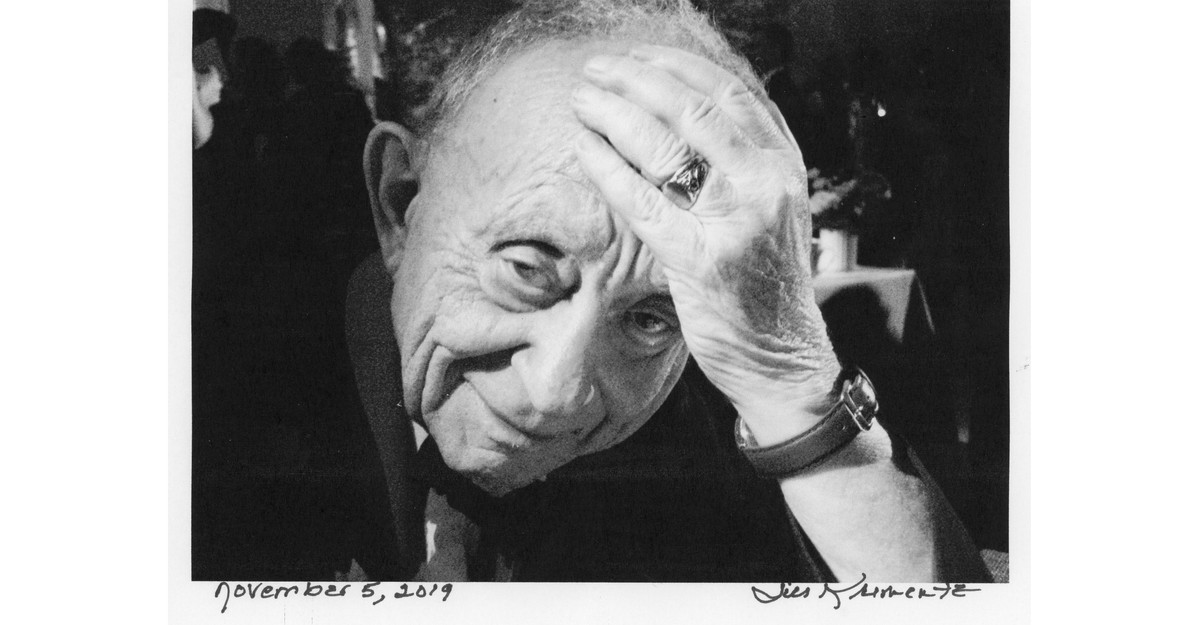
BOSTON — Frederick Wiseman, the pioneering documentary filmmaker whose unflinching examinations of American institutions exposed the inner workings of society and sparked legal battles over free speech, died last week at his home in Cambridge, Massachusetts. He was 96. Wiseman's death was confirmed by his producer and longtime collaborator, Michael Polissar, who described him as a relentless observer of human systems whose work reshaped the genre of documentary cinema.
Wiseman's journey into filmmaking began unexpectedly during his time as a law professor at Boston University in the 1960s. A Yale Law School graduate who had attended partly to dodge the Korean War draft—though he was drafted anyway—Wiseman admitted he often taught subjects he knew little about. To compensate, he organized field trips for his students to real-world sites, including the then-named Bridgewater State Hospital for the Criminally Insane in southeastern Massachusetts. It was there, in 1966, that Wiseman proposed filming the facility's operations to the superintendent, who granted permission. What emerged was Titicut Follies, a 76-minute film that captured the dehumanizing conditions inside the hospital through stark, unadorned footage of patients and staff.
The film's release in 1967 ignited immediate controversy. Massachusetts officials, alarmed by its portrayal of institutional neglect, sought to suppress it. The state's Superior Court ordered Titicut Follies pulled from distribution, citing violations of patient privacy. This ban, effectively an act of government censorship, lasted 24 years until a 1991 court ruling lifted it, allowing public screenings. According to court records, the decision came after arguments that the film's educational value outweighed privacy concerns, particularly since many patients had since died. Wiseman's battle over the film not only highlighted free speech issues but also launched his decades-long career chronicling American life.
Born on January 1, 1930, in Boston to a Jewish family, Wiseman grew up in a middle-class neighborhood and served briefly in the U.S. Army after law school. By the late 1960s, the advent of portable 16mm cameras and synchronized sound equipment had revolutionized documentary filmmaking, enabling filmmakers like Wiseman to capture intimate, unscripted moments. With a small crew—often just a cinematographer and sound technician—he gained access to diverse institutions across the country, from high schools in Philadelphia to military bases in Idaho. His approach eschewed traditional narration, interviews, or on-screen credits, allowing subjects to interact naturally without acknowledging the camera's presence.
Wiseman completed over 40 films in his lifetime, each averaging two to three hours and drawn from hundreds of hours of raw footage meticulously edited in his Cambridge home. He rejected labels like "observational cinema" or "cinéma vérité," arguing in interviews that all documentaries inherently reflected the filmmaker's choices. "I disdained labels such as observational cinema, fly-on-the-wall, and cinema vérité—all used to describe certain modes of naturalistic documentary-making—because he believed they signaled a lack of editorial judgment," according to a profile in The Atlantic. Instead, Wiseman viewed editing as the true artistry, where he compressed events to reveal institutional dynamics.
One of his early works, Welfare (1975), immersed viewers in New York City's Waverly Welfare Center, documenting the bureaucratic hurdles faced by applicants seeking benefits. The film portrayed government processes as an "intractable and unfeeling force," showing long lines, frustrated interactions, and the daily grind of poverty. Wiseman once described his obligation as being "to the people who have consented to be in the film," emphasizing consent from institutions and individuals, though he avoided overt advocacy. In a 2011 interview with The New York Times, prepared for his obituary, Wiseman pushed back against perceptions of his work as purely exposés. "There are people who think if I don’t make a movie about how poor people are being taken advantage of by the system, it’s not a real Fred Wiseman movie," he said. "And I think that shows a complete misunderstanding about what I’m doing."
Even in films without explicit social critique, Wiseman's lens revealed underlying tensions. His 1993 documentary Aspen explored the affluent Colorado resort town, balancing scenes of natural beauty and luxury with the labor that sustained it. The film juxtaposed a farmer feeding cows with a lavish hot-air balloon wedding, and miners drilling mountainsides with oblivious skiers gliding below. At community gatherings, Wiseman captured unfiltered voices: a man at a Bible study decrying no-fault divorce, a cosmetic surgeon linking his profession to the myth of Narcissus while making disparaging remarks about "non-Caucasians," and an artist boasting about selling portraits of phone booths and Coke machines, crediting her shift to realism as mirroring Reagan-era conservatism. These moments, edited with subtlety, underscored class divides without narration.
"Wiseman’s films often feature people speaking at length to various congregations, whether a church service or an informal assembly. He allowed his subjects to talk uninterrupted for long periods of time, rather than chop up their language into its juicier excerpts," The Atlantic reported, highlighting his commitment to unedited authenticity.
In later works, Wiseman turned to urban diversity and community resilience. In Jackson Heights (2015), his portrait of the multicultural Queens, New York, neighborhood, focused on immigrant life amid threats of gentrification. Filmed over several months starting in 2013, it showcased meetings at organizations like Make the Road New York, where residents discussed issues from obtaining IDs to avoiding police harassment. Small-business owners debated mall evictions with the same intensity as scenes from a Pride march or a local bar's dance night. Wiseman, often called America's preeminent "meetings filmmaker," treated bureaucratic frustrations and celebrations with equal gravitas. One poignant sequence followed a "taxi tutor" instructing aspiring cab drivers—many immigrants—on navigating New York, capturing their shared joy and determination.
Wiseman's exploration of small-town America appeared in Belfast, Maine (2000), a three-hour chronicle of the historic seaport city on Maine's coast. The film wove together factory work, school lessons, and town hall debates, emphasizing everyday dignity. A standout scene featured a high school English teacher lecturing on Herman Melville's Moby-Dick, elevating a commercial fisherman to heroic status. "The common man 'is as good as the rich,'" the teacher said proudly, before discussing Melville's The Confidence-Man, which critiqued the American dream as a "false bill of goods." This moment encapsulated Wiseman's dual themes: the grandeur of ordinary lives and the barriers imposed by larger systems.
Though rooted in America, Wiseman occasionally ventured abroad. His final feature, Menus-Plaisirs—Les Troisgros (2023), examined the operations of a three-star Michelin restaurant in central France's Roanne region. Shot over two years starting in 2021, it traced the culinary process from market sourcing to table service, interrogating every detail from produce selection to menu design. At 96, Wiseman demonstrated his enduring curiosity, proving his method adaptable to fine dining as much as welfare offices.
Throughout his career, Wiseman received numerous accolades, including a MacArthur Fellowship in 1982, an Honorary Academy Award in 2012, and a Peabody Award. He taught at Harvard University from 1966 to 1984 and continued producing films into his 90s through his company, Zipporah Films. Despite his influence, Wiseman shunned the spotlight, rarely granting interviews and preferring his work to speak for itself. Colleagues remembered him as meticulous and collaborative; Polissar noted that Wiseman edited alone but valued input on access and logistics.
Wiseman's death marks the end of an era for documentary filmmaking. His films, distributed through platforms like PBS and now streaming services, continue to influence creators who prioritize institutional critique. As society grapples with ongoing debates over privacy, bureaucracy, and inequality—echoing the issues in Titicut Follies—Wiseman's legacy endures. Upcoming retrospectives at institutions like the Museum of Modern Art in New York, planned for later this year, will screen his oeuvre, ensuring his observations of American life remain relevant. In a statement, Harvard Film Archive director Haden Guest called Wiseman "one of the great chroniclers of our time," whose work invited viewers to question the systems shaping their world.
Funeral arrangements were private, per the family's wishes. Wiseman is survived by his wife of 65 years, the documentary producer Karen Konner, and their two children. Donations in his memory are encouraged to organizations supporting independent filmmaking.