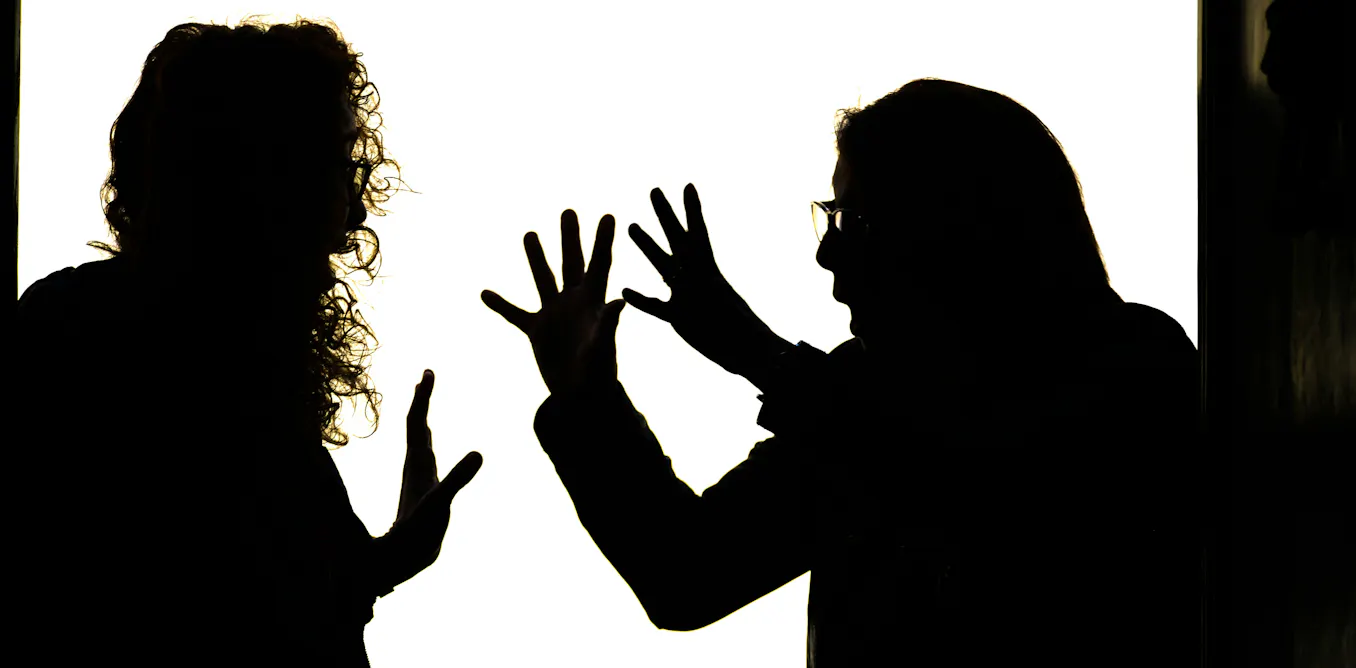
In an era where public discourse often feels charged with unyielding moral stances, Australians are grappling with the challenges of meaningful conversation, according to a new essay published on The Conversation. Titled "Friday essay: how to have brave conversations in an age of loud moral certainty," the piece argues that while people value openness and nuance, morally charged topics lead many to retreat into certainty or silence. Written by academics associated with Monash University's Brave Conversations Project, the essay highlights how disagreement has become harder to navigate in classrooms, workplaces, and even family settings across the country.
The authors point to a growing sense of scrutiny in discussions, where words are not just evaluated for content but for what they reveal about one's loyalties and character. "A question that once might have opened a conversation now risks being heard as a provocation," they write. "A moment of hesitation can be read as moral weakness. An attempt at nuance can sound, to someone else, like evasion, indifference, or betrayal." This dynamic, they say, narrows the space for thinking aloud and results in thinner, more slogan-driven exchanges rather than exploratory dialogue.
Australia's self-image as a nation of plain speakers makes this shift particularly concerning, the essay notes. Polarization plays a role, with increasing distrust among those who disagree, but the deeper issue lies in the conditions of speech itself—where nuance feels costly and certainty offers safety. The authors attribute this to several forces, including the emotional toll of public shocks like violent incidents, hateful acts, and global conflicts that resonate deeply in a multicultural society tied to migration across continents.
"Our brains are not built to absorb this volume of distress," the essay explains. "The result is cognitive overload: a strained system that struggles with complexity and defaults to certainty." This leads to binary thinking—reducing issues to good versus bad, right versus wrong—which rarely captures the nuances of real human experiences. On a physiological level, when conversations touch identity or core values, the brain's threat-detection system activates, prompting a scan for allies or dangers rather than genuine listening.
Social media exacerbates these pressures by rewarding speed, confidence, and moral certainty, the authors argue. Hesitant voices fade, while bold ones dominate, encouraging people to perform assurance even when uncertain. A single misstep can label someone as ignorant or harmful, so many opt for polished positions or silence, allowing extreme views to fill the void.
The essay critiques calls for civility as insufficient, describing them as a "veneer" that ignores underlying tensions. "Civility assumes a calm environment, one in which people are free to engage in nuance without fear of being judged or punished," it states. "But that is not the environment we live in." Instead, polite language can sometimes heighten suspicions, with restraint seen as indecision or betrayal. True progress, the authors contend, requires addressing the emotional architecture that prioritizes judgment over understanding.
While acknowledging that some topics demand moral seriousness, the essay introduces Monash University's Brave Conversations Project as a response. Grounded in psychology and education research, the initiative helps participants replace certainty with curiosity and disagree without abandoning values. Workshops with students and educators reveal a desire to engage on issues like climate policy, gender ideology, and geopolitical tensions, but also fears of social repercussions.
"What shifts the room is not argument, but honesty about fear," the authors report from their sessions. "When people name what they fear in difficult conversations, they feel less alone. Compassion grows, and shared vulnerability becomes a foundation for trust." Brave conversations, they emphasize, start with willingness to think and feel alongside others despite discomfort, turning disagreement into opportunities for learning and connection.
The project offers practical tools to foster this approach. First, open conversations with care using humble language, such as “I’ve been thinking about this and I’m not sure I’ve got it right” or “Can I get your perspective?” to invite collaboration. Second, adopt an "explorer" mindset to understand the person behind the position, asking “Why do we see this differently? Where do our differences come from?” This deep listening uncovers values and experiences, humanizing disagreements.
Third, create room for uncertainty by posing questions like “Can you think of a time you were confused about this issue?” or scaling confidence on a 0-to-10 basis. Even a high score, say a 9, opens doors: “Tell me about the remaining 10%.” Fourth, signal partnership in critiques with phrases like “Could we explore another way of looking at this?” to emphasize joint inquiry over opposition.
When misunderstandings arise, the tools suggest pausing to clarify intent: “This is what I heard – is this what you meant?” This generosity prevents escalation and allows for nuance. The essay stresses that brave conversation involves treating others' intentions as hypotheses, recognizing that harm can occur without malice.
Feedback from students underscores the project's relevance. Participants aren't seeking less conflict but spaces free from social penalties for honest exploration. "They are fatigued by performative certainty – the pressure to appear fully formed while feeling unsure," the authors note. At a recent national student leadership retreat, students expressed profound loneliness in classrooms where they can't bring their full selves, hindering genuine connections.
Surprisingly, the essay finds that authentic community emerges through disagreement when handled bravely. Students want disagreement treated as a strength, not failure, and curiosity valued over hostility. This aligns with broader university roles: institutions should develop capacities for candid speech and careful listening, preparing students for pluralistic societies rather than just managing risks.
The piece warns against certainty as social currency, which signals belonging but substitutes for thought, flattening complexity and hardening loyalties. "Brave conversation is not a soft skill or a slogan for better manners," it asserts. "It is the refusal to let our shared reality be dictated by the loudest certainties and the most rigid forms of in-group bias."
Looking ahead, the authors advocate building habits and institutions that make difficult speech more bearable and thoughtful. In an age rewarding premature certainty, admitting “I do not have this fully worked out yet. Help me understand how you see it” represents true courage. To that end, Daniel Heller and Farid Zaid, key figures in the project, will discuss "Dialogue in a Divided World" at the Wheeler Centre in Melbourne on April 15, offering further insights into fostering these vital exchanges amid ongoing global and local tensions.