In an era where social media platforms like Bookstagram and BookTok have turned personal reading habits into public spectacles, a growing conversation is emerging about what our bookshelves reveal—or conceal—about our character. Academics and book enthusiasts alike are debating the concept of 'red flag' books, those titles that might signal deeper personality traits or incompatible values to anyone glancing at a profile or a shelf. This scrutiny, detailed in a recent essay by Dr. Sarah Walker, a lecturer in creative writing at the University of Melbourne, highlights how reading has evolved from a solitary pursuit to a performative act under constant online observation.
Dr. Walker's essay, published on The Conversation on October 18, 2024, draws from her experiences teaching literature classes, where students' reading choices often spark revealing discussions. 'When teaching creative writing and literature classes, I always ask my students about their favourite genres and current reading in the first week,' Walker writes. 'It is a good way to get a sense of their interests, gauge how they will respond to set texts, and get them thinking about the kinds of projects they want to work on.' These conversations, she notes, can uncover unexpected preferences, such as a student's casual admission of reading The Turner Diaries, a notorious white nationalist novel recently referenced in the 2024 film The Order.
The student in question, from Walker's second year of teaching around 2010, claimed to be reading the book out of 'just curiosity.' Walker recalls feeling cautious despite the student's respectful demeanor in class. 'I didn’t press them further and the student never expressed any extremist views in class or in their writing,' she explains. 'In fact, they were unfailingly thoughtful and respectful. I couldn’t see any evidence that this uncomfortable reading choice reflected anything about them as a person.' Still, the incident underscores a broader unease: even curiosity about controversial texts can raise eyebrows in an age of heightened public visibility for private habits.
This public dimension of reading has intensified with the rise of online communities. Platforms like Goodreads and The Storygraph enable users to track and share reading goals with friends and strangers, while pulling out a book on public transport is now sometimes labeled 'performative reading,' complete with parody videos on TikTok. Walker observes that 'what was once a deeply personal activity has started to feel a lot more public.' At parties, she adds, guests often 'slide over to a host’s bookshelves... and attempted to discern something about their personality and interests from the titles.'
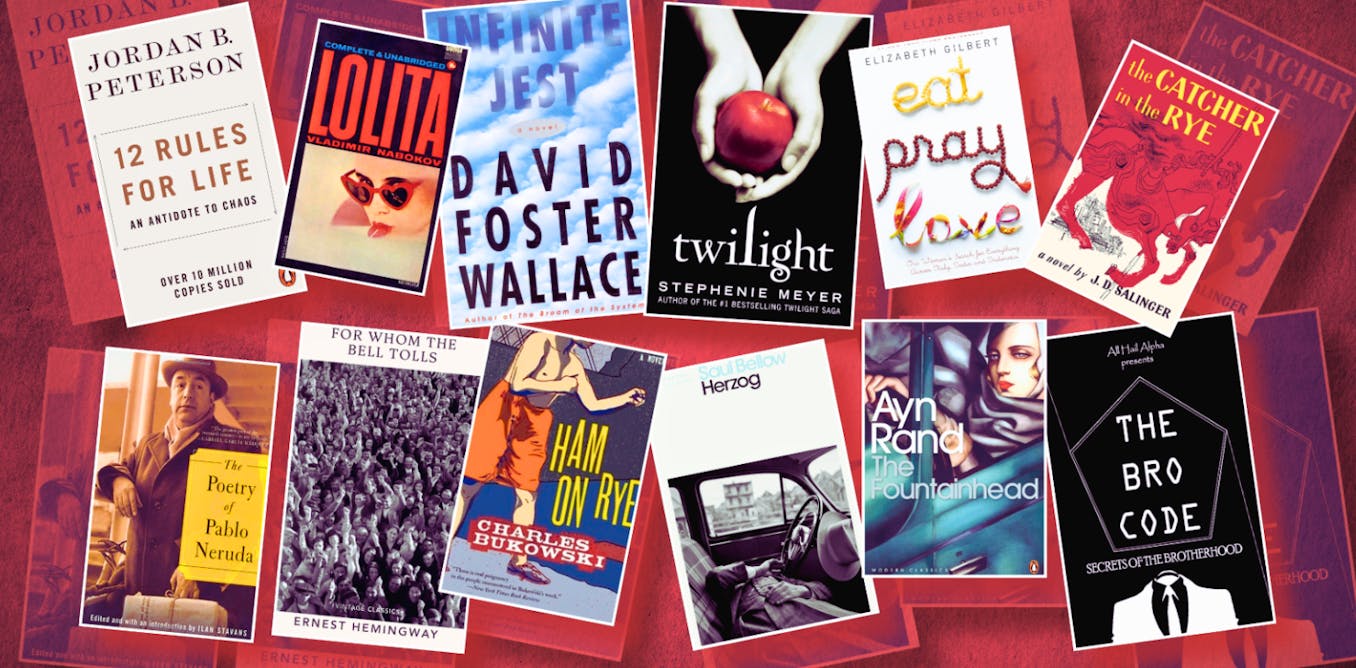
Lists of 'red flag' books have proliferated online, ranging from overt extremists like Adolf Hitler's Mein Kampf to more subtle indicators such as self-help tomes, finance guides, religious texts, or works by authors like Jordan Peterson and Ayn Rand. Even literary classics can fall under suspicion. Walker points out that certain titles are frequently flagged in dating advice forums, particularly for male readers. 'Audiences are jokingly (and not so jokingly) advised to block, ghost or run from men with too many Ernest Hemingway or Charles Bukowski titles on their shelves, which may be an indicator of a particularly noxious brand of hypermasculinity,' she writes.
An interest in Vladimir Nabokov's Lolita often draws warnings, with the assumption that readers might sympathize with the predatory narrator Humbert Humbert rather than recoil from him. Fans of Fyodor Dostoevsky are stereotyped as 'humourless and self-serious,' overlooking the author's wit, while declaring David Foster Wallace's Infinite Jest as a favorite might label someone 'dull or pretentious.' Walker humorously concedes, 'We should not close ourselves off to the possibility that a fun, charismatic David Foster Wallace fan may theoretically exist, somewhere in the world.'
Perhaps unsurprisingly, warnings about “red flag” books come up frequently in discussions around dating and relationship advice. Dating and social media profiles are common spaces where stated reading interests are used to convey or project one’s personality or values.
Book blogger Ashley Holstrom, cited in Walker's essay, offers pointed cautions against what she calls 'dude-bro and hippie-chick' books, including The Bro Code by the fictional Barney Stinson from the TV show How I Met Your Mother or Elizabeth Gilbert's Eat, Pray, Love. Holstrom is wary of those who list classic philosophy texts as favorites—'I’m not saying an interest in philosophy sucks or is a major red flag, but listing one of these boring-ass books as your all-time fave is'—or whose identities revolve around popular series like Stephenie Meyer's Twilight novels or Sarah J. Maas's A Court of Thorns and Roses. Referencing high school staples like George Orwell's Animal Farm, J.D. Salinger's The Catcher in the Rye, or F. Scott Fitzgerald's The Great Gatsby might suggest stagnation in one's literary journey, Holstrom implies.
Beyond reader preferences, the essay delves into authors whose personal lives cast shadows over their work. With social media bringing writers closer to their audiences, private behaviors are now public knowledge, complicating enjoyment of their books. Walker mentions friends renouncing J.K. Rowling due to her views on gender issues and Neil Gaiman amid allegations of misconduct—though sexual assault charges against Gaiman were dropped in early 2024, 'his documented behaviour remains problematic for many former readers,' according to various online discussions.
Other examples include fantasy authors David and Leigh Eddings, convicted of child abuse in the 1970s, which has made returning to their works 'impossible' for Walker. Similar sentiments surround Marion Zimmer Bradley, Alice Munro, and filmmaker Woody Allen, whose allegations of abuse have tainted their legacies. Pablo Neruda's status as a great love poet is undermined for some by his abandonment of his first wife and disabled daughter in the 1940s. Even Saul Bellow's 1964 novel Herzog, which won him the Nobel Prize in Literature in 1976, is reframed as a 'revenge novel' after biographical revelations about his abusive second marriage to Sondra Pontarès, whom he slandered in the book as the unfaithful Madeleine.
Critic Louis Menand, referenced by Walker, notes that Herzog 'aims to settle scores' by omitting Bellow's own physical abuse of Sondra, details uncovered in recent biographies. Walker reflects, 'How we understand and appreciate particular books may also shift when we learn more about the circumstances surrounding their creation.' She argues for nuance: while it's reasonable to withhold financial support from problematic authors—'Consistently unimpeachable behaviour may be too high of a demand, but it is always possible to find an equally great writer who has not done awful things'—completely discarding their works risks an 'overly cautious or antiseptic art.'
Walker shares her own discomfort with playwright David Mamet's politics but maintains his greatness as a writer. She advocates for curiosity, even about 'terrible people and unconscionable worldviews,' suggesting that knowledge of a text's issues can enrich understanding. 'Our knowledge of what is problematic about particular texts and authors may enhance our reading and make new understandings possible,' she states.
The essay also addresses the tension between private enjoyment and public display. Some suggest sequestering 'red flag' books in a 'corner of shame' for private reading only, while others banish them entirely. Walker pushes back: 'I am not comfortable with discarding red flag books and authors entirely, or confining them to some hidden “corner of shame”.' She emphasizes reading's social role, vital for literacy through word-of-mouth recommendations, even if 'problematic or “performative.”'
This debate arrives amid broader cultural shifts, including the #MeToo movement's impact on artistic legacies since 2017 and ongoing discussions about cancel culture in publishing. For instance, Rowling's 2020 essay on sex and gender sparked boycotts of the Harry Potter series, while Gaiman's issues surfaced in a 2023 Tortoise Media podcast investigation, leading to dropped charges but lingering reputational damage. Walker's piece, part of The Conversation's 'Friday essay' series, has garnered attention for bridging academic insight with everyday reader anxieties.
As reading communities grow more interconnected, the implications extend to how we curate identities online and offline. Dating apps like Tinder and Bumble often feature book quotes in bios, turning shelves into subtle résumés. Yet Walker warns against over-curation: 'The idea that our reading lists should be carefully curated to avoid projecting a particular persona also seems limiting.' Everyone, she argues, reads differently at different life stages, and a few red flags on the shelf might simply reflect human complexity.
Looking ahead, the essay suggests a balanced approach: engage critically, support ethical alternatives, and keep conversations open. In a world where a single bookshelf photo can go viral on BookTok, readers are navigating uncharted territory. As Walker concludes, 'Our reading is a part of us, but it does not simply define us. We can all probably afford and accept a few “red flags” on our bookshelves.'