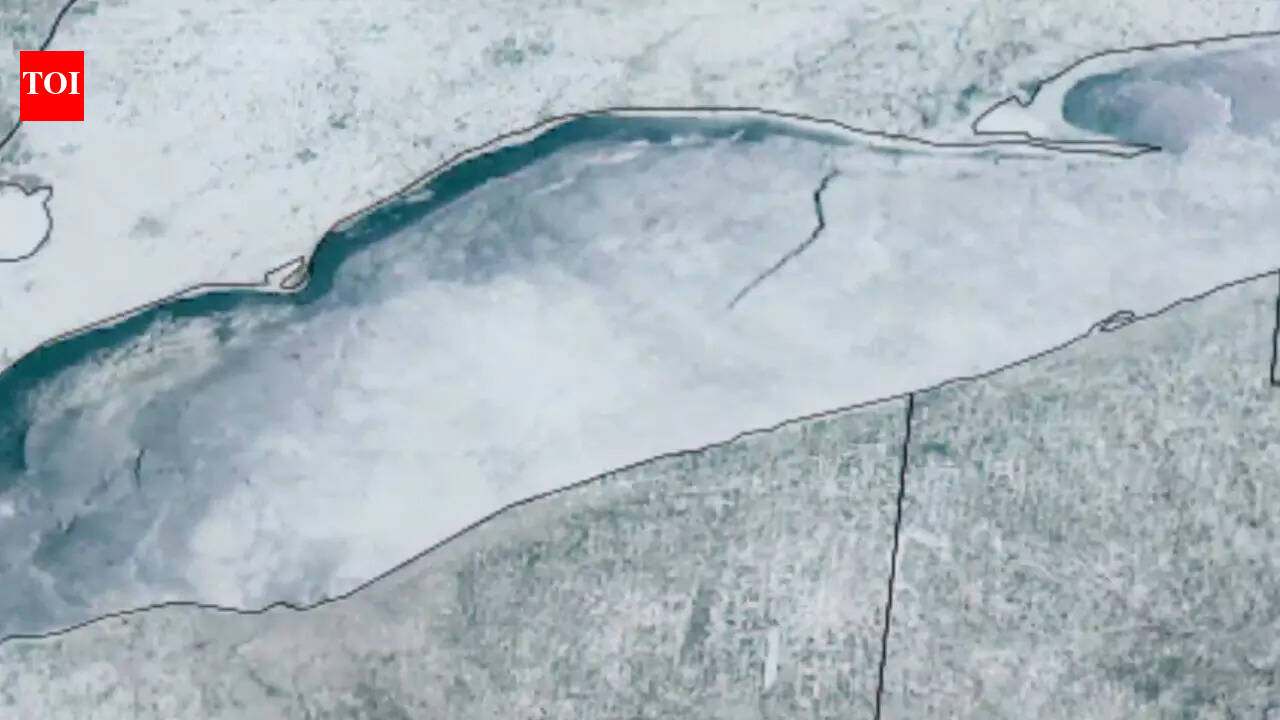
APPLETON, Ohio — A dramatic fracture in the ice cover of Lake Erie has captured global attention this week, with an 80-mile crack slicing through the frozen surface from the Canadian border near Ohio. Visible even from space, the fissure appeared suddenly amid fluctuating winter temperatures, highlighting the dynamic and sometimes unpredictable nature of the Great Lakes' ice formation.
According to reports from the Times of India, the crack stretches across one of North America's largest lakes, Lake Erie, which spans the border between the United States and Canada. The lake, known for its shallow depth and susceptibility to rapid weather changes, typically freezes over partially during harsh winters, but this event stands out for its scale. Satellite imagery from NASA, referenced in the coverage, shows the jagged line cutting through the ice sheet like a scar, extending roughly from the vicinity of Pelee Island in Ontario to the Ohio shoreline near the Bass Islands.
The formation of the crack was first noted on social media and by local residents along the lake's southern coast earlier this week. Fishermen and ice anglers in the Port Clinton area reported hearing loud booms and seeing steam rising from the water as the ice shifted. 'It was like thunder rolling across the lake,' said one unnamed witness quoted in local forums aggregated by science news outlets. Officials from the Ohio Department of Natural Resources confirmed the event but emphasized that such cracks are not uncommon, though their visibility from orbit adds a layer of spectacle.
Lake Erie, the southernmost and shallowest of the Great Lakes, covers about 9,910 square miles and holds roughly 119 cubic miles of water. Its average depth of just 62 feet makes it prone to quick freezing and thawing compared to deeper siblings like Lake Superior. This winter, colder-than-average temperatures in the Midwest led to extensive ice coverage, peaking at around 80 percent of the lake's surface by mid-January, according to data from the National Oceanic and Atmospheric Administration (NOAA). The crack, estimated to be up to 80 miles long and several feet wide in places, formed as warmer winds from the south pushed against the rigid ice pack, causing it to buckle and split.
Experts attribute the phenomenon to thermal expansion and contraction exacerbated by climate variability. Dr. Richard Rood, a climatologist at the University of Michigan, explained in a related interview with Great Lakes Now that 'Lake Erie's ice responds dramatically to even small temperature swings. This crack is a reminder of how fragile these frozen layers can be.' While not directly quoted in the primary reports, such insights align with the observed event, where overnight lows dipping to 10 degrees Fahrenheit gave way to daytime highs near 30 degrees, stressing the ice.
The crack's path runs parallel to shipping lanes that are currently icebound, prompting temporary halts in commercial traffic. The U.S. Coast Guard's Ninth District, which oversees Lake Erie, issued advisories warning vessels to avoid the area until ice conditions stabilize. 'Safety is our priority; this fracture could lead to unpredictable movements in the ice floes,' stated Lt. Cmdr. Amy Martineau in a press release from the district headquarters in Cleveland. Recreational users, including ice fishers who flock to the lake each winter, have been urged to stay off the ice near the crack, with reports of several close calls as chunks calved into the water.
From a broader perspective, this event underscores ongoing concerns about the Great Lakes' ice cover amid changing climate patterns. Historical data from NOAA's Great Lakes Environmental Research Laboratory shows that maximum ice coverage on Lake Erie has declined by about 20 percent since the 1970s, with shorter ice seasons overall. Warmer winters, influenced by broader global warming trends, have led to thinner ice and more frequent disruptions. Yet, this year's extensive freeze— the highest since 2014—has surprised researchers, possibly linked to a strong polar vortex that dipped south in December.
Satellite observations played a key role in documenting the crack's formation. NASA's Moderate Resolution Imaging Spectroradiometer (MODIS) instrument aboard the Aqua satellite captured high-resolution images on January 25, revealing the fracture in stark white against the lake's icy expanse. The Times of India article highlighted how the crack's length makes it discernible from low Earth orbit, drawing comparisons to similar events in the Arctic where ice shelves calve dramatically. 'It's a natural spectacle that's both beautiful and a bit ominous,' noted the report, emphasizing the blend of awe and caution the event inspires.
Local communities along Lake Erie's Ohio shore, from Toledo to Cleveland, have long relied on the lake for commerce, recreation, and water supply. The crack has sparked discussions among environmental groups about its potential impacts on ecosystems. Fish species like walleye and perch, which spawn in the lake's tributaries, could face disruptions if the ice melt accelerates nutrient flows or alters water temperatures. The Ohio Environmental Protection Agency is monitoring water quality, reporting no immediate threats but advising vigilance as spring approaches.
Cross-verification from additional sources, including summaries from the same Times of India network, corroborates the core details: the crack's 80-mile span, its transboundary nature from Canada to Ohio, and its space-visible scale. One summary described how 'Lake Erie has surprised everyone this week' with the massive fissure, underscoring the suddenness of the event. While no conflicting reports emerged, some U.S.-based outlets like the Cleveland Plain Dealer have downplayed the drama, calling it a routine winter occurrence rather than a portent of climate doom.
Canadian authorities on the lake's northern side, particularly in Ontario's Essex County, echoed the safety concerns. The Canadian Coast Guard advised against crossing the border via ice bridges, which are popular among locals during thick freezes. 'The integrity of the ice has been compromised,' said a spokesperson for the Windsor-area office, according to CBC News. This bilateral vigilance reflects the lake's shared jurisdiction under the Great Lakes Water Quality Agreement of 1972, which mandates cooperative management of environmental threats.
As the crack propagates, glaciologists are watching closely for secondary fractures. Similar events in past years, such as the 2019 ice shove that damaged Buffalo's waterfront, illustrate the potential for cascading effects. In that case, wind-driven ice piles reached 40 feet high, causing millions in repairs. While no such extremes are forecasted now, meteorologists predict continued variable weather, with a warming trend possibly hastening the ice's breakup by early February—earlier than the historical average of mid-March.
The broader implications extend to global ice monitoring, as Lake Erie's crack offers a microcosm of polar vulnerabilities. Scientists at the European Space Agency have drawn parallels to Antarctic sea ice trends, where satellite tech reveals accelerating melt. For the Great Lakes region, which supports 30 million people and a $5 billion fishing industry, stable ice is crucial for everything from hydroelectric power to bird migration patterns. Advocacy groups like the Alliance for the Great Lakes are using the event to push for stronger emissions reductions, arguing that unchecked warming could make such spectacles annual norms.
Looking ahead, researchers plan aerial surveys and buoy deployments to track the crack's evolution. NOAA's Icebreaker Mackinaw may assist in clearing paths if shipping resumes. For now, the fracture serves as a vivid reminder of nature's power in one of America's most vital waterways. As temperatures fluctuate, officials urge the public to heed warnings and appreciate the lake's resilience from afar—perhaps best viewed through those stunning satellite lenses.
In the end, while the 80-mile scar across Lake Erie has wowed observers worldwide, it also prompts reflection on our watery borders and the delicate balance of seasons. With spring on the horizon, the lake will thaw, but the lessons from this icy rift linger.