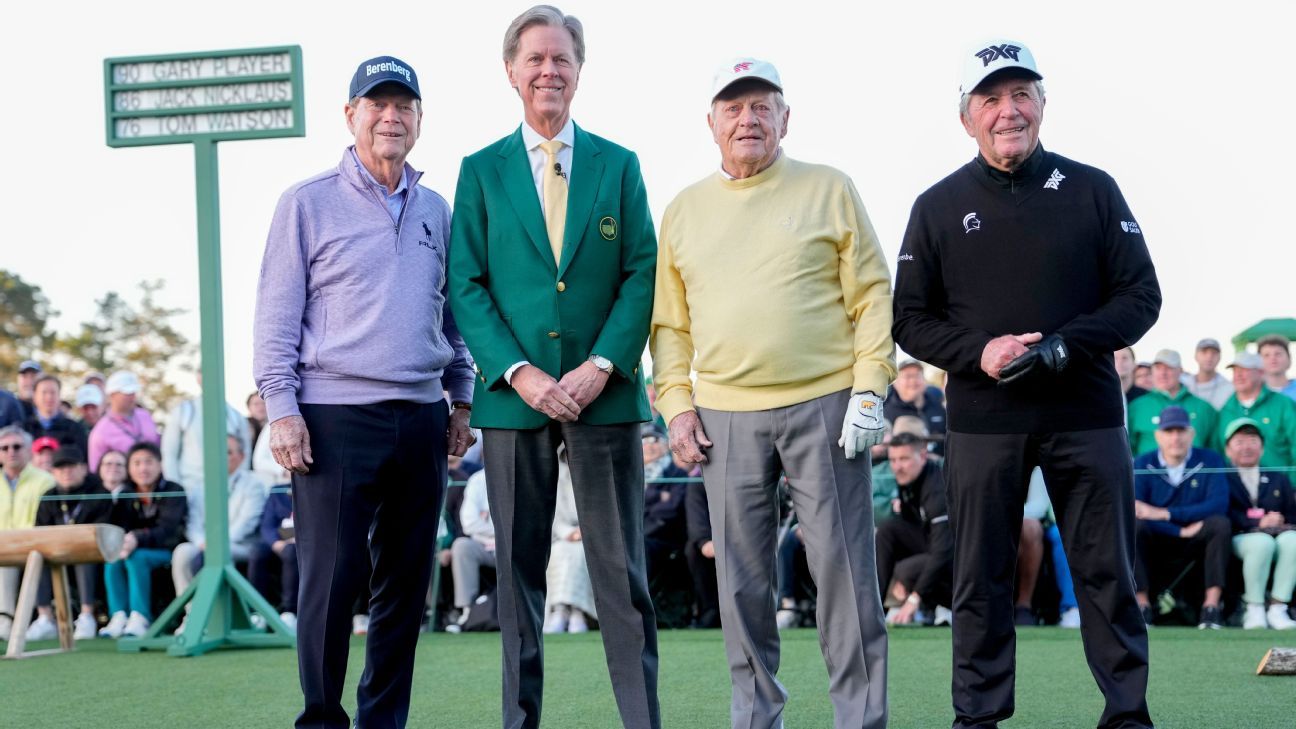
AUGUSTA, Ga. — As the 90th Masters Tournament got underway on Thursday, the shadow of Tiger Woods' recent legal troubles loomed large over the hallowed grounds of Augusta National Golf Club. Golf legends Gary Player and Jack Nicklaus, both multiple Masters champions, offered their perspectives on Woods' DUI arrest and his path to recovery, emphasizing sympathy for his chronic pain while urging caution in his daily life.
Gary Player, the nine-time major winner from South Africa, spoke candidly to reporters after delivering his ceremonial tee shot before the opening round. He expressed deep empathy for Woods, who has battled a series of debilitating injuries over the years, but stressed the importance of safety when medicated. "Do I blame him for taking medicine? Hell, no," Player said. "He has sleep deprivation. Do I blame him for taking something to help him sleep? No. But I don't think he should drive a car. When you're taking that medicine, it's dangerous when you're driving a car, same as it's dangerous when you look at your cellphone in the car."
Player's comments came in the wake of Woods' arrest on March 27 in Florida, where the 50-year-old golf icon was involved in a single-vehicle crash. According to a Martin County Sheriff's affidavit, Woods' SUV clipped the back of a trailer before flipping on its side, leaving the vehicle severely damaged. Deputies reported finding two pain pills in Woods' pants pocket at the scene, and they noted that he exhibited signs of impairment.
Formally charged on Wednesday with misdemeanor driving under the influence and refusing to submit to a chemical or physical test of his breath or urine, Woods also faces a ticket for distracted driving. Court records indicate that Woods told police he had been looking at his phone prior to the incident. The charges stem from the early morning crash on a highway in Jupiter, Florida, near Woods' home.
In response to the arrest, Woods announced on March 31 that he was stepping away from competitive golf and his administrative roles with the PGA Tour to undergo "comprehensive inpatient treatment." A judge approved his request to seek treatment outside the United States, citing privacy concerns. Reports suggest Woods is currently at a rehabilitation facility in Switzerland, following the landing of his private plane there shortly after the approval.
Player, who won the Masters in 1961, 1974, and 1978, highlighted the toll of constant pain on Woods' life. "My heart goes out for him," he said. "There's nothing worse than living in pain every day of your life. You can't think of anything worse. I just hope he can get it all sorted out because he's such an asset to golf and has done so much for the game." Woods, a five-time Masters champion himself, has long been credited with elevating the sport's global popularity, drawing massive audiences and inspiring a new generation of players.
Jack Nicklaus, the 18-time major champion and six-time Masters winner, echoed Player's sentiments in a brief statement. "Just whatever you need to help you and get back, because I think golf needs him, and we'd love to have him back," Nicklaus said. The 84-year-old Nicklaus, who has been a fixture at Augusta for decades, has previously spoken about the physical demands of professional golf and the injuries that often accompany a long career.
The incident marks another challenging chapter for Woods, whose career has been punctuated by both triumphs and setbacks. Since his last major victory at the 2019 Masters, Woods has undergone multiple back surgeries and recovered from a serious car crash in 2021 that nearly cost him his right leg. That earlier accident, also in Florida, required extensive rehabilitation and limited his tournament play. Woods' ongoing battle with pain management has been well-documented, with the golfer openly discussing his reliance on medications to cope with injuries sustained over more than two decades on the tour.
Prosecutors in the case against Woods have moved forward with their investigation. On Tuesday, they indicated plans to issue a subpoena for copies of Woods' prescription medication records from Lewis Pharmacy in Palm Beach, Florida. This step aims to clarify the substances involved in the March 27 crash and whether they contributed to his impairment, as alleged in the sheriff's affidavit.
The legal proceedings are unfolding amid heightened scrutiny of Woods' absence from the Masters, where he has been a dominant figure since his first appearance in 1995. At 50, Woods is no longer the prodigy who won his third major at age 21, but his presence remains a draw. Organizers of the tournament, held annually at Augusta National, have not commented directly on Woods' situation, focusing instead on the competition featuring top players like Scottie Scheffler and Rory McIlroy.
Player's advice to hire a driver resonated with broader discussions in sports about athlete safety and the risks of operating vehicles while under the influence of prescribed medications. Woods is not alone in facing such issues; other high-profile athletes have encountered similar troubles, prompting leagues like the PGA Tour to enhance support services for mental health and addiction.
Nicklaus, whose own career spanned from the 1960s to the 1980s, understands the pressures of the professional game. He has mentored Woods in the past and views him as integral to golf's future. The sport, which has seen participation surges partly due to Woods' influence, could benefit from his return, even in a limited capacity. However, the timeline for Woods' recovery remains uncertain, with no official word on when he might resume public appearances or competitive play.
As the Masters progresses through its four rounds, the absence of Woods serves as a reminder of the human elements behind the precision and pageantry of professional golf. Players and officials alike have expressed hope for his well-being, underscoring the tight-knit community within the sport. Meanwhile, Woods' legal team has yet to enter a plea, and further developments in the case are expected as prosecutors review the subpoenaed records.
The incident has also sparked conversations about privacy and treatment for public figures. Woods' decision to seek care abroad highlights the challenges of maintaining confidentiality in the age of social media and instant news cycles. Supporters argue that his contributions to golf warrant understanding and space for recovery, while critics point to the responsibilities that come with fame.
Looking ahead, the PGA Tour and golf's governing bodies will monitor Woods' situation closely. His roles, including as a player director on the PGA Tour's policy board, add layers to his absence. For now, the focus remains on his health, with Player and Nicklaus' words serving as a bridge between concern and optimism for one of the game's greatest icons.
In the end, the Masters continues, a tradition uninterrupted by individual stories, yet enriched by them. As the azaleas bloom and the leaders vie for the green jacket, the golf world waits—and hopes—for Tiger Woods' next chapter.