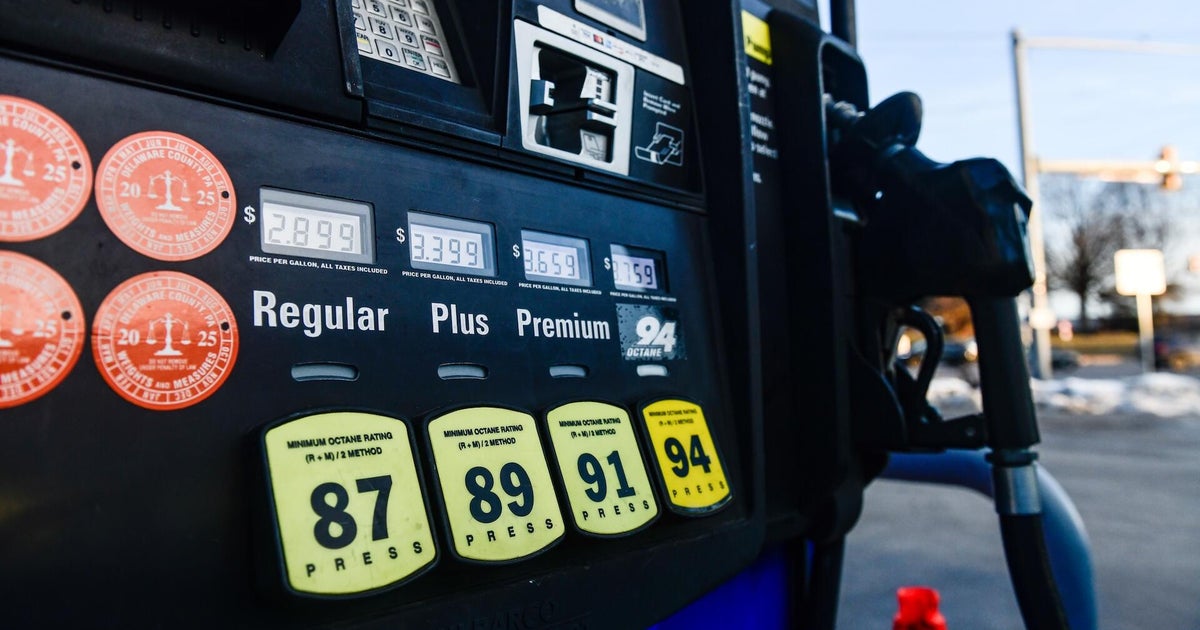
Gasoline prices across the United States ticked upward on Monday, reaching an average of $3.72 per gallon, as global oil markets grappled with the ongoing paralysis of the Strait of Hormuz, a critical chokepoint for international energy shipments amid escalating conflict in the Middle East.
According to data from AAA, the national average rose from $3.70 the previous day, marking a sharp increase of nearly 79 cents per gallon compared to a month earlier. The surge comes as Brent crude, the international benchmark for oil prices, hovered above $100 per barrel, closing the day at $101.93 after a modest decline of about 2.4%, based on FactSet figures. Meanwhile, the U.S. benchmark West Texas Intermediate crude fell 4.1% to $94.62 per barrel, providing a slight reprieve following an intraday peak above $102.
The volatility in oil prices stems directly from the intensifying war between Iran and a coalition led by the United States and Israel. Since the U.S. and Israeli strikes on Iranian targets began several weeks ago, oil prices have climbed steadily from around $70 per barrel. In retaliation, Iran has launched drones and missiles at energy infrastructure in the Persian Gulf region, effectively shutting down traffic through the Strait of Hormuz—a narrow waterway that handles about 20% of the world's oil supply.
With the strait closed, major oil producers in the Gulf are slashing output, as their crude has no viable route to global markets. This disruption has fueled fears among economists and investors that prolonged closure could exacerbate inflation worldwide, hitting consumers and businesses alike. "Every escalation in the Middle East pushes energy prices higher," Nigel Green, CEO of deVere Group, wrote in an email on March 13. "Energy costs ripple through every layer of the economy. They squeeze businesses, erode consumer spending power and push inflation higher at the same time."
Financial markets showed signs of resilience on Monday, buoyed by the day's dip in oil prices. The S&P 500 climbed 89 points, or 1.3%, to 6,720.75 in morning trading, while the Dow Jones Industrial Average rose 1.2% and the tech-focused Nasdaq composite gained 1.5%. Despite the turbulence, the S&P 500 remains just 4% shy of its all-time high, reflecting investor confidence that the conflict may not drag on indefinitely.
Historical patterns support this optimism: U.S. stock markets have typically recovered swiftly from Middle East flare-ups, provided oil prices stabilize. Paul Christopher, head of global investment strategy at Wells Fargo Investment Institute, suggested that the rapid pace of recent escalations might indicate underlying limitations on both sides. "Escalations have been mounting quickly, but that could suggest 'both sides are facing growing constraints that may prevent a long conflict,'" Christopher said.
The conflict's roots trace back to heightened tensions over Iran's nuclear program and regional influence. U.S. and Israeli forces initiated airstrikes targeting Iranian military sites in early March, prompting Iran's aggressive response. Reports indicate that Iranian attacks have damaged key oil terminals and refineries along the Persian Gulf coast, though exact casualty figures and the extent of destruction remain unconfirmed by independent sources.
President Trump addressed the crisis over the weekend, urging nations affected by the strait closure to step up. He stated that other countries should "take care of that passage" and pledged that the U.S. "will help - A LOT!" His comments, delivered via social media, highlighted the administration's expectation of international cooperation in securing the waterway.
European leaders, however, expressed frustration with the lack of consultation. Officials from several EU nations demanded clarity on Trump's strategy for the war and a timeline for resolution, as they assessed his call for joint action. The European response underscores broader allied concerns about being drawn into a conflict they had little role in starting.
At the White House, questions about burden-sharing dominated Monday's briefing. CBS News correspondent Nancy Cordes pressed Press Secretary Karoline Leavitt on why other countries should assist in safeguarding ships in the Strait of Hormuz, noting their exclusion from the initial U.S.-Israeli strikes. Leavitt replied, "Because these other countries are benefiting greatly from the United States military taking out the threat of Iran." She added, "The rogue Iranian regime has long not just posed a threat to the United States of America, but of course, to our Gulf and Arab partners in the region. So, these countries are absolutely benefiting from ensuring that Iran can never obtain a nuclear weapon. This is something not just the United States, but the entire Western world has agreed with for many, many years."
Leavitt did not elaborate on contingency plans should allies decline to participate, leaving open questions about potential U.S. unilateral moves to reopen the strait. Military analysts have speculated that naval deployments could be necessary, but the White House has offered no specifics.
Beyond immediate price hikes at the pump, the situation carries wider economic ramifications. Higher energy costs are already filtering into transportation, manufacturing, and food production sectors, potentially stoking inflation that central banks worldwide are struggling to contain. In the U.S., where gas prices directly impact household budgets, the uptick could dampen consumer confidence and slow post-pandemic recovery efforts.
Globally, dependent economies like those in Europe and Asia face even steeper challenges. Countries reliant on Gulf oil imports are scrambling to secure alternative supplies, with some turning to costlier sources in the Americas or Africa. The International Energy Agency has warned of potential shortages if the strait remains blocked beyond the coming weeks.
As diplomatic efforts intensify, the path forward remains uncertain. Backchannel talks between U.S. envoys and regional mediators have been reported, though Iranian officials have dismissed them as insincere. President Trump has hinted at further military options, while allies push for de-escalation to avoid a broader regional war.
For now, the world watches the Strait of Hormuz closely, where the interplay of geopolitics and energy markets could dictate the next chapter of global stability. With oil prices still elevated and gas pumps reflecting the strain, the hope is for a swift resolution that eases the burden on everyday economies.