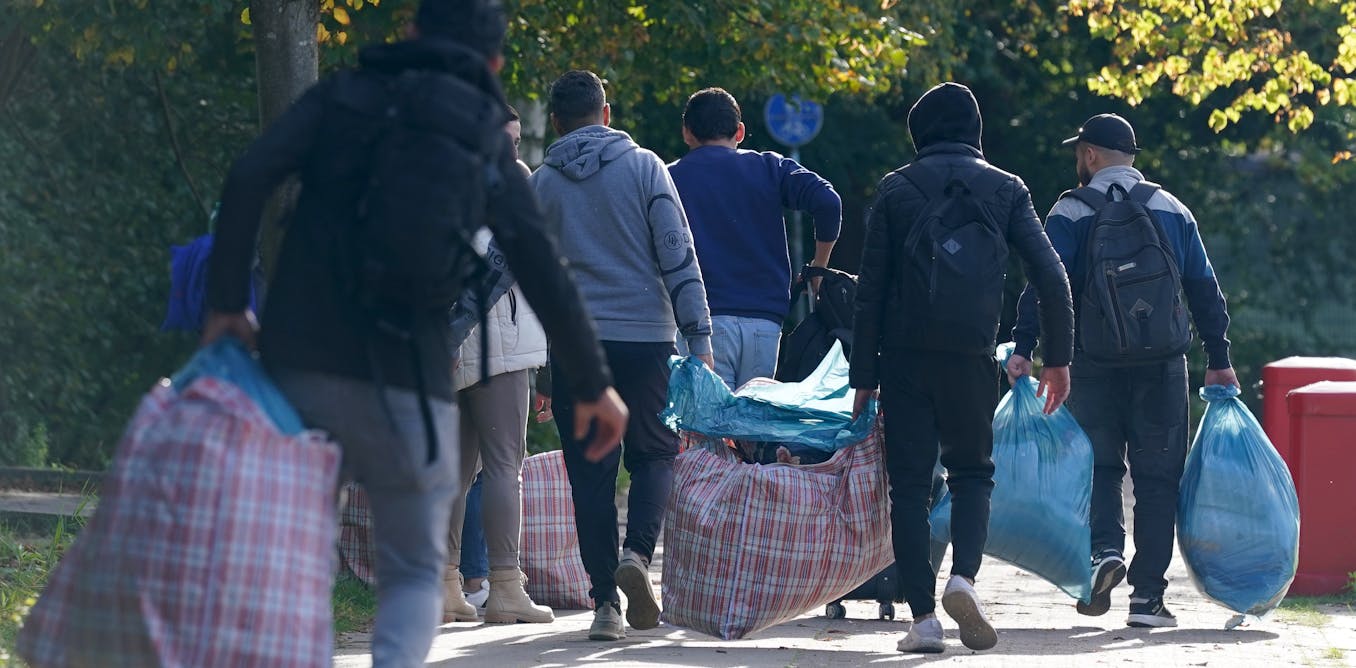
BERLIN — In a sharp pivot from years of providing refuge, German Chancellor Friedrich Merz announced in November plans to deport Syrian refugees 'in the near future,' urging the approximately 1 million Syrians living in the country to return home voluntarily. The move comes just over a year after the fall of Bashar al-Assad's regime on December 8, 2024, which ended Syria's 14-year civil war but left the nation grappling with widespread devastation. Merz's statement, delivered amid rising political pressures, has ignited debates over immigration, human rights, and Germany's historical approach to migrant communities.
Germany had opened its doors to Syrians fleeing the violence starting in 2011, with many arriving during the peak of the crisis in 2015. Today, these refugees have woven themselves into the fabric of German society: about 15% have obtained German citizenship, nearly half of working-age Syrians are employed, and around 250,000 Syrian children attend local schools, according to data from migration experts. Yet, with the war's end, the mood has shifted. Merz, leader of the centrist Christian Democratic Union (CDU), framed the policy as a response to stabilizing conditions in Syria, but critics see it as a bid to counter the surging far-right Alternative for Germany (AfD) party, which captured nearly 21% of the vote in the February 2025 national elections, securing its position as the second-largest force in parliament.
The government's strategy includes financial incentives to encourage voluntary returns. Since January 2025, Syrian refugees in Germany can apply online for up to $4,650 (4,000 euros) per family through an official program administered by the Federal Office for Migration and Refugees. This initiative mirrors similar efforts by other European Union countries and the United Nations Refugee Agency, which also provide aid packages to facilitate repatriation. However, uptake has been minimal: only about 1,300 Syrians — or 0.1% of the community — have chosen to leave Germany since Assad's ouster, reflecting deep integration and lingering fears about Syria's stability.
Human rights organizations have lambasted the program as inadequate and coercive. Amnesty International and Human Rights Watch argue that the payouts are 'far too meager to restart one’s life in Syria,' especially given the country's dire conditions. According to the Migration Policy Institute, effective reintegration requires 'robust and durable' support, far beyond what Berlin is offering. Syria remains mired in crisis: two-thirds of its population depends on humanitarian aid, over 7 million people are internally displaced, and basic services like electricity, water, sanitation, and medical supplies are scarce in many areas. Homes are often destroyed or entangled in land disputes, complicating any return.
Syrian activists have raised alarms about safety for vulnerable groups. Religious minorities, women, and LGBTQ+ individuals face ongoing threats in a post-Assad landscape marked by factional tensions and reprisals. The United Nations Refugee Agency, as of December 2025, continues to invoke the principle of non-refoulement, which bars forcing refugees back to places where their lives or freedoms are at risk. Even within Germany, voices of caution have emerged from the top. Foreign Minister Johann Wadephul, after visiting Damascus on October 30, remarked, “Here, hardly anyone can live a dignified life,” tempering earlier government optimism about repatriation.
Merz's tougher stance extends beyond incentives. He has signaled readiness for forced deportations, starting with Syrians who have criminal records, and recently invited Syria's interim president to Berlin for talks on the issue. Neighboring countries have already acted: Lebanon, Turkey, and Jordan — which host the majority of the world's 6.8 million Syrian refugees — have begun deporting nationals back across the border. Globally, nearly 1.5 million displaced Syrians have returned since December 2024, representing about one-quarter of those who fled since 2011, but Germany's Syrian population has shown the least inclination to follow suit.
This is not the first time Germany has turned to financial lures to reduce its migrant numbers. Historians draw parallels to the 1980s, when the CDU, under then-Chancellor Helmut Kohl, targeted Turkish guest workers — Germany's largest ethnic minority at the time. Recruited in the 1960s and 1970s to fuel post-World War II reconstruction, millions of Turks arrived in West Germany. By the late 1970s, they were bringing families, settling permanently despite their 'guest' status. As economic anxieties grew, so did racism and Islamophobia, manifesting not just among neo-Nazis who perpetrated violent attacks, but across the political spectrum, including centrist voices claiming Islam's incompatibility with Europe.
In that charged atmosphere, Kohl aimed to halve the Turkish population. Direct deportations were politically untenable for a nation still reckoning with its Nazi past and the Holocaust, so the government opted for persuasion. In 1983, West Germany enacted the remigration law, offering financial incentives for voluntary returns. Rights groups decried it as a 'kicking out policy,' but it succeeded in prompting about 250,000 Turks — 15% of the community — to leave, one of the largest and swiftest mass departures in modern European history.
Returnees to Turkey often encountered hardship. The country's economy was struggling in the 1980s, leaving many without viable livelihoods. Children, in particular, faced ostracism as 'Germanized Turks,' struggling to reintegrate into a society that viewed them as outsiders. Michelle Lynn Kahn, an associate professor of history at the University of Richmond and author of a book on German migration and far-right extremism, notes that these experiences underscore the pitfalls of such policies. 'As the Turkish case shows, even a voluntary return is not always a happy homecoming,' she writes in a recent analysis.
Today's Syrian policy echoes those 1980s tactics, according to Kahn, who has received funding from institutions like the United States Holocaust Memorial Museum and the Alexander von Humboldt Foundation for her research. She argues that racism and Islamophobia are not fringe issues but have long permeated mainstream German politics, including the CDU. Merz's approach, she suggests, risks pandering to these biases while responding to the AfD's rise, which has pushed centrists further right on immigration.
Political analysts point to the February 2025 elections as a turning point. The AfD's strong showing, fueled by anti-immigrant rhetoric, has forced mainstream parties to adopt harder lines to reclaim voters. Merz's November announcement came weeks after the vote, positioning the CDU to neutralize the far-right threat. Yet, supporters of the policy maintain it aligns with international shifts post-Assad, emphasizing Syria's need for reconstruction and the burden on host countries. German officials have cited improved security as a rationale, though the U.N. and aid groups dispute the timeline for safe returns.
The debate has broader European implications. As the E.U. coordinates repatriation aid, tensions simmer over burden-sharing among member states. Germany's actions could set a precedent, influencing policies in nations like Sweden and Austria, which also host significant Syrian populations. Meanwhile, in Syria, the interim government's capacity to absorb returnees remains unproven, with reports of sporadic violence and economic collapse persisting into late 2025.
Looking ahead, Merz's invitation to Syria's leader signals escalating bilateral efforts, but legal hurdles loom. German courts have historically scrutinized deportations under non-refoulement, and refugee advocacy groups vow challenges. For the Syrians in Germany — many now with jobs, homes, and children in school — the uncertainty weighs heavy. As one community leader told reporters anonymously, the offers feel like 'a bribe to forget our lives here.' The policy's success, or failure, may redefine Germany's role in global migration for years to come.
In the end, the Syrian repatriation push highlights enduring fault lines in Europe's approach to refugees: balancing humanitarian obligations with domestic politics. While 1.5 million have returned regionally, Germany's 1,300 departures suggest resistance rooted in hard-won stability. As Wadephul's Damascus observation lingers, the question remains whether financial incentives can bridge the gap between policy goals and on-the-ground realities.