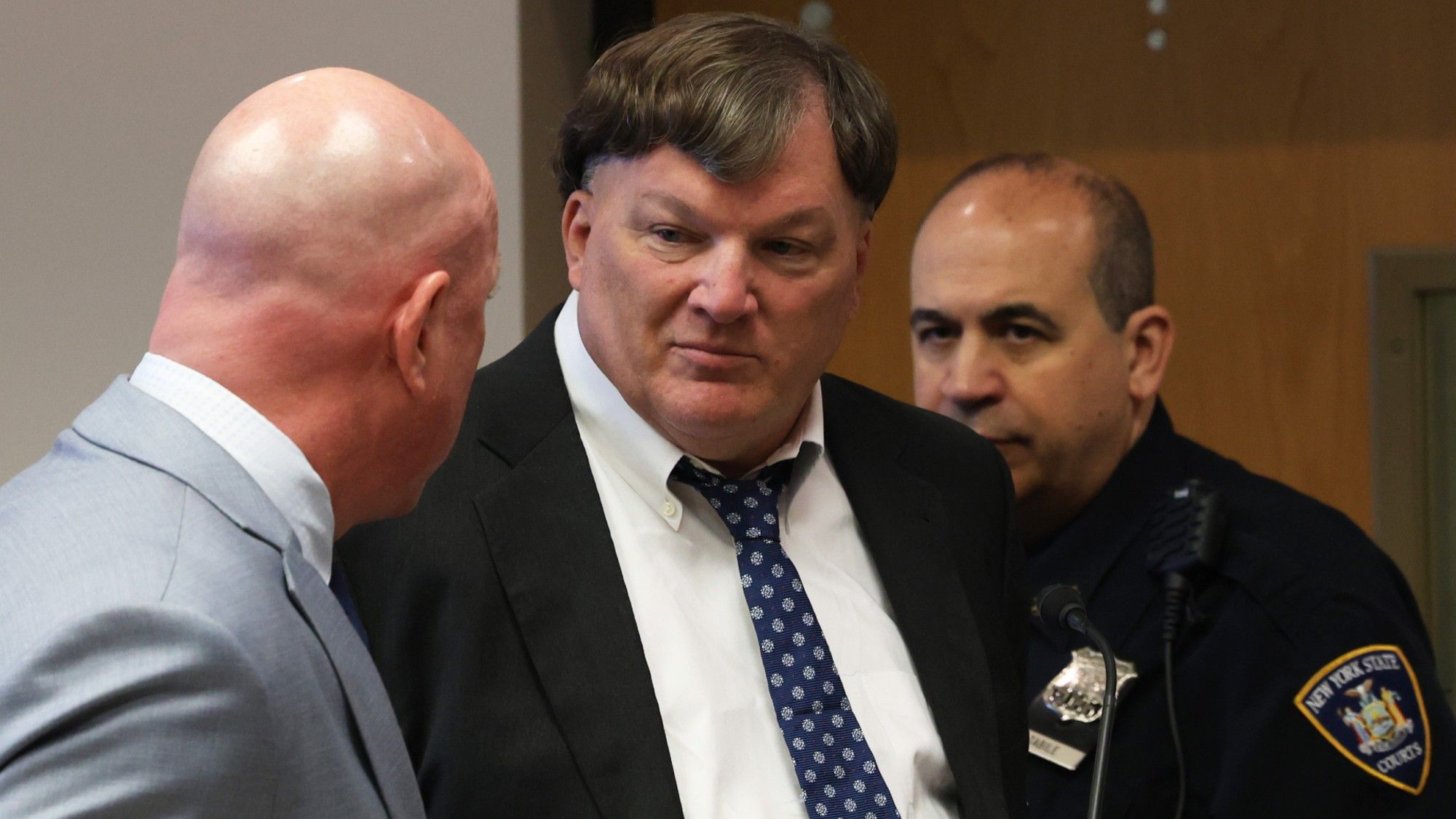
In a stunning development that has brought long-awaited closure to one of Long Island's most notorious cold cases, Rex Heuermann, the architect accused of the Gilgo Beach serial killings, pleaded guilty on Wednesday to the murders of seven women and confessed to an eighth. The killings, which spanned from 1993 to 2010, involved the strangulation of victims and, in some instances, the dismemberment of their bodies. Heuermann's remains of several victims were discovered near Gilgo Beach in 2010 and 2011, sparking a sprawling investigation that captivated true-crime enthusiasts and haunted the families of the missing women.
Heuermann, who was arrested in July 2023 and initially entered a not guilty plea, appeared composed during the court proceedings in Suffolk County, New York. According to reports, he maintained a normal demeanor, as if engaged in a casual morning conversation, while detailing his involvement in the horrific crimes. The guilty pleas cover the deaths of seven women whose bodies were found along Ocean Parkway, a remote stretch near Gilgo Beach, and extend to the 1996 murder of Karen Vergata, whose remains were discovered in a wooded area in Manorville.
Suffolk County District Attorney Ray Tierney addressed the media following the hearing, describing Heuermann as someone who "walked among us play-acting as a normal suburban dad" while "obsessively targeting innocent women for death." Tierney's remarks underscored the duality of Heuermann's life: by day, a family man and professional in Massapequa Park; by night, allegedly a predator responsible for a series of unsolved disappearances and murders that terrorized the region for nearly two decades.
The Associated Press characterized Wednesday's pleas as bringing "finality to a case that bedeviled investigators, tormented victims’ families and tantalized a true-crime obsessed public for years." Indeed, the Gilgo Beach murders gained national attention after the initial discoveries in December 2010, when a police search for a missing woman named Shannan Gilbert uncovered the skeletal remains of 10 individuals, including eight women, a toddler, and a man. Gilbert's own death was later ruled an accidental drowning, but the other cases pointed to a serial killer at work.
The New York Times reported that the investigation was marred by years of "dysfunction, disarray and corruption," which delayed progress and allowed the case to languish as a cold file. Local law enforcement faced criticism for mishandling evidence and jurisdictional disputes between Suffolk and Nassau counties. It wasn't until 2022, under Tierney's leadership, that renewed efforts using advanced DNA analysis and digital forensics led to Heuermann's arrest. Investigators had linked him through hair samples found on the victims' bindings and burner phone records that placed him near the disposal sites.
Among the victims tied to Heuermann's confession are Melissa Barthelemy, Megan Waterman, Amber Lynn Costello, and Maureen Brainard-Barnes, whose bodies were found wrapped in burlap near Gilgo Beach in 2010. Additional remains, including those of Jessica Taylor and Valerie Mack, were discovered in 2003 and 2000 respectively, but connected to the series later. Karen Vergata's case, from 1996, involved partial remains found in plastic bags, and Heuermann's admission marks the first resolution for her family after nearly three decades.
During the plea hearing, Heuermann provided graphic details of the crimes, admitting to luring sex workers via online ads, strangling them in his basement, and disposing of their bodies along the isolated parkway. He described dismembering some victims to facilitate transport and burial. Court documents revealed that Heuermann conducted extensive online searches for news coverage of the murders and even visited the discovery sites post-arrest, behaviors that prosecutors said demonstrated his ongoing obsession.
Family members of the victims expressed a mix of relief and lingering pain outside the courthouse. Jessica Taylor's mother, Janine, told reporters, "It's been 20 years of hell, but at least now we know." Similarly, the sister of Amber Costello, Allison, said the plea offered "some peace, but nothing brings them back." These statements highlight the emotional toll on loved ones, many of whom had advocated for renewed investigations through advocacy groups like the Lost Girls Coalition.
The plea deal, which avoids a lengthy trial, includes Heuermann's agreement to life imprisonment without parole, with sentencing scheduled for June in Riverhead, New York. In exchange, he will undergo interviews with the FBI's Behavioral Analysis Unit, a provision that could aid in profiling similar offenders. The Times noted this aspect as potentially helping "investigators hunt down others with similarly violent minds," suggesting broader implications for unsolved cases nationwide.
Background on the Gilgo Beach investigation reveals a complex web of leads and missteps. Early suspicions fell on local figures, including a disgraced police chief, but DNA evidence ultimately pointed to Heuermann. His wife and children, who lived with him at the time of the crimes, have not been implicated, though the family home was searched extensively after his arrest, yielding computers and hard drives with disturbing content.
Experts in criminology have long viewed the Gilgo case as emblematic of challenges in investigating sex worker homicides, where victims are often marginalized and cases deprioritized. Dr. Katherine Ramsland, a forensic psychologist, commented in prior coverage that serial killers like the one behind these murders exploit societal blind spots. Heuermann's profession as an architect, involving detailed planning, may have informed his methodical approach to the crimes and their concealment.
While Wednesday's confession resolves the core cases, questions remain about potential additional victims. Authorities have not ruled out links to other unsolved disappearances on Long Island during the 1990s and 2000s. Tierney indicated that the investigation continues, with tips still coming in from the public hotline established post-arrest.
The resolution of the Gilgo Beach saga also prompts reflection on advancements in forensic science. Techniques like familial DNA searching, which helped identify Heuermann through a relative's public genealogy database, have revolutionized cold case work. Similar methods were pivotal in cases like the Golden State Killer, and their application here underscores a shift toward technology-driven justice.
As Heuermann awaits sentencing, the community of Long Island breathes a tentative sigh of relief. Memorials for the victims, including a plaque near Gilgo Beach, serve as reminders of lives cut short. For the families, the pleas mark the end of a grueling chapter, though the scars of loss endure. District Attorney Tierney emphasized that the outcome honors the victims by ensuring Heuermann "will never see the light of day again."
Looking ahead, the case's closure may inspire legislative pushes for better funding of cold case units and protections for vulnerable populations. Advocacy groups are already calling for reforms to address biases in missing persons investigations. Meanwhile, Heuermann's cooperation with the FBI could yield insights into the psychology of serial offenders, potentially preventing future tragedies.