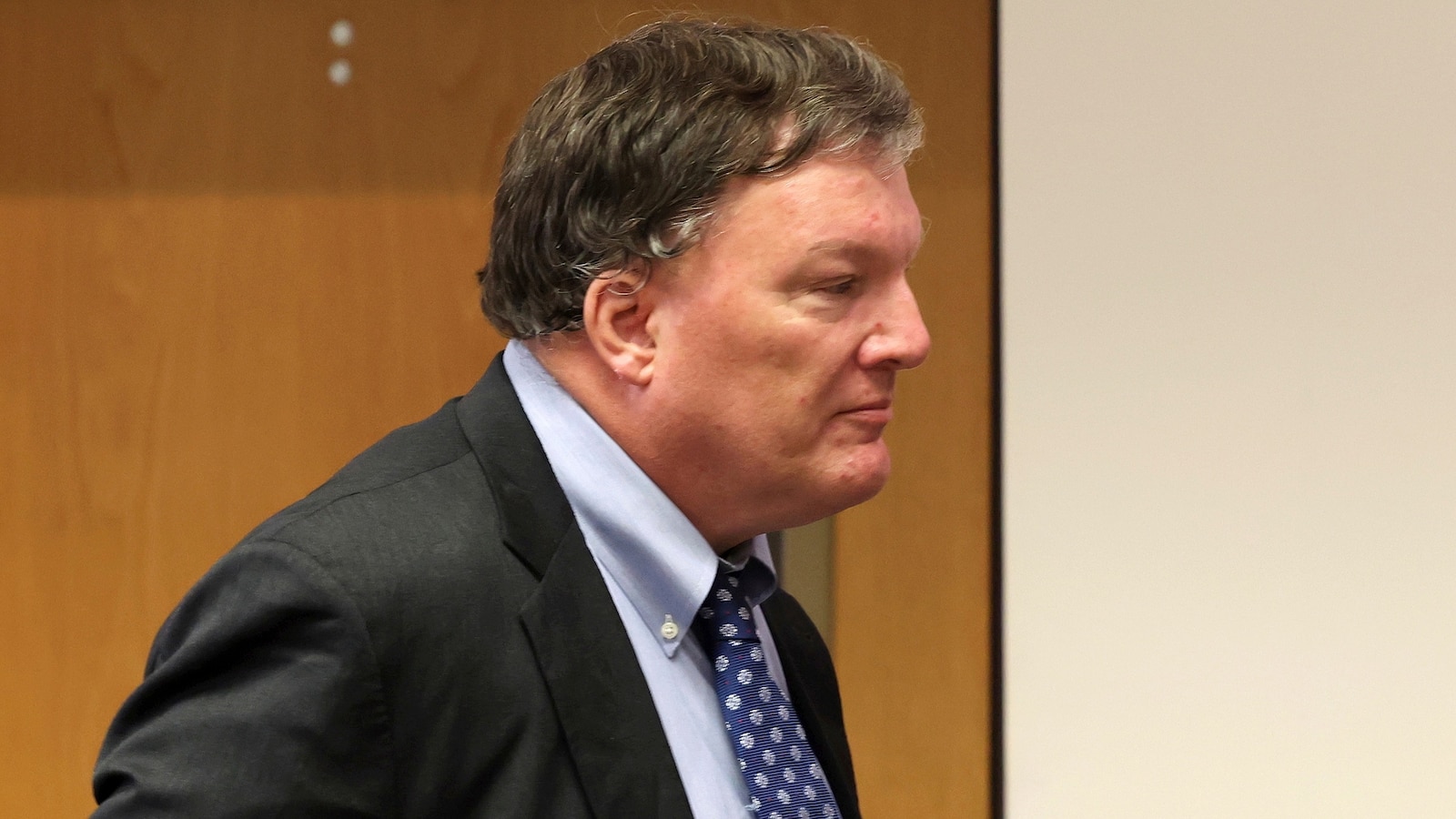
In a stunning development in one of Long Island's most notorious unsolved cases, sources close to the investigation say that Rex Heuermann, the architect accused of being the Gilgo Beach serial killer, may change his plea to guilty when he appears in court next month. Heuermann, who has maintained his innocence since his arrest in July 2023, is scheduled to face a judge on April 8 in Suffolk County Supreme Court. According to sources familiar with the case who spoke to ABC News, the 60-year-old Massapequa Park resident could admit to the murders of seven women whose remains were discovered along Ocean Parkway near Gilgo Beach and other parts of Long Island between 1993 and 2011.
The Suffolk County District Attorney's Office, led by Raymond Tierney, has charged Heuermann with seven counts of murder in connection with the deaths. However, officials declined to comment on the potential plea change when reached by reporters. "We have no comment at this time," a spokesperson for the office told ABC News. Heuermann's attorney, Michael Brown, did not immediately respond to requests for comment on the reports.
The anticipation of a possible guilty plea was first reported by Newsday, which cited sources indicating that negotiations between the defense and prosecution have been ongoing. If Heuermann does enter a guilty plea, it would mark a dramatic turn in a case that has captivated the New York area for over a decade. He is currently being held without bail at the Riverhead Correctional Facility, where he has been since his initial arrest more than 20 months ago. His trial, originally set to begin shortly after Labor Day in September, could be derailed or expedited depending on the outcome of the April 8 hearing.
The Gilgo Beach murders, as they became known, first came to light in December 2010 when a police officer searching for a missing person stumbled upon a bundle of human remains wrapped in burlap near Gilgo Beach on Long Island's South Shore. Over the following days, search teams uncovered the bodies of 10 individuals, including four Asian male sex workers and a toddler, but the focus quickly shifted to the four young women—dubbed the "Gilgo Four"—who appeared to have been victims of a serial killer. The remains of these women, all in their 20s and working as escorts, were found within a quarter-mile stretch of the beach.
Investigators later linked additional remains found in nearby areas to the same perpetrator. The first victim identified in the broader series was Sandra Costilla, a 28-year-old woman whose partial remains were discovered in North Sea, Long Island, in November 1993. Costilla had been reported missing from her home in Queens earlier that year. According to autopsy reports, she had been strangled, a method consistent with several of the later victims.
Valerie Mack, a 24-year-old Pennsylvania native, was killed in 2000, with her partial remains found in Manorville in 2000 and additional bones discovered near Gilgo Beach in 2011. Mack had moved to New York City to pursue modeling but struggled with addiction and sex work. Her identification came years later through DNA analysis, closing a long-cold case.
Jessica Taylor, 20, from London, was another early victim, murdered in 2003. Her torso was found in Manorville that July, and her head, hands, and forearm turned up near Gilgo Beach in 2011. Taylor had come to the U.S. on a work visa and was working in the sex trade. Like Mack, her case was solved through advanced forensic techniques.
The timeline of the killings accelerated in the late 2000s. Maureen Brainard-Barnes, 25, from Norwich, Connecticut, vanished in July 2007 after placing calls to advertise escort services. Her skeletal remains were found near Gilgo Beach in 2010, wrapped in the same type of burlap used for the Gilgo Four.
The so-called Gilgo Four were killed in a tight window between 2009 and 2010. Megan Waterman, 22, from Scarborough, Maine, disappeared in June 2009 after traveling to New York for work. Her body was recovered near Gilgo Beach in 2010, bound and gagged. Melissa Barthelemy, 24, from Buffalo, went missing in July 2009; her remains were found similarly positioned. Amber Lynn Costello, 27, from North Babylon, was last seen in September 2010 entering a client's vehicle; her body was discovered days later near the beach.
Heuermann's arrest in July 2023 came after a years-long investigation involving DNA evidence, phone records, and witness tips. Authorities allege he used burner phones to contact the victims and disposed of their bodies along the remote parkway. Searches of his home yielded items like a bloody saw and hair samples matching victim profiles. He has pleaded not guilty to all charges and denied involvement through his legal team.
The case has drawn intense media scrutiny and public interest, partly due to its parallels with other high-profile serial killings and the initial investigative missteps. Early searches were hampered by the remote location and jurisdictional issues between local and state police. The task force formed in 2022, under District Attorney Tierney, reinvigorated the probe, leading to Heuermann's indictment.
Families of the victims have expressed mixed emotions over the years. While some welcomed the arrest as a step toward justice, others have criticized the pace of the investigation. In a 2023 statement, the family of Melissa Barthelemy said, "We have waited over a decade for answers, and while this is progress, true closure comes only with a conviction." Similar sentiments have been echoed by relatives of the other women, who described them as daughters, sisters, and friends lost too soon.
If Heuermann changes his plea, it could spare the families a lengthy trial, which was expected to last months and involve graphic testimony and evidence. Prosecutors have indicated they might pursue the death penalty if additional charges are filed, though New York's moratorium on capital punishment complicates that. A guilty plea would likely result in multiple life sentences, ensuring he spends the rest of his days behind bars.
Broader implications of the case extend to discussions on violence against sex workers and the vulnerabilities they face. Advocacy groups like the Sex Workers Outreach Project have highlighted how the women's professions may have delayed police response initially. The resolution, if it comes via plea, could provide some measure of accountability but also underscore ongoing challenges in protecting marginalized communities.
As the April 8 court date approaches, all eyes will be on Suffolk County Courthouse in Riverhead. Whether Heuermann maintains his not guilty plea or admits to the horrific crimes, the outcome will close a dark chapter in Long Island's history. For now, sources suggest a plea deal is on the table, but until it's official, the uncertainty lingers for victims' loved ones and the public alike.