WASHINGTON — As President Donald Trump escalates his rhetoric on foreign interventions, Republican leaders in Congress are showing scant interest in curbing his war powers, even after he ordered military strikes on Caracas and an operation that captured Venezuelan President Nicolás Maduro. The moves, which Trump has framed as necessary to address instability in the region, have drawn sharp rebukes from Democrats and a handful of Republicans, who argue that such actions require congressional approval under the Constitution and the 1973 War Powers Resolution.
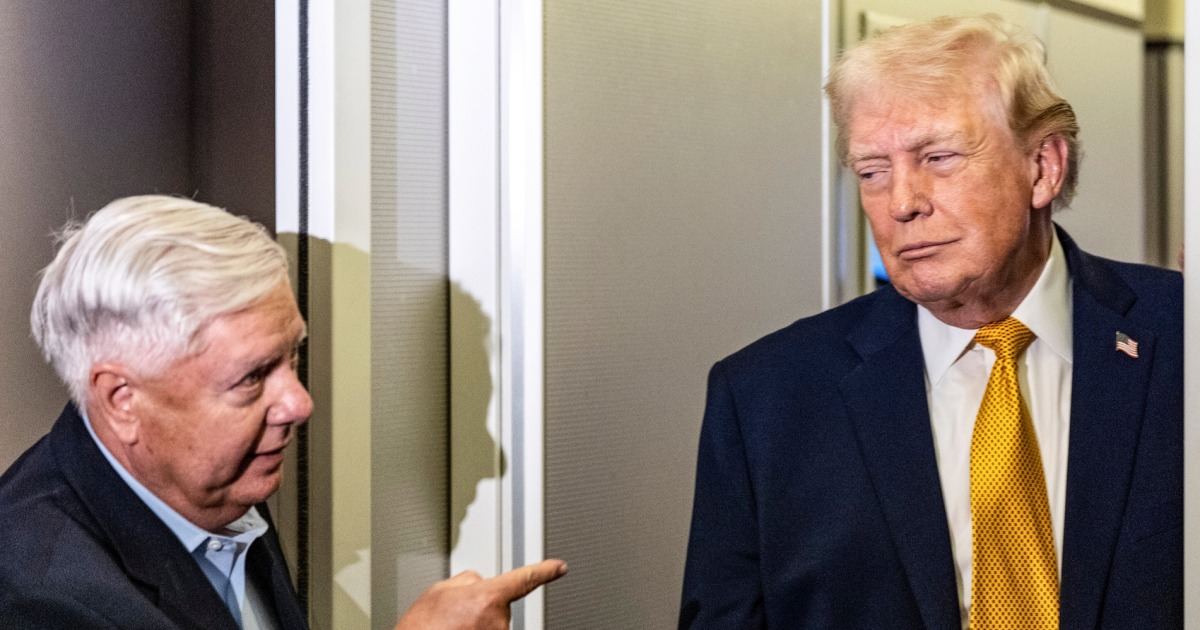
Sen. Lindsey Graham, a staunch Trump ally from South Carolina, delivered a blunt response Tuesday when asked if Congress would seek to limit the president's authority in this matter. “No,” Graham told NBC News, encapsulating the broader Republican reluctance to reclaim what many see as Congress's Article I prerogative to declare war. This stance comes amid Trump's increasingly provocative statements, including suggestions that the United States could "run" Venezuela, deploy ground troops there, and ensure the flow of its oil resources.
Trump's comments, made during a series of public appearances over the weekend, have heightened concerns among U.S. allies and opponents alike. On Saturday, speaking from the White House, the president declared that his administration is “not afraid of boots on the ground” in Venezuela. Later, aboard Air Force One, he warned of a “second wave” of action if Venezuela's next leaders fail to “behave,” while also targeting neighboring Colombia, saying it is “very sick, too.”
The president's taunts extended beyond South America. Regarding Iran, Trump stated, “If they start killing people like they have in the past, I think they’re gonna get hit very hard by the United States.” He further claimed that “Cuba is ready to fall” and reiterated his long-standing interest in annexing Greenland, mocking Denmark—a NATO ally—for its defense capabilities there. “We need Greenland from a national security situation,” Trump said, adding that Denmark had bolstered security in the territory with “one more dogsled.”
The White House has defended the Venezuela operation as a law enforcement matter rather than a military engagement requiring congressional sign-off. Officials argue that capturing Maduro, whom they describe as an illegitimate leader, falls under existing authorities to combat transnational crime and protect U.S. interests, including oil supplies vital to global markets. Top Republicans, who hold majorities in both the House and Senate, have echoed this support, emphasizing Maduro's role in regional instability without committing to further escalations.
Senate Foreign Relations Committee Chair Jim Risch of Idaho sidestepped questions about whether Trump would need permission for ground troops in Venezuela. “I don’t want to engage on that conversation right now,” Risch said, dismissing the president's rhetoric as mere suggestion. “There’s been suggestion that there would be boots on the ground.” Similarly, Sen. John Kennedy of Louisiana expressed having a “squillion” questions about the situation but repeatedly avoided affirming the need for congressional approval. “We’re a long way from boots on the ground,” Kennedy said. “And every circumstance is different.”
House Speaker Mike Johnson of Louisiana has backed Trump's actions, aligning with the GOP leadership's general deference to the executive on foreign policy. Senate Majority Leader John Thune of South Dakota went further in downplaying Trump's Greenland comments, stating, “I don’t see military action being an option there.” However, hours later, White House press secretary Karoline Leavitt contradicted Thune, asserting in a statement that military options remain on the table for acquiring the territory. “President Trump has made it well known that acquiring Greenland is a national security priority of the United States, and it’s vital to deter our adversaries in the Arctic region,” Leavitt said. She added that the president and his team are “discussing a range of options,” and “utilizing the U.S. Military is always an option at the Commander in Chief’s disposal.”
Democrats, led by Sen. Tim Kaine of Virginia, are mounting a vigorous challenge to Trump's approach. Kaine is spearheading a war powers resolution that could force a Senate vote as early as this week, aiming to restrain any escalation in Venezuela. On the Senate floor Tuesday, Kaine argued that the president's moves are “illegal,” stressing that “only Congress can declare war — or in the modern phrase contained in the 1973 War Powers Resolution, authorize the use of military force in hostilities.”
A narrow exception has been long understood: The president as commander-in-chief has the power and duty to defend the nation from ongoing or imminent attack without prior congressional approval. ... The administration has advanced no credible legal basis, under American or international law, to invade Venezuela, depose its leadership, seize its oil and run the country.
Senate Minority Leader Chuck Schumer of New York has thrown his weight behind Kaine's effort, noting that Democrats have secured commitments from some Republicans, including Sens. Rand Paul of Kentucky and Adam Schiff of California, though not enough for passage. “And it’s needed now more than ever with a reckless president,” Schumer told reporters Tuesday. “They don’t have any plans. You can’t do things that way. And so war powers act is extremely, extremely important.”
Not all Republicans are fully on board. Sen. Josh Hawley of Missouri voiced uncertainty about the Venezuela strategy during an interview this week, saying he is “hoping to get briefed tomorrow here. What is the situation on the ground? What are our objectives? What’s our policy going forward? I don’t have any idea on any of that stuff.” Hawley, who expects briefings Wednesday from Secretary of State Marco Rubio and Defense Secretary Pete Hegseth, appeared conflicted on whether Congress should intervene. “I just don’t know,” he said. “I need to hear from them.”
The Venezuela operation marks a significant escalation in U.S. involvement in the South American nation, which has been mired in economic crisis and political turmoil since Maduro's disputed 2018 reelection. The U.S. has long recognized opposition leader Juan Guaidó as Venezuela's legitimate interim president, imposing sanctions on Maduro's regime for human rights abuses and election fraud. Trump's decision to authorize strikes on Caracas and the capture of Maduro—reportedly executed in a joint operation with U.S. special forces last week—has been hailed by supporters as a bold stroke against authoritarianism but criticized as overreach by others.
Internationally, Trump's rhetoric has alarmed allies. European nations, including Denmark, have expressed unease over the Greenland comments, viewing them as a strain on NATO unity. In Latin America, countries like Colombia have urged de-escalation, fearing spillover effects from heightened U.S. military presence. The United Nations has called for restraint, with Secretary-General António Guterres warning Tuesday that unilateral actions could undermine multilateral efforts to resolve the Venezuelan crisis.
Domestically, the debate underscores ongoing tensions over executive power in foreign affairs, a issue that has simmered since the post-9/11 era. The 1973 War Powers Resolution, passed over President Richard Nixon's veto amid the Vietnam War, requires presidents to notify Congress within 48 hours of committing forces to hostilities and withdraw them within 60 days without authorization. Critics of Trump argue his Venezuela actions violate this framework, while the administration maintains they do not constitute “hostilities” under the law.
As the Senate weighs Kaine's resolution, the outcome remains uncertain given Republican control. If passed, it would signal a rare bipartisan check on presidential authority, potentially setting precedents for future interventions. Failure to advance could embolden Trump to pursue his broader foreign policy vision, including threats against Iran and ambitions in the Arctic, without legislative hurdles.
Looking ahead, briefings for lawmakers like Hawley could clarify U.S. objectives in Venezuela, where humanitarian needs are acute—over 7 million people have fled the country since 2015, according to United Nations estimates. With oil prices fluctuating amid the uncertainty, global markets are watching closely. Trump's administration has yet to outline a post-Maduro plan, leaving questions about governance, reconstruction, and U.S. involvement hanging. For now, the divide in Washington reflects deeper partisan fault lines on America's role in the world.