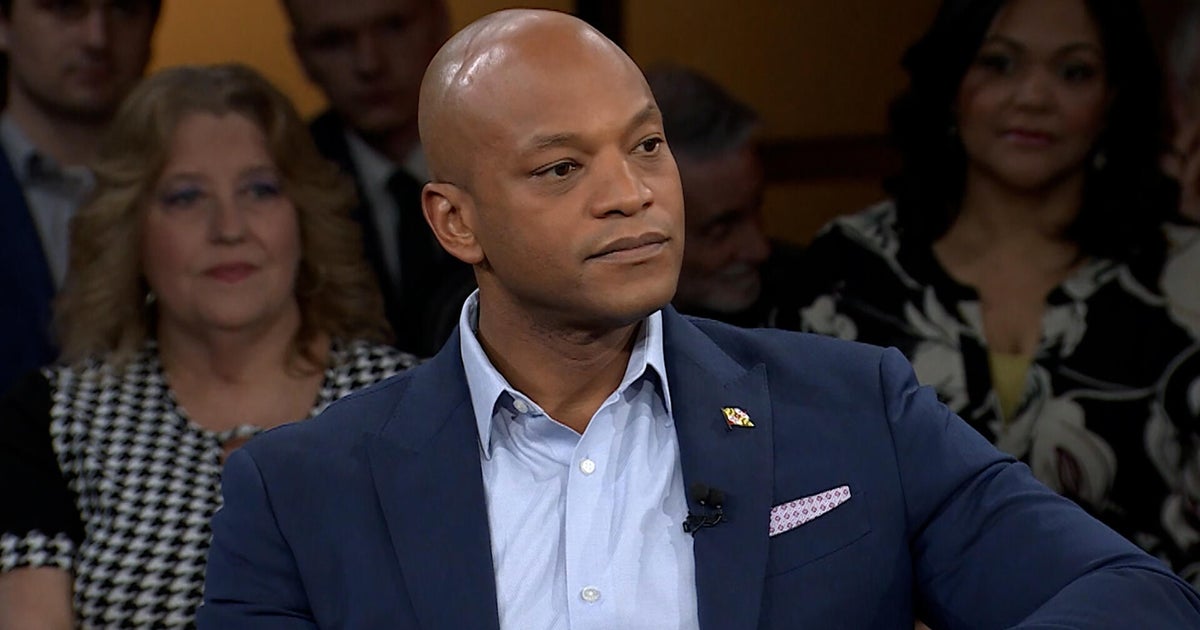
Maryland Governor Wes Moore stood his ground against a pointed remark from President-elect Donald Trump, asserting in a recent interview that he would "bow down to no one." The exchange highlights ongoing tensions between the Democratic governor and the incoming Republican administration, as Moore navigates state leadership amid national political shifts.
During an appearance on CBS Evening News with anchor Norah O'Donnell, Moore addressed Trump's comment labeling him as "not worthy." The president-elect made the statement on his Truth Social platform earlier this week, in response to Moore's criticism of Trump's proposed policies on immigration and federal funding for blue states like Maryland. Trump wrote, "Governor Wes Moore of Maryland is not worthy of my time or consideration," according to reports from multiple outlets covering the social media post dated December 15, 2024.
Moore, a rising star in the Democratic Party and the first Black governor of Maryland, did not mince words in his rebuttal. "I will bow down to no one," he told O'Donnell, emphasizing his commitment to independent governance. The governor, who was elected in 2022 with 64% of the vote, has positioned himself as a pragmatic leader focused on economic development and public safety in a state that leans heavily Democratic.
The spat appears to stem from Moore's public statements following Trump's victory in the November 5, 2024, presidential election. In a post-election address at the Maryland State House in Annapolis on November 7, Moore congratulated Trump but urged him to pursue unity, saying, "We need a president who brings us together, not divides us further." Trump, known for his combative style on social media, responded days later with the "not worthy" dismissal, which allies of the governor described as an attempt to undermine Democratic opposition.
White House transition officials have not commented directly on the exchange, but sources close to the president-elect indicated that Trump's post was part of a broader pattern of calling out critics. According to a spokesperson for the Trump transition team, reached by phone on December 17, "The president-elect speaks his mind freely, and Governor Moore's remarks were seen as partisan attacks on his agenda." This perspective underscores the divide, with Republicans viewing Moore's comments as resistance to Trump's mandate after securing 312 electoral votes.
Maryland, with its population of over 6 million and a gross state product exceeding $400 billion, relies heavily on federal funding, particularly for defense and health programs. Moore has warned that Trump's proposals to cut federal spending could impact key initiatives, such as the $1.2 billion Chesapeake Bay restoration effort, a bipartisan project dating back to 1983. In his CBS interview, the governor elaborated, "Maryland will continue to fight for our interests, regardless of who occupies the White House."
Political analysts offered varied interpretations of the feud. Dr. Elena Ramirez, a professor of political science at the University of Maryland, College Park, noted in an email to The Appleton Times that "this is classic Trump: using social media to personalize political disagreements. Moore's response shows he's not backing down, which could boost his national profile ahead of 2028." Ramirez, who has studied gubernatorial responses to federal shifts, pointed to similar clashes during Trump's first term, when then-Governor Larry Hogan, a Republican, occasionally diverged from White House directives.
On the other side, Maryland Republican Party Chair Scott Presler praised Trump's directness in a statement released December 16. "Governor Moore needs to remember that Maryland voters, including many in red counties like Allegany and Garrett, supported Trump. His snub is a wake-up call," Presler said. The state GOP, which holds slim majorities in some legislative districts, sees the exchange as an opportunity to rally support for federal policies favoring deregulation and tax cuts.
Moore's tenure has not been without challenges. Elected on a platform of healing post-COVID recovery, he has overseen a 5% drop in violent crime in Baltimore since 2023, according to state police data released in October 2024. However, critics, including Trump supporters, have accused him of being soft on issues like education funding, where Maryland ranks 10th nationally in per-pupil spending at $17,000 annually, per the U.S. Census Bureau.
The governor's military background adds another layer to his stance. A U.S. Army veteran who served in Afghanistan and rose to the rank of captain, Moore often draws on his experience to frame his leadership. In the O'Donnell interview, he referenced this, stating, "I've served my country under fire; politics won't change that resolve." This personal narrative resonates with Maryland's diverse electorate, which includes significant veteran communities in areas like Montgomery and Prince George's counties.
As the January 20, 2025, inauguration approaches, questions linger about how this rift might affect interstate cooperation. Maryland shares borders with Virginia and Pennsylvania, both with Democratic governors—Glenn Youngkin (Republican) in Virginia and Josh Shapiro in Pennsylvania—creating a mixed regional dynamic. Officials in Annapolis said Moore plans to attend Trump's inauguration, signaling a willingness for dialogue despite the barbs.
Broader implications extend to national Democratic strategy. With figures like Moore, who at 46 is among the youngest governors, the party is grooming potential 2028 contenders. His firm response to Trump could position him as a counterweight to the GOP's dominance, especially in swing states. A recent poll by the Washington Post on December 18 showed Moore's approval rating at 58% in Maryland, up from 52% pre-election.
Trump's team, meanwhile, is focused on assembling his cabinet, with announcements expected weekly. The "not worthy" comment fits into a series of social media posts targeting opponents, including California Governor Gavin Newsom and New York Mayor Eric Adams. According to media trackers, Trump posted over 50 times on Truth Social in the week following the election, amplifying his messaging.
For Maryland residents, the exchange underscores everyday concerns. In Baltimore, where unemployment hovers at 5.2% as of November 2024 Bureau of Labor Statistics data, locals expressed mixed views. "Moore's right to stand up, but we need jobs, not drama," said community organizer Jamal Hayes in an interview outside City Hall on December 17.
Looking ahead, Moore's office announced plans for a January 10 economic summit in Annapolis to address federal policy impacts. The event, expected to draw 500 attendees including business leaders from the Port of Baltimore—which handles 1.3 million containers annually—aims to forge paths forward. As one aide put it, "We're preparing for all scenarios."
In the end, this episode reflects the polarized landscape post-2024 election, where personal jabs often eclipse policy debates. Governor Moore's declaration of independence sets the tone for his second year in office, promising a vigilant watch over Maryland's interests amid national turbulence.