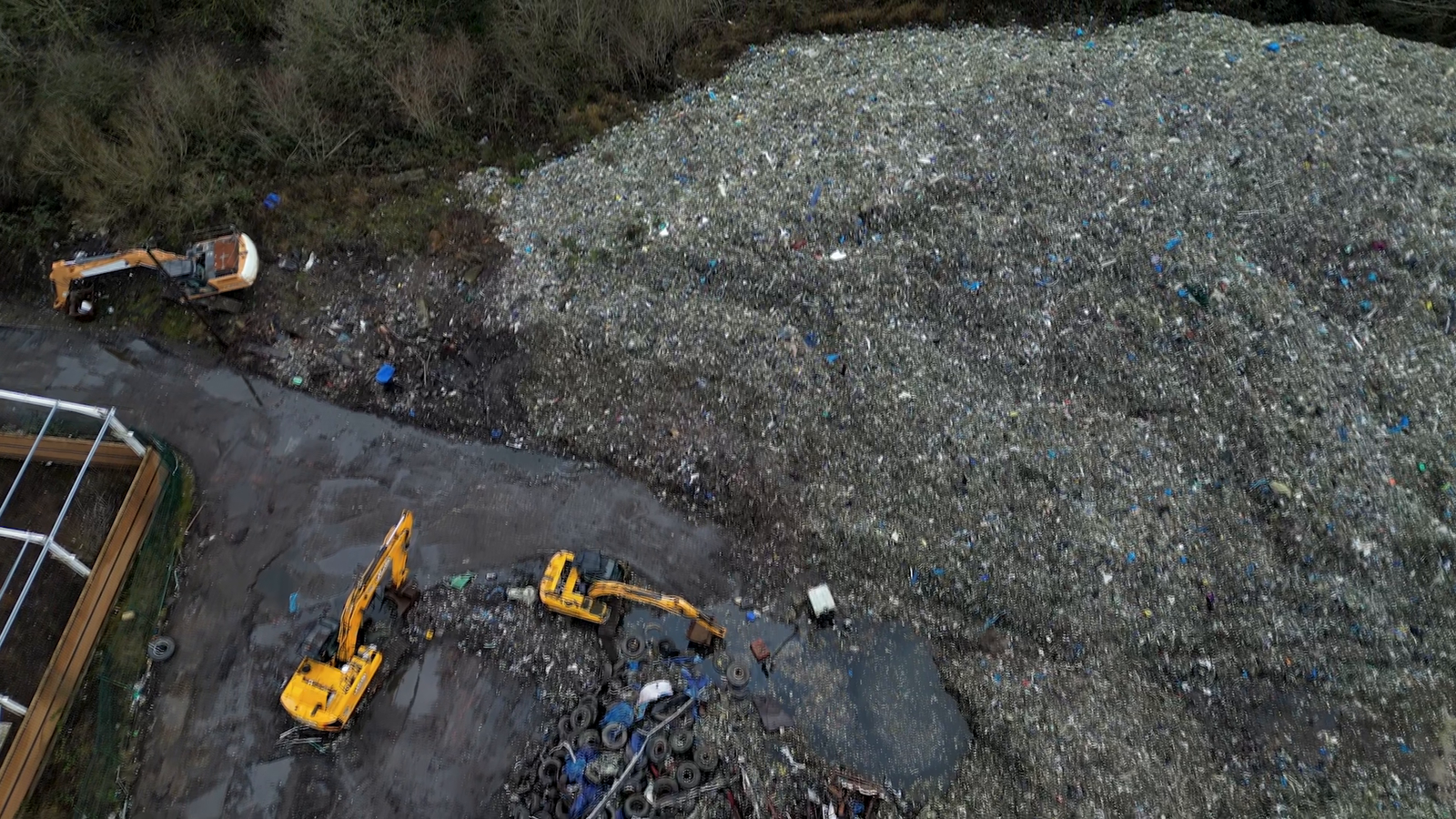
In a move aimed at addressing long-standing concerns over illegal waste dumping, the UK government has announced direct funding to clear 48,000 tonnes of waste from illegal tips in the north of England, specifically in Wigan, Sheffield, and Lancashire. The decision comes amid criticism of a perceived north-south divide in tackling waste crime, following reports of communities feeling neglected by authorities. The funding is part of a broader initiative by the Department for Environment, Food and Rural Affairs (DEFRA) and the Environment Agency, described as the "toughest ever crackdown" on waste criminals.
The announcement follows Sky News investigations that spotlighted the plight of residents in Bickershaw, near Wigan, where illegal dumping has led to severe infestations of rats in local homes. Residents there expressed frustration, saying they felt abandoned by the Environment Agency despite repeated complaints. This contrasts with the government's earlier allocation of £9 million to clean up a similar waste site in Kidlington, Oxfordshire, in the south, prompting accusations of uneven resource distribution.
Secretary of State for the Environment, Food and Rural Affairs, Emma Reynolds, emphasized the urgency of the measures in a statement. "Waste criminals have been damaging our communities, countryside, environment and economy for too long," she said. "This action plan sends a clear message: dump illegally and you will face the full consequences." The plan includes funding for the immediate clear-up of the northern sites, with an estimated cost not yet specified but aligned with the £20 million already committed to southern sites like Hoad's Wood in Kent and the Kidlington location.
At the heart of the initiative is a 10-point plan unveiled by the Environment Agency, focusing on enhanced enforcement and prevention. Key elements include faster handling of intelligence, more consistent and quicker responses to reports of dumping, and a policy of naming and shaming operators involved in waste crime. Officials also plan to create "clean-up squads," where fly-tippers caught by local authorities could receive conditional cautions requiring them to clean up waste sites unpaid for up to 20 hours.
To bolster detection efforts, the Environment Agency has introduced a new drone squad equipped with advanced technology. Sky News was granted exclusive access to the unit, which features 33 pilots operating drones fitted with lasers, thermal imaging, and high-resolution cameras. James Burton, one of the pilots, highlighted the technology's potential: "It can be used very effectively for evidence gathering, the photographs we can take from the sky. It paints the picture of the significant level of impact this has had on the countryside and it enables us to better sell the story to a jury and the judge."
Steve Molyneux, the Environment Agency's director of environment and business, underscored the collaborative approach to combating organized crime networks behind the dumping. "My message to the criminals is we'll be working with our partners at the police, HMRC and local authorities and we'll all be bearing down and coming after you," he said. Molyneux also stressed the importance of early intervention: "As soon as we're in there, we can use things like restriction orders to stop activity virtually immediately on site, so the more we can work with people to get that early detection the more we can work on prevention."
The measures extend to new enforcement powers for Environment Agency officers, modeled after police procedures. These include the ability to seize assets, search premises without a warrant, and suspend or revoke permits for those caught offending. Additionally, a dedicated unit will coordinate intelligence gathering to identify and disrupt criminal operations more effectively.
Despite the ambitious plans, skepticism persists among some stakeholders. Local residents in affected areas, such as Bickershaw, have reported making multiple alerts to authorities about suspicious activities, only to see dumps grow unchecked until they become massive, costly problems. The criminals, often organized gangs, reportedly view the sites as highly profitable alternatives to paying landfill taxes, with one senior waste industry executive describing the situation to Sky News as the "easiest fraud opportunity ever." The executive dismissed the new plans as "hilarious," suggesting that gangs believe they can continue operations with minimal risk.
The Environment Agency acknowledged challenges in its current approach when pressed on past shortcomings. Officials admitted there have been "challenges" in responding promptly, but insisted that the 10-point plan addresses these issues head-on. The agency is urging the public to play a vital role by reporting suspicious activities, positioning communities as the "eyes and ears on the ground" to enable swifter action.
Baroness Sheehan, chair of the House of Lords Environment and Climate Change Committee, offered a measured response to the announcements. She welcomed the additional enforcement powers and budget but cautioned that success depends on implementation. "As our initial inquiry found, the Environment Agency has had sufficient powers in the past to stop the illegal dumping of waste across the country but has failed to use them," she said. "The apparent additional enforcement powers and budget afforded to them today means it is time for them to step up to the plate. The Committee looks forward to questioning Philip Duffy, the chief executive of the Environment Agency, next week about how he plans to deliver effective regulation and enforcement."
The broader context of waste crime in the UK reveals a persistent issue, with illegal dumping sites proliferating due to the high costs of legitimate disposal. Landfill taxes make it economically attractive for criminals to either inconspicuously dump waste or purchase cheap land and gradually fill it with tens of thousands of tonnes. The northern sites targeted for clean-up— in Wigan, Sheffield, and Lancashire—represent just a fraction of the problem, but the funding is seen as a direct response to public and media pressure highlighting regional disparities.
Earlier this week, DEFRA outlined complementary actions, including the clean-up squads and enhanced intervention protocols. These build on ongoing efforts, such as the £20 million investment in southern clean-ups, which have already begun at Hoad's Wood and Kidlington. However, critics argue that reactive clean-ups, no matter how well-funded, do little to prevent the initial crimes, especially when perpetrators vanish before authorities arrive.
Looking ahead, the success of these measures will likely hinge on inter-agency coordination and public engagement. The Environment Agency's drone technology and intelligence unit could provide a technological edge, but as Baroness Sheehan noted, the real test will be in execution. With the House of Lords committee set to grill agency leadership next week, further scrutiny is expected to ensure the plans translate into tangible reductions in waste crime.
For communities like Bickershaw, the immediate relief of funded clean-ups offers hope after years of blight. Yet, the underlying profitability of illegal dumping means that without sustained enforcement, new sites could emerge elsewhere. As the government pushes forward with its crackdown, the north-south funding balance appears to be shifting, potentially easing tensions over regional inequities in environmental protection.
In total, this initiative represents a multifaceted assault on a crime that has long evaded robust action, blending technology, policy reform, and community involvement. Whether it proves to be the decisive blow against waste criminals remains to be seen, but for now, it signals a renewed commitment to safeguarding the environment and public health across England.