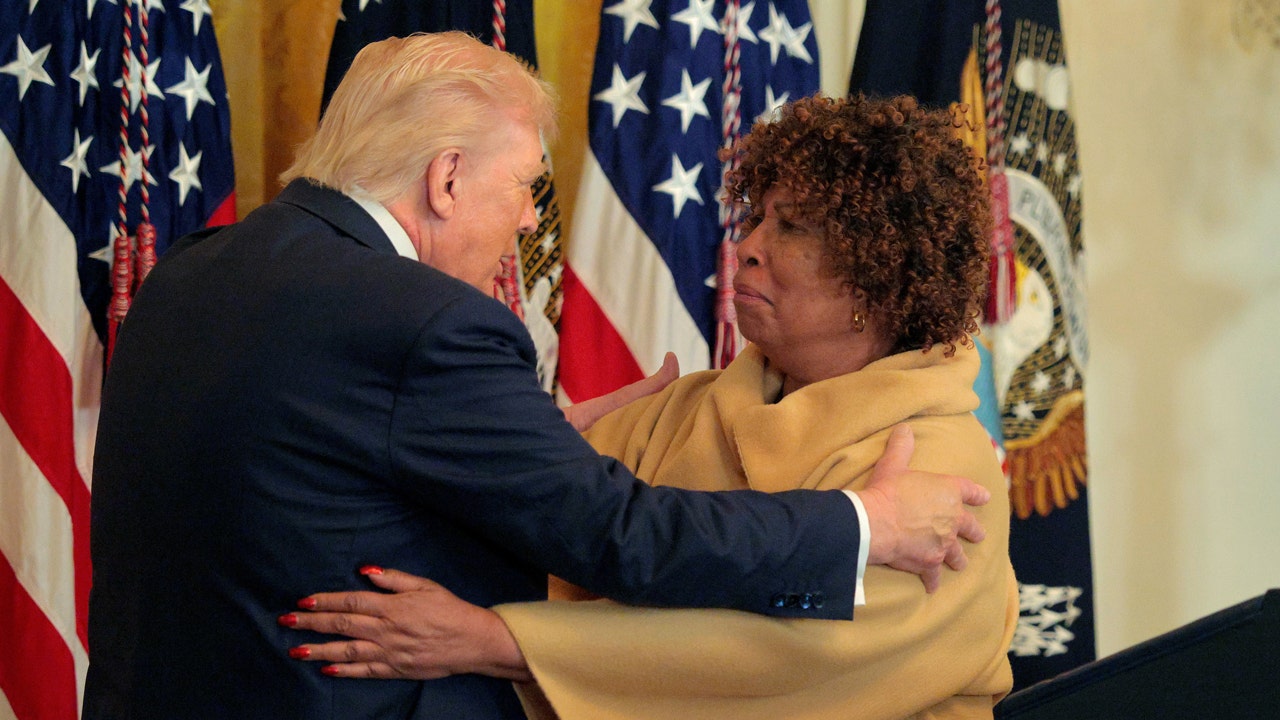
WASHINGTON, D.C. — A grieving grandmother from the nation's capital made headlines this week by delivering a passionate defense of President Donald Trump during a White House Black History Month celebration, urging voters to prioritize issues over partisan loyalty amid rising concerns about urban crime.
Forlesia Cook, a Washington, D.C., resident who lost her 22-year-old grandson to gun violence in 2017, spoke out against critics labeling the president as racist. During the event on Wednesday, Cook declared, "I love him. I don’t want to hear nothing you got to say about that racist stuff." She added, "And don’t be looking at me on the news, hating on me because I’m standing up for somebody that deserves to be stand up for. Get off the man’s back. Let him do his job. He’s doing the right thing. Back up off him."
Cook's remarks came as part of the White House's annual Black History Month observance, an event that highlights African American achievements and contributions. The gathering, held in the East Room of the White House, featured speeches and performances celebrating Black history. Cook, invited as a community advocate, used the platform to share her personal story and advocate for tougher crime measures.
Her grandson, Marty William McMillan Jr., was shot multiple times and his body was discovered dumped on the side of a Maryland highway months after his death in 2017. According to court records, the perpetrator was convicted of voluntary manslaughter and sentenced to 16 years in prison seven years later, in what Cook described as a hard-fought victory for justice. "It was really awesome that they took interest enough in my grandson's case to hear about it because that's what I rally for, that's what our protest [was] for, that's what I stood up for – for the laws to change," Cook said in an interview. "The laws need to change."
Appearing on Fox News' "Hannity" program the following evening, Thursday, Cook elaborated on her support for Trump's policies, particularly his initiatives to combat crime in Democrat-led cities like Washington, D.C. She praised the president's efforts to reduce violence in the capital, noting that recent statistics show a decline in certain crime categories under federal intervention. "I see his vision," Cook told host Sean Hannity. "I know that what he's doing, a lot of people are looking at it in the wrong aspect. But tell me this, will you look at it different if it was your loved one that's murdered, and you didn't get justice?"
Cook's advocacy stems from her own experiences with the criminal justice system. After McMillan's murder, she organized protests and rallies calling for legislative reforms to ensure faster investigations and prosecutions in gun violence cases. The delay in finding her grandson's body and bringing the killer to trial underscored what she sees as systemic failures in urban areas plagued by crime. Washington, D.C., has long grappled with high rates of homicides and shootings, with the Metropolitan Police Department reporting over 200 murders in recent years, though officials credit federal partnerships with Trump for some improvements.
In her "Hannity" appearance, Cook issued a broader call to action for voters across the country. "Stop voting for party," she said. "Vote for causes, vote for those that you see are making changes, the right changes that are keeping us safe." She emphasized unity over division, stating, "When I vote for someone, I vote for the issues. I vote for the causes; I stand up for the causes, and we need to get over parties and races."
This message resonates amid ongoing national debates about crime and policing, especially in cities like Chicago and Baltimore, where violence has drawn federal attention. For instance, a Chicago family, whose teenage son was killed in their backyard, has publicly called on Trump to deploy troops to curb what they describe as a "war zone." Cook's comments echo similar sentiments from other affected families who support the president's tough-on-crime stance, including proposals for increased federal law enforcement presence in high-crime areas.
Trump's administration has highlighted successes in Washington, D.C., where crime rates have reportedly dropped in key areas following the implementation of stricter enforcement measures. According to White House officials, these efforts include enhanced cooperation between local police and federal agencies, leading to more arrests and convictions. Cook credited these changes with giving her hope for future justice in similar cases.
Critics of Trump's approach, however, argue that his rhetoric on crime sometimes exacerbates racial tensions and overlooks root causes like poverty and inequality. Civil rights groups have pointed to the president's past statements as divisive, though Cook dismissed such characterizations during the Black History Month event. She maintained that personal loss has made Trump's policies clear to her, regardless of political labels.
The timing of Cook's speech, during Black History Month in February, adds layers to the discussion. The month-long observance commemorates the struggles and triumphs of African Americans, from slavery to the civil rights movement. Events like the White House celebration often feature diverse voices, but Cook's unapologetic support for Trump stood out, drawing both praise and backlash on social media.
Supporters of Cook celebrated her courage, with some online commentators echoing her call to transcend party lines. "And grandma said it!" one viral post exclaimed, referencing her emphatic defense. Others, however, questioned the appropriateness of politicizing a cultural event, though no official response from White House organizers has been reported.
As the 2020 election cycle heats up, Cook's story highlights the intersection of personal tragedy and national policy. With crime remaining a top concern for many voters, particularly in urban communities, her plea for issue-based voting could influence discussions in swing districts. Polls indicate that safety and justice reforms are key priorities for Black voters, a demographic where Trump has sought to make inroads.
Looking ahead, Cook plans to continue her advocacy through community organizing and public speaking. She hopes her grandson's case will inspire broader changes in how gun violence is addressed nationwide. "The tragedy of losing her grandson makes Trump's plan clear to her," as she put it, underscoring a vision for safer streets that she believes transcends political divides.
In a divided political landscape, voices like Cook's remind observers of the human stakes in policy debates. Whether her message sways voters remains to be seen, but it has already sparked conversations about loyalty, justice, and the future of American cities.