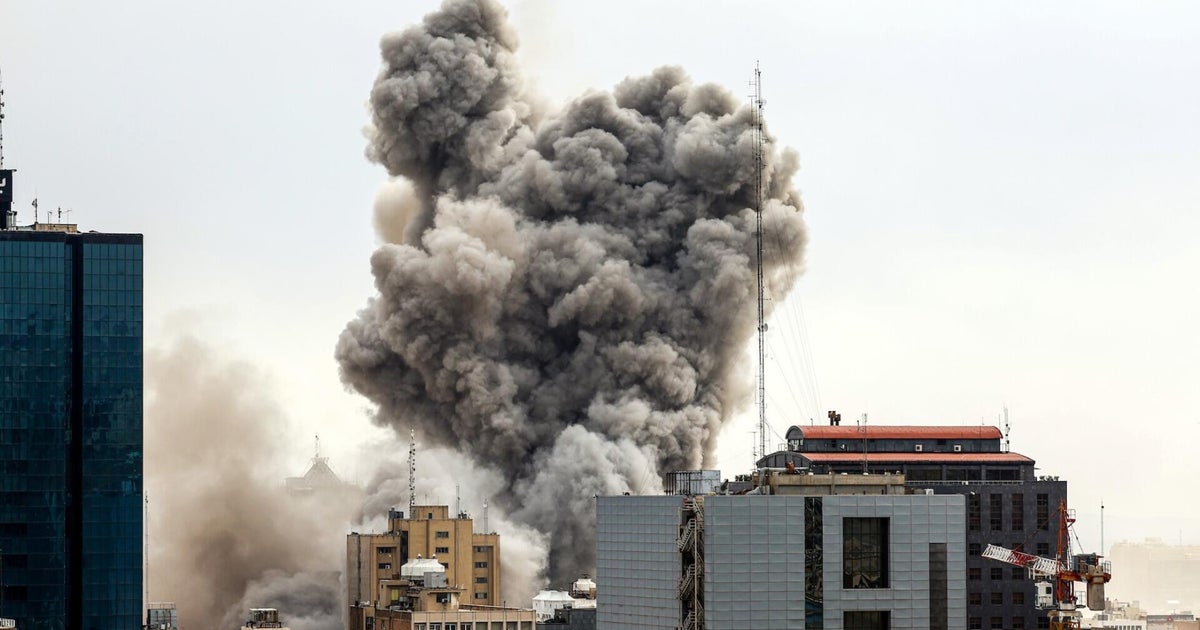
RIYADH, Saudi Arabia — Six major Gulf nations, long known for their cautious diplomacy in the volatile Middle East, are signaling a potential shift away from neutrality in the escalating conflict between the United States, Israel, and Iran. Officials from these countries have sharply criticized Tehran's recent military actions as "reckless and indiscriminate," according to a report from CBS News. This development comes amid heightened tensions following a series of Iranian missile strikes that have targeted regional infrastructure, prompting fears of broader involvement from America's traditional allies in the Persian Gulf.
The nations in question—Saudi Arabia, the United Arab Emirates, Qatar, Kuwait, Bahrain, and Oman—have historically balanced relations with both Washington and Tehran to safeguard their economic interests, particularly in oil production and trade routes through the Strait of Hormuz. However, the latest Iranian attacks, which reportedly began intensifying on October 15, 2023, have tested this delicate equilibrium. According to Gulf diplomats speaking anonymously to international media, the strikes have damaged key oil facilities in eastern Saudi Arabia and disrupted shipping lanes near the UAE's ports, leading to an estimated $2.5 billion in preliminary economic losses across the region.
"Iran's actions represent a dangerous escalation that threatens the stability of the entire Gulf," said Saudi Foreign Minister Prince Faisal bin Farhan Al Saud in a statement released on October 20, 2023, from Riyadh. The minister's remarks echoed sentiments expressed by UAE President Sheikh Mohamed bin Zayed Al Nahyan during a virtual summit of Gulf Cooperation Council (GCC) leaders earlier that week. "We cannot stand idly by as our sovereignty and economic lifelines are put at risk," Sheikh Mohamed added, according to a palace readout of the meeting.
The context for this potential realignment traces back to the broader U.S.-Israel campaign against Iran, which intensified following the October 7, 2023, Hamas attacks on Israel and subsequent Iranian support for proxy groups like Hezbollah and the Houthis in Yemen. U.S. forces, alongside Israeli airstrikes, have targeted Iranian nuclear sites and military bases since mid-September 2023, according to Pentagon briefings. Iran, in response, has launched over 150 ballistic missiles toward Israeli territory and U.S. bases in Iraq and Syria, with several volleys spilling over into Gulf airspace, officials said.
Reports from CBS News highlight that the Gulf states' frustration stems from what they describe as Tehran's disregard for international norms. "The attacks were not just aimed at our adversaries but have indiscriminately affected civilian and commercial areas," a Qatari foreign ministry spokesperson told reporters in Doha on October 18, 2023. This accusation aligns with eyewitness accounts from the UAE's Fujairah port, where a missile fragment struck a commercial tanker on October 16, injuring three crew members and causing a brief oil spill into the Gulf of Oman.
While the Gulf nations have not yet committed to direct military involvement, diplomatic cables leaked to Western media suggest coordination with U.S. Central Command for enhanced air defense support. Kuwaiti Prime Minister Sheikh Ahmad Nawaf Al Ahmad Al Sabah confirmed on October 21, 2023, that his country is "reviewing all options" to protect its borders, including potential joint exercises with American and Israeli forces. Bahrain, home to the U.S. Navy's Fifth Fleet, has already increased patrols in the Persian Gulf, with reports of F-35 jets from the USS Abraham Lincoln carrier group conducting flyovers near Iranian waters.
Oman, traditionally the most neutral of the group and a mediator in U.S.-Iran talks, appears to be the outlier. Omani Foreign Minister Badr Albusaidi stated in a Muscat press conference on October 19, 2023, that his nation "remains committed to dialogue and de-escalation." This stance contrasts with the more hawkish tones from Riyadh and Abu Dhabi, illustrating the varied perspectives within the GCC. "While we share concerns about Iranian aggression, Oman prioritizes humanitarian channels," Albusaidi said, referencing ongoing backchannel communications with Tehran.
Experts on Middle East affairs have noted the significance of this moment. "The Gulf's pivot could dramatically alter the balance of power, providing the U.S. and Israel with crucial logistical support," said Aaron David Miller, a senior fellow at the Carnegie Endowment for International Peace, in an interview with CBS News. Miller pointed to historical precedents, such as the Gulf states' tacit backing of the U.S.-led coalition during the 1991 Gulf War, when Iraq's invasion of Kuwait drew them into open alliance.
From Iran's perspective, the attacks are framed as defensive measures. Iranian Supreme Leader Ayatollah Ali Khamenei addressed the nation on October 17, 2023, via state television, declaring that "any aggression against the Islamic Republic will be met with a proportionate response to safeguard our sovereignty." Iranian Foreign Ministry spokesperson Nasser Kanaani further accused the Gulf states of "complicity with Zionist and American imperialists," claiming that the missile interceptions over Gulf airspace were unprovoked provocations by U.S. allies.
U.S. officials have welcomed the Gulf rhetoric but stopped short of confirming any formal alliances. White House Press Secretary Karine Jean-Pierre said during a briefing on October 22, 2023, "We appreciate our partners' resolve in the face of Iranian threats and are in close consultation to ensure regional security." Israeli Prime Minister Benjamin Netanyahu echoed this in a Knesset address, thanking the Gulf leaders for their "moral clarity" without specifying military commitments.
The economic ramifications are already evident. Oil prices surged to $95 per barrel on the New York Mercantile Exchange following the latest strikes, up 15% since early October 2023, according to Bloomberg data. Gulf exporters, which supply about 20% of global crude, fear prolonged disruptions could exacerbate inflation worldwide. In Qatar, the world's top liquefied natural gas producer, exports to Europe have been rerouted to avoid Iranian-claimed waters, delaying shipments by up to 72 hours.
Humanitarian concerns are mounting as well. The United Nations Office for the Coordination of Humanitarian Affairs reported on October 20, 2023, that over 5,000 civilians in border areas of Iraq and Syria have been displaced due to crossfire from the U.S.-Israel operations, with indirect effects rippling into Gulf migrant worker communities. Witnesses in Bahrain's Manama described air raid sirens blaring for the first time in decades during an Iranian drone incursion on October 14, 2023.
As the conflict enters its second month, the Gulf nations' deliberations continue behind closed doors. A GCC summit scheduled for November 5, 2023, in Abu Dhabi is expected to formalize a unified response, potentially including sanctions on Iranian oil or shared intelligence with NATO allies. "This is a crossroads for the region," noted UAE Ambassador to the UN Lana Nusseibeh in a New York address on October 21, 2023. "Neutrality in the face of such threats is no longer viable."
Looking ahead, analysts warn that full Gulf engagement could draw in other powers, including Russia and China, which have deepened ties with Iran through arms deals and economic pacts. The U.S. State Department has urged restraint, emphasizing diplomatic off-ramps like renewed nuclear talks under the Joint Comprehensive Plan of Action framework. Yet, with Iranian missiles reportedly amassing near the Strait of Hormuz—through which 21 million barrels of oil pass daily—the window for de-escalation appears narrow.
For residents of the Gulf, the shift feels palpable. In Dubai's bustling souks, traders like Ahmed Al-Mansoori expressed anxiety over the uncertainty. "We've always traded with everyone, but now it feels like war is at our doorstep," Al-Mansoori said in an interview on October 23, 2023. As the sun sets over the Persian Gulf, the question remains: will these nations' words translate into action, reshaping alliances in one of the world's most oil-rich corners?