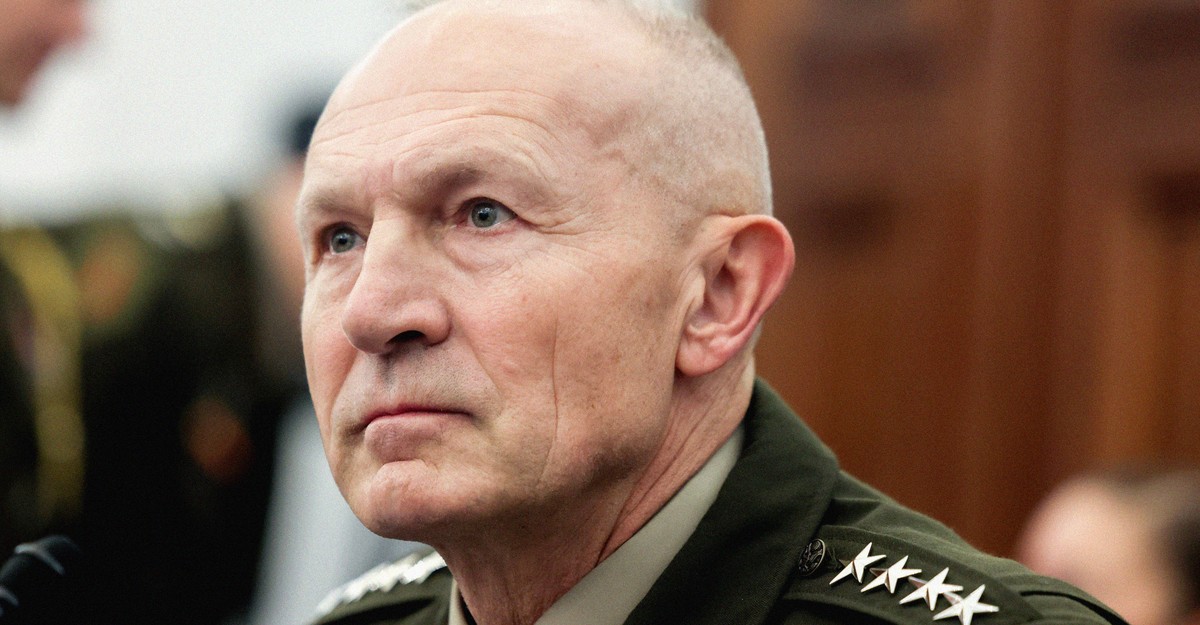
In a move that has stunned military observers, Secretary of Defense Pete Hegseth dismissed General Randy George, the U.S. Army's top officer, along with two other senior generals on Thursday, amid ongoing U.S. military engagements overseas. George, who served as the Army Chief of Staff and was expected to remain in the position until 2027, was a decorated combat veteran with no public record of conflict with Hegseth. The firings also included four-star General David Hodne and Major General William Green Jr., the Army's senior chaplain, marking the latest in a series of high-level dismissals within the Pentagon.
The Defense Department provided no official explanation for the dismissals, leaving questions swirling about the motivations behind what some describe as a rolling purge of senior Army leadership. According to sources familiar with the matter, the actions target officers perceived as close to Army Secretary Dan Driscoll, with whom Hegseth has reportedly clashed repeatedly. This comes at a precarious time, as U.S. forces are deeply involved in conflicts abroad, including an escalating war in Iran that has drawn thousands of American troops into potential combat zones.
Hegseth, a former Fox News host and Army National Guard veteran, assumed the role of Secretary of Defense following the 2024 election victory of President Donald Trump. His tenure has been marked by efforts to reshape the military's leadership, often focusing on what he has described as an overemphasis on diversity, equity, and inclusion (DEI) initiatives. Early in his appointment, Hegseth pushed for the removal of General C.Q. Brown, the Chairman of the Joint Chiefs of Staff, who is Black, and oversaw the dismissal of several female military leaders, replacing them with male officers.
These recent firings appear to extend that pattern. Reports indicate that Hegseth has intervened in promotion lists, recently removing four colonels—two Black men and two women—from consideration for advancement to brigadier general. NBC News has reported that this could be just the beginning, with Hegseth allegedly canceling promotions across multiple services for at least a dozen minority and female officers. Pentagon officials, speaking to The New York Times, described the actions as "the product of Mr. Hegseth’s long-running grievances with the Army, battles over personnel and his troubled relationship" with Driscoll.
The tensions between Hegseth and the Army trace back to his own military service, which he detailed in his 2024 book. There, Hegseth wrote that the service "spit me out," reflecting on what he portrayed as an undistinguished and shortened career that ended at the rank of major. Critics within the Pentagon have pointed to this personal history as fueling his aggressive approach to leadership changes, though Hegseth has not publicly commented on the latest dismissals.
One notable incident highlighting the politicization of military assets occurred when two Army helicopters flew low over a political rally before heading to the home of musician Kid Rock, a prominent supporter of the MAGA movement. The Army initially suspended the pilots and launched an investigation, but Hegseth intervened, halting the suspension and quashing the probe. Such actions have raised concerns about the blurring of lines between military operations and political activities.
The tone for these developments was arguably set by President Trump himself. Last June, during a visit to Fort Bragg—now known as Fort Liberty—Trump transformed what was intended as a military address into what observers called a political rally. Senior officers, including General George and Secretary Driscoll, remained publicly silent on the event, adhering to long-standing civil-military norms that discourage military personnel from engaging in partisan politics.
Despite these norms, Hegseth has frequently used his platform at the Pentagon to advocate for Trump and his right-wing evangelical beliefs. This has included public statements from the department's podium that blend defense policy with ideological messaging. Meanwhile, the Army's senior leaders, like George, have maintained discipline by keeping their perspectives out of the public domain, even as they face abrupt career endings.
The fired officers—George, Hodne, and Green—boast long and distinguished records of service, with no charges of wrongdoing or accusations of incompetence leveled against them. George, in particular, had no known public disagreements with Hegseth, making his dismissal all the more puzzling. As these individuals transition to civilian life, there is speculation that they may soon offer insights into the internal dynamics at the Pentagon.
Hegseth's relationship with Driscoll has been a flashpoint. Sources suggest that Driscoll's prominence during controversies, such as the so-called "Signalgate" scandal involving leaked communications, positioned him as a potential replacement for Hegseth. Additionally, last fall, Driscoll represented the Pentagon in a high-level delegation to Geneva aimed at negotiating an end to the Russia-Ukraine war—a trip that Hegseth did not join. According to reporting by The Washington Post's Ashley Parker and Sarah Fitzpatrick, Driscoll is now rumored to be the next senior appointee in line for dismissal.
Inside the Pentagon, frustration with Hegseth's leadership style has led to pointed nicknames, with some staff referring to him as "Dumb McNamara," a reference to the controversial Defense Secretary under President Lyndon B. Johnson. Critics argue that Hegseth has prioritized cultural and ideological battles over core defense priorities, especially as the U.S. navigates its most significant conflict in decades—the war in Iran.
The Iranian conflict, which erupted earlier this year, has seen rapid escalation, with U.S. troops deploying to regions comparable in size to Alaska but with a population exceeding three times that of North Korea. President Trump's most substantive public address on the war to date lasted just 19 minutes and was described by observers as consisting of "jumbled thoughts." As the conflict impacts global markets and erodes Trump's approval ratings, the internal turmoil at the Pentagon raises questions about readiness and focus.
Pentagon infighting is not new—generals have faced abrupt retirements from civilian leaders before—but the timing and scale of these purges are unprecedented during active hostilities. The American public, stakeholders in a military that represents national security interests worldwide, deserves transparency on why top officers are being removed without cause. With no formal charges or explanations forthcoming from the Defense Department, the firings underscore ongoing debates about civilian oversight of the armed forces.
Looking ahead, the implications of Hegseth's leadership could reshape the military's culture and effectiveness. As rumors swirl about further dismissals, including potentially Driscoll's, Congress and military advocacy groups may intensify calls for accountability. For now, the silence from the affected officers and the administration leaves much unanswered, but their eventual voices as civilians could shed light on the purges' true drivers.
In the broader context of Trump's second term, these events fit into a pattern of efforts to align federal institutions, including the military, more closely with MAGA priorities. While supporters view it as necessary reform, detractors see it as politicization that undermines apolitical traditions. As the U.S. confronts multiple global threats, the stability of its defense leadership remains a critical concern for policymakers and the public alike.