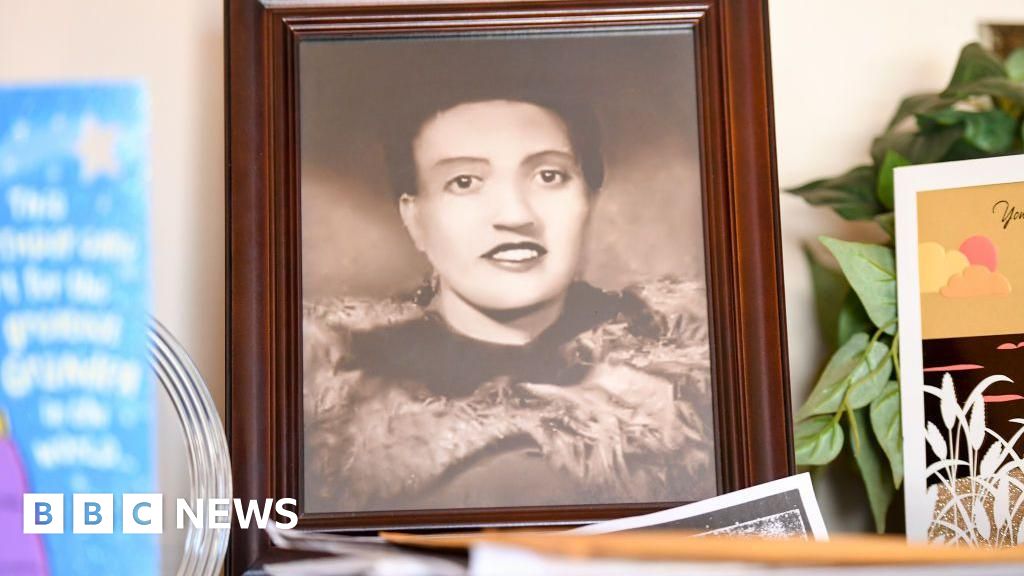
BALTIMORE, Maryland — The family of Henrietta Lacks, the Black woman whose cells were harvested without her consent more than 70 years ago, has reached a confidential settlement with Swiss biotech giant Novartis, marking the second major legal victory in their long fight for recognition and compensation.
The agreement, announced this week, resolves a lawsuit filed in Maryland state court accusing Novartis of profiting from Lacks' so-called "immortal" cells, known as HeLa cells, which have revolutionized medical research worldwide. Details of the settlement remain private, but a joint statement from the Lacks family and Novartis expressed mutual satisfaction with the out-of-court resolution.
"Members of the family of Henrietta Lacks and Novartis are pleased they were able to find a way to resolve this matter filed by Henrietta Lacks's estate outside of court," the statement read. "The terms of the agreement are confidential."
Ben Crump, the prominent civil rights attorney representing the family, told The New York Times that the settlement brings a sense of justice after decades of what he described as exploitation. "For the family and her grandchildren, this is certainly justice because people said they would never realize any benefit or compensation from her immortal HeLa cells, even though these pharmaceutical companies were profiting billions and billions of dollars," Crump said. He added that the agreement offers "some measure of justice, to offer respect and dignity to the life that was taken."
The case stems from events in 1951, when 31-year-old Henrietta Lacks, a tobacco farmer and mother of five from Baltimore, sought treatment at Johns Hopkins Hospital for abdominal pain and abnormal bleeding. Doctors diagnosed her with aggressive cervical cancer and, without her knowledge or permission, took a sample of her tumor cells during the examination.
Those cells, sent to a lab for research, behaved unlike any others: they multiplied indefinitely and did not age, earning them the label of "immortal." Named HeLa after Lacks' first and last initials, the cells were distributed to labs across the globe, forming the foundation for countless scientific breakthroughs.
According to the World Health Organization, HeLa cells played a pivotal role in developing the polio vaccine in the 1950s and have advanced research into HIV, cancer treatments, and infertility solutions. They've been used in over 100,000 scientific studies, contributing to an estimated $100 billion in economic value from related medical innovations, though exact figures on profits from specific companies like Novartis are not publicly detailed.
Despite these contributions, Lacks received no consent or compensation during her lifetime. She died just months after her diagnosis, on October 4, 1951, at age 31, and was buried in an unmarked grave in Clover, Virginia, her family's ancestral home.
For decades, the Lacks family remained unaware of the cells' existence and their widespread use. It wasn't until the 1970s that they learned about HeLa through a chance encounter with a researcher, sparking a prolonged struggle for acknowledgment. The family's efforts gained public attention with the 2010 publication of Rebecca Skloot's bestselling book, The Immortal Life of Henrietta Lacks, which detailed the ethical lapses and racial injustices involved.
Nearly three years ago, in August 2021, the family settled a similar lawsuit against Thermo Fisher Scientific, a Massachusetts-based company, for undisclosed terms. That case accused Thermo Fisher of unjust enrichment from selling HeLa cells and related products. The settlement was seen as a landmark, but the family continued pursuing claims against other firms, including Novartis.
The Novartis lawsuit, filed in 2021 by the estate of Henrietta Lacks, alleged that the company benefited commercially from the cells without compensating the family or obtaining proper consent. Court documents claimed Novartis used HeLa cells in drug development and research, generating substantial revenue. Novartis has not publicly commented on the specifics beyond the joint statement.
Family members, including Lacks' grandchildren, have described the legal battles as a quest not just for money, but for ethical accountability in medical research, particularly concerning marginalized communities. "This is about respect," one relative told reporters in previous coverage, emphasizing the lack of informed consent in an era of widespread medical experimentation on Black patients.
The settlements come amid growing scrutiny of historical medical ethics, especially involving racial disparities. Johns Hopkins Hospital, where Lacks was treated, issued a formal apology in 2022 for the non-consensual taking of her cells, acknowledging the harm caused. Officials at the hospital stated they were "deeply sorry for the pain" inflicted on the Lacks family.
While the Novartis deal provides closure on one front, several other lawsuits against biotech companies remain active. The family has filed claims in federal court against entities like Roche and Eli Lilly, alleging similar profiteering. Legal experts say these cases could set precedents for consent and compensation in biotechnology.
Broader implications extend to ongoing debates in bioethics. The National Institutes of Health established guidelines in 2013 for sharing HeLa genome data, following advocacy from the Lacks family, to protect privacy. Yet, questions persist about how to fairly compensate descendants of those whose biological materials fuel industry profits.
As the Lacks family reflects on this latest chapter, Crump reiterated their commitment to ensuring Henrietta's legacy is honored. "Her cells changed the world, but it's time the world recognizes the woman behind them," he said. With settlements secured from two major players, the family hopes to channel any benefits toward education and health initiatives in underserved communities.
The story of Henrietta Lacks continues to resonate, highlighting the intersection of science, race, and justice in America. As research evolves, her immortal cells remain a cornerstone of progress, but the settlements underscore a push toward equity in how that progress is achieved.