In the midst of the global buzz surrounding Ryan Gosling's latest science fiction blockbuster, Project Hail Mary, New Zealand audiences found an unexpected cultural highlight amid the Hollywood spectacle. The film, which opened to positive reviews and strong box office numbers in late 2024, features a soundtrack blending tracks from the Beatles and Harry Styles with a poignant song in te reo Māori, the indigenous language of New Zealand's Māori people. That song, a rendition of Pō Atarau performed by the Turakina Māori Girls Choir, has sparked delight and surprise locally, serving as a bittersweet farewell tune that resonates deeply with the movie's themes of interstellar communication and unlikely friendships between humans and aliens.
According to cultural researchers, Pō Atarau, also known internationally as Now is the Hour or The Māori Farewell Song, traces its roots to the mid-1910s. That's when Māori lyrics were added to the melody of a popular piano piece called the Swiss Cradle Song, composed by Australian musician Clement Scott. The waiata, or song, quickly became a staple in Māori cultural performances, often shared with tourists visiting sites like Rotorua. By the 1940s, it had captured international attention after British actress and singer Gracie Fields heard it performed at the home of tourist guide Rangitīaria Dennan during a visit to Rotorua. Fields recorded an English version, propelling it to worldwide fame with covers by artists like Bing Crosby and Vera Lynn.
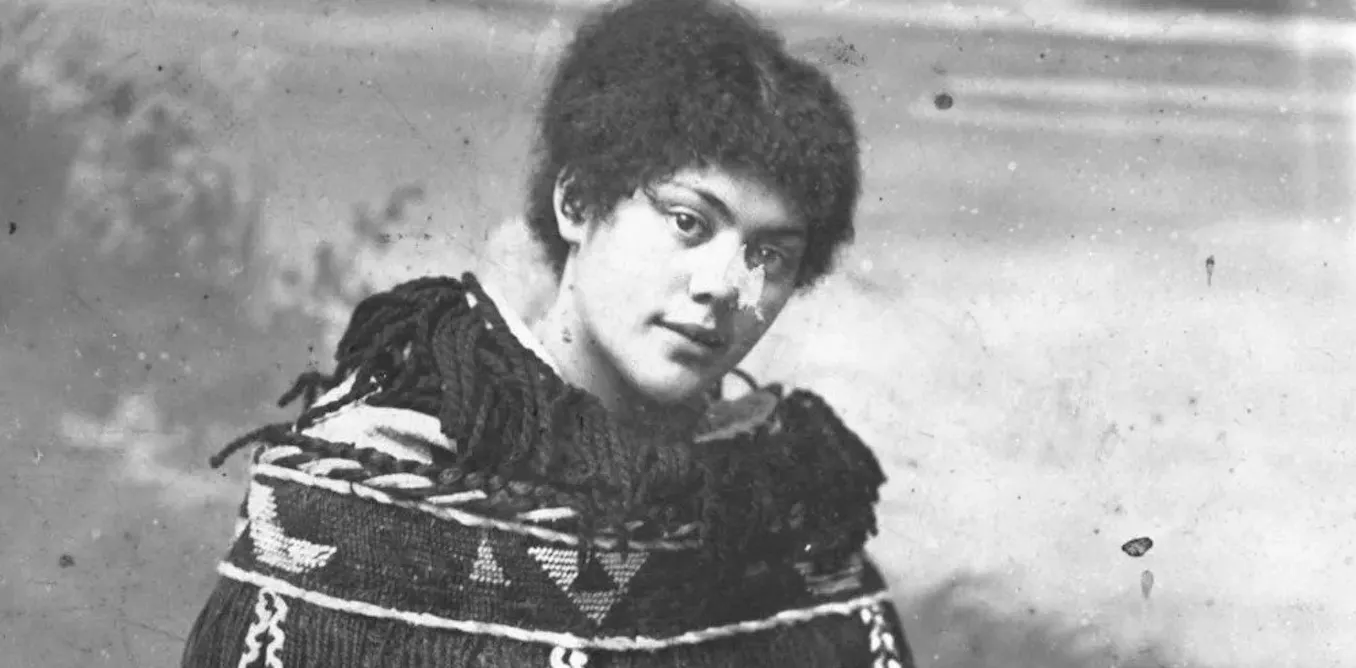
Yet behind this enduring melody lies the story of a remarkable woman whose contributions have largely faded from public memory: Erima Maewa Kaihau, credited with the song's lyrics and adapted tune. Born in 1879 as Louisa Flavell in Whangaroa, Northland, Kaihau grew up in a prominent family of mixed Pākehā (European) and Māori heritage. She belonged to the Ngāpuhi iwi in the north and the Ngāti Te Ata iwi near Waiuku, Auckland, tracing her lineage to notable ancestors including her great-grandfather Ururoa, a rangatira who signed the 1835 Māori Declaration of Independence.
Kaihau's life took her from the rural north to the politically charged south. As a teenager in the late 1890s, she and her family relocated to Waiuku to live with relatives, only to discover that much of their ancestral land had been confiscated by the Crown following the invasive wars and land seizures of the 1860s. The Waikato region, neighboring Waiuku, was still recovering from these upheavals, which had devastated Māori communities. It was here that Kaihau married Hēnare Kaihau, a influential politician and rangatira of Ngāti Te Ata who served as chief advisor to Māori King Mahuta.
Together, the couple navigated the intersections of Māori and European worlds. Erima Kaihau attended political hui, or meetings, alongside her husband and sometimes independently, often as one of the few women present. Dressed impeccably, she carried considerable political mana, or authority, using her presence to bridge divides. While the exact start of her composing career remains unclear, her earliest published songs appeared in 1918, marking her as one of the first Māori composers to achieve recognition in Pākehā circles.
Kaihau's compositions spanned themes of love, loss, and diplomacy. Many focused on unhappy lovers, echoing traditional Māori waiata aroha, or songs of affection and sorrow, while also mirroring the sentimental English parlor songs of the era. But her work extended far beyond personal emotion; she crafted pieces for official welcomes and farewells, positioning music as a tool for cultural exchange. In 1926, she performed her songs for the famed Russian ballerina Anna Pavlova during the dancer's New Zealand tour. The following year, in 1927, Kaihau welcomed the Duke and Duchess of York—later King George VI and Queen Elizabeth—with her composition The Huia, named after New Zealand's extinct native bird symbolizing nobility.
Her diplomatic efforts continued into the 1930s. In 1930, Kaihau both farewelled and welcomed the wives of successive governors-general with original songs, underscoring her role as a cultural broker. These performances allowed her, as a wahine Māori, or Māori woman, to assert her rights as tangata whenua, the people of the land, in hosting visitors. Cover illustrations on her published sheet music often depicted Māori women waving goodbye to European-style ships, symbolizing the poignant partings and connections she musicalized.
"Kaihau’s songs work as a kind of musical diplomacy," notes M. Brett, an opera singer, poet, and researcher who has extensively studied Kaihau's life and work. "As a wahine Māori, to perform them allowed her to assert her right as tangata whenua to undertake the work of welcoming and farewelling."
Brett, a Pākehā New Zealander, has sung Kaihau's songs in performances and translated her evocative te reo Māori lyrics. Through archival dives across the country, Brett uncovered forgotten manuscripts and unpublished compositions that had been overlooked or miscatalogued. This research reveals Kaihau not just as a composer and singer, but as a figure who wove together Māori and European poetic traditions. Her lyrics blend indigenous conventions with Western influences, creating a bicultural emotional language that fosters understanding.
One such song, Akoako o te Rangi, caught the attention of contemporary Ngāi Tahu author Becky Manawatu. In her 2019 novel Auē, Manawatu references the piece, describing it as "strange and beautiful." She initially assumed it was composed by a Pākehā due to its unique style, highlighting how Kaihau's fusion of palettes—Māori and European—defied easy categorization. Manawatu's nod illustrates the song's lasting, if understated, impact on modern Māori literature.
Kaihau's influence flowed in multiple directions. In 1900, she accompanied King Mahuta, who spoke little English, to a performance of Gilbert and Sullivan's operetta The Gondoliers in Auckland. The king's reaction to the whimsical production remains a matter of imagination, but the outing exemplifies Kaihau's efforts to expose Māori leaders to European arts while sharing indigenous culture abroad. Her home became a hub for such exchanges; it was there in the 1940s that Gracie Fields first encountered Pō Atarau, transforming a local waiata into a global anthem.
Despite her prominence in early 20th-century New Zealand, Kaihau died in 1941 with her legacy overshadowed by the song's international versions. Most listeners today associate Now is the Hour with wartime nostalgia or crooner classics, unaware of the Māori woman who shaped its words. Brett's ongoing work aims to rectify this, piecing together Kaihau's story to demonstrate how wāhine Māori employed waiata as instruments of diplomacy—expressing personal mana while building bridges between peoples.
The inclusion of Pō Atarau in Project Hail Mary has reignited interest in Kaihau at a time when New Zealand grapples with its bicultural identity. Directed by Phil Lord and Christopher Miller, the film—based on Andy Weir's 2021 novel—explores themes of linguistic barriers and cross-species empathy, making the song's placement seem almost predestined. Local screenings in Aotearoa have drawn crowds eager not just for Gosling's portrayal of lone astronaut Ryland Grace, but for this nod to indigenous heritage amid the sci-fi action.
Experts like Brett see broader implications. "What might Erima Maewa Kaihau have made of her famous waiata featuring in a sci-fi epic about alien contact?" Brett writes. "Given her efforts to create a musical language that speaks across worlds and languages, I imagine she would be pleased." This resurgence underscores the enduring power of Kaihau's vision: a harmonious blend of cultures that promotes living and loving together on shared islands.
As New Zealand continues to amplify Māori voices in global media—from soundtracks to literature—Kaihau's story serves as a reminder of the women who paved the way. With archives yielding more discoveries, future performances and publications may restore her to the spotlight she once commanded, ensuring her diplomatic melodies echo for generations.