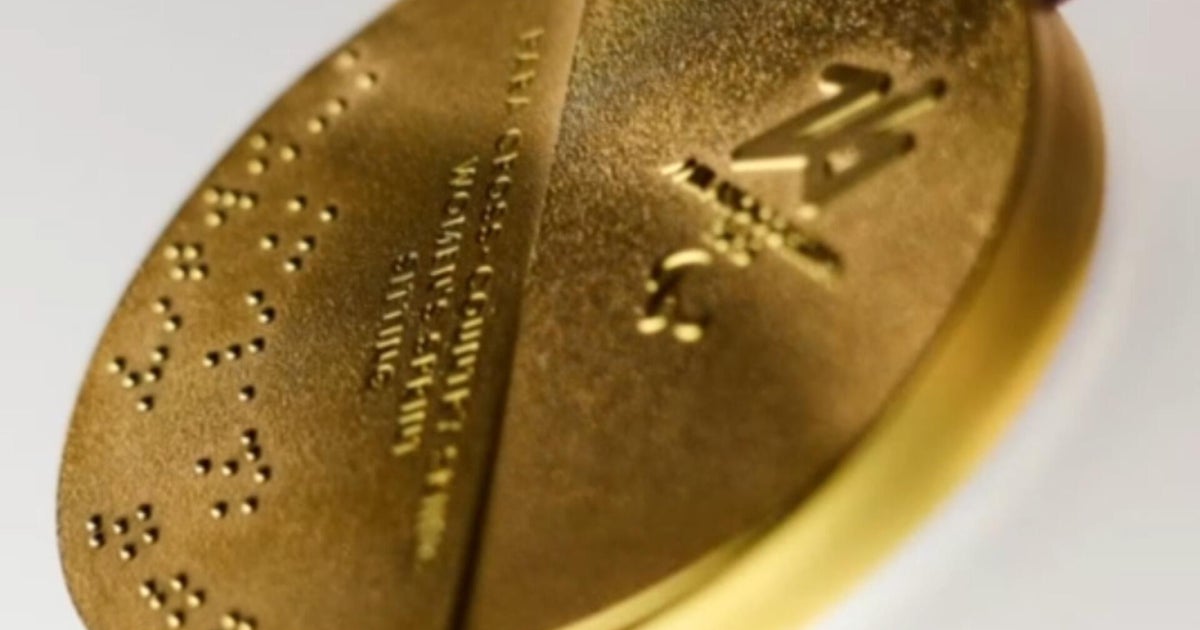
As the world gears up for the upcoming Olympic Games, a spotlight has fallen on one of the event's most iconic symbols: the gold medal. According to a recent report from CBS News, the monetary value of these prized awards is on the rise, driven by surging prices in precious metals. This development comes at a time when athletes from around the globe are preparing to compete in Paris for the 2024 Summer Olympics, where medals will once again represent the pinnacle of human achievement.
The CBS MoneyWatch segment, titled "Here's how much Olympic gold medals cost," delves into the composition and current market valuation of these medals. Reporter Megan Cerullo explains that while the medals are not solid gold—a common misconception—they are made primarily of silver, with a thin layer of gold plating. "The value of Olympic gold medals may be higher than usual as metal prices rise," Cerullo states in the report, highlighting how fluctuations in global commodity markets are impacting even symbolic items like these.
To understand the full picture, it's worth noting the historical context of Olympic medals. Since the modern Games began in 1896, gold medals have been awarded to the top finishers in each event. However, the International Olympic Committee (IOC) has long standardized their design to emphasize symbolism over opulence. For the Paris 2024 Games, organizers have incorporated pieces of the Eiffel Tower into the medals, adding a unique French flair, but the core materials remain consistent: about 92.5% silver for the bulk, overlaid with six grams of 24-karat gold.
Cerullo's report quantifies this value shift. She notes that the melt value of a gold medal, based on current spot prices, has climbed to approximately $1,000—up from around $600 just a few years ago. This increase is attributed to the rally in gold prices, which have surged past $2,400 per ounce amid economic uncertainties, inflation concerns, and geopolitical tensions. Silver prices, too, have risen, contributing to the overall uptick.
Experts in the field of numismatics and precious metals trading have weighed in on the implications. Dr. Elena Vasquez, a metallurgist at the University of Geneva, told CBS that "while athletes prize these medals for their prestige, not their scrap value, the rising costs could strain Olympic budgets if material expenses continue to escalate." Vasquez's comments underscore a broader challenge for event organizers, who must balance tradition with fiscal realities.
From the IOC's perspective, the focus remains on the medals' inspirational role rather than their monetary worth. In a statement to reporters last month, IOC President Thomas Bach emphasized, "Our medals are not commodities; they are embodiments of excellence, perseverance, and unity." Bach's remarks were made during a press conference in Lausanne, Switzerland, where he discussed preparations for Paris 2024, including sustainability initiatives to reduce the environmental impact of medal production.
Yet, not all viewpoints align perfectly. Some critics, including sports economists, argue that the increasing value highlights inefficiencies in Olympic funding. According to a analysis by the Global Sports Policy Institute, the cost to produce each set of medals—gold, silver, and bronze—has risen by 15% since the Tokyo 2020 Games, partly due to supply chain disruptions from the COVID-19 pandemic. "This isn't just about metals; it's about how the IOC allocates resources amid growing hosting expenses," said institute director Marcus Hale in an interview with Reuters.
Looking back, the value of Olympic medals has fluctuated with market trends before. During the 1980 Moscow Olympics, gold prices were around $600 per ounce, making medals worth far less in today's dollars. Conversely, in 2012, during the London Games, the melt value peaked at about $650 due to a commodities boom. Cerullo's CBS report points out that for Paris 2024, the projected cost per gold medal could approach $1,200 if prices hold steady, factoring in labor and design elements.
Athletes themselves offer a grounded perspective on the medals' true worth. Swimmer Michael Phelps, the most decorated Olympian with 28 medals, once remarked in a 2016 interview with ESPN, "You don't swim for the gold; you swim for the journey and the legacy." Phelps's words resonate as new stars like American gymnast Simone Biles and Jamaican sprinter Elaine Thompson-Herah gear up for potential record-breaking performances in Paris.
The production process adds another layer of intrigue. Medals for the Olympics are crafted by specialized mints, often under strict confidentiality until unveiling. For Paris, the medals were designed by French artist Julie de Libran and produced by the Monnaie de Paris, incorporating recycled metals to promote eco-friendliness. Cerullo reports that the gold plating alone requires precise electroplating techniques to ensure durability, a process that has become more expensive with rising energy costs.
Beyond the medals, the broader Olympic economy is feeling the pinch of metal price volatility. Sponsors and broadcasters, who pour billions into the Games, are monitoring these trends closely. NBCUniversal, the U.S. rights holder, has invested over $7.75 billion for broadcasting rights through 2032, and any cost overruns in production could indirectly affect negotiations. "Rising material costs are a small but symbolic part of the larger financial puzzle," noted media analyst Sarah Kline in a Variety op-ed last week.
Environmental considerations are also coming to the fore. The IOC's Agenda 2020 initiative aims to make the Olympics more sustainable, and Paris 2024's use of recycled materials in medals aligns with this goal. However, critics from environmental groups like Greenpeace argue that the event's overall carbon footprint remains high. "While medal recycling is a step forward, the Games still rely on resource-intensive logistics," said Greenpeace campaigner Theo Bertrand in a statement to AFP.
As training intensifies and qualification events wrap up—such as the U.S. Olympic Trials in Eugene, Oregon, last month—the anticipation builds. With over 10,500 athletes expected in Paris from July 26 to August 11, 2024, the medals will be hotly contested in 329 events across 32 sports. Cerullo's report serves as a timely reminder that even in the realm of pure sport, economic forces are at play.
Looking ahead, what happens to these medals post-competition? Many athletes keep them as cherished keepsakes, while others donate them to museums or charities. In rare cases, financial hardship has led to sales at auction; a 1912 gold medal fetched $50,000 in 2019, far exceeding its melt value. The IOC prohibits melting down medals, preserving their integrity as historical artifacts.
In the end, as metal prices continue their upward trajectory—gold up 20% year-to-date according to Bloomberg—the Olympic gold medal's allure endures beyond dollars and cents. For the competitors, it's the pursuit that counts, but for observers, Cerullo's insight into their hidden economics adds a fascinating dimension to the Games' grandeur. With Paris on the horizon, all eyes will be on the podiums where dreams turn to gold.