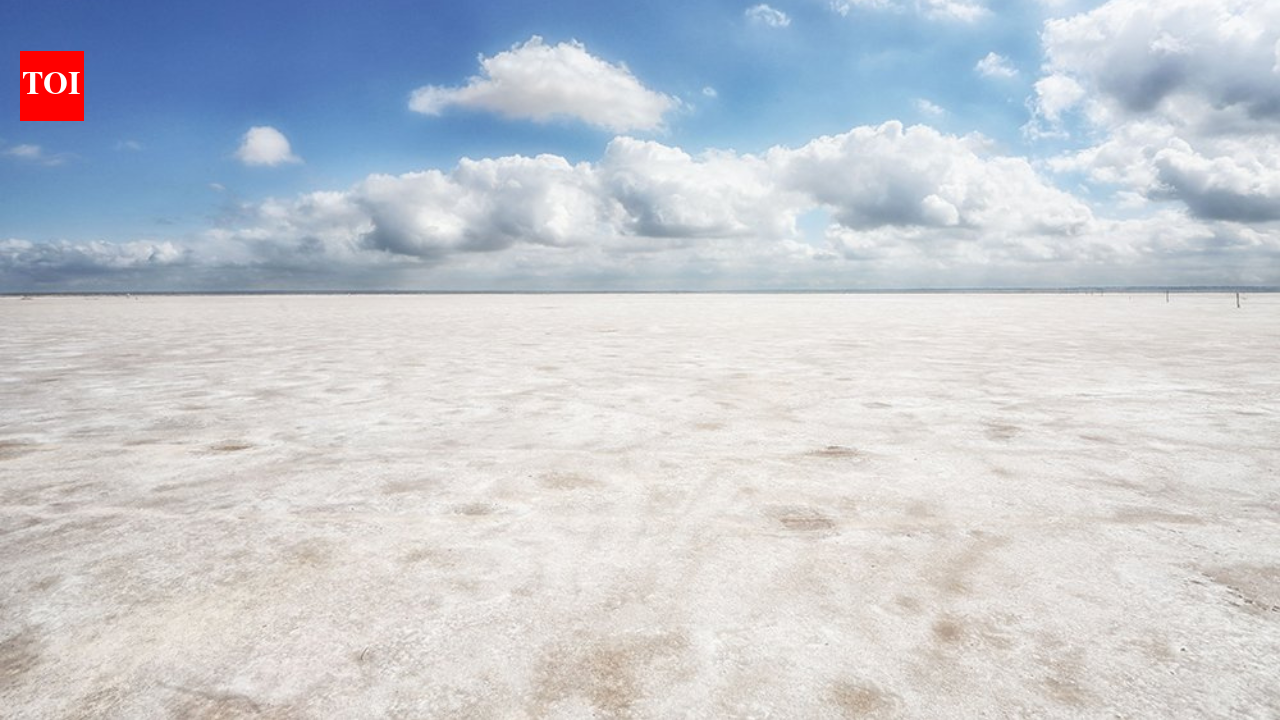
In the vast, shimmering expanse of northern Oklahoma, where the ground appears as a boundless sea of white salt flats, lies a geological treasure unlike any other on Earth. Known as the Great Salt Plains, this otherworldly landscape draws adventurers, rock hounds, and curious families each year to unearth selenite crystals, translucent formations that sparkle like frozen flames and are found nowhere else in such abundance and accessibility. According to reports from the Times of India Science Desk, these crystals, hidden just beneath the surface of the salt-encrusted plains, can be dug up for free by visitors, offering a rare opportunity to interact directly with a natural wonder.
The Great Salt Plains National Wildlife Refuge, spanning over 31,000 acres in Alfalfa County, Oklahoma, serves as the epicenter for this unique activity. Established in 1937 to protect migratory birds and wetland habitats, the refuge also preserves these mineral-rich deposits formed millions of years ago during the Permian period. Geologists explain that the crystals emerge from a combination of ancient seawater evaporation and gypsum deposits, creating perfect conditions for selenite to grow in hollow, flower-like clusters called 'sand roses.' 'It's like stepping into another world,' said refuge manager Tom Albright in a recent interview with local outlet KFOR-TV. 'People come from all over to experience the thrill of discovery right under their feet.'
Each September and October, when the soil is moist enough from summer rains but not too wet from winter freezes, the Bureau of Land Management opens a designated 640-acre digging area within the refuge. This seasonal window, typically running from early September to late October, allows visitors to collect up to 10 pounds of crystals per person without a permit fee. The flats, which cover about 12 square miles, transform into a bustling scene of families kneeling in the salt, armed with shovels and trowls, unearthing specimens that can range from a few inches to over a foot in diameter. According to the U.S. Fish and Wildlife Service, which oversees the refuge, last year's digging season saw more than 5,000 visitors, a 20% increase from pre-pandemic levels.
The allure of selenite, a variety of gypsum mineral with the chemical formula CaSO4·2H2O, goes beyond its beauty. These crystals are prized by collectors for their clarity and unique formations, often displaying internal 'hourglass' patterns caused by impurities during growth. Unlike mined gems, the Oklahoma selenite is raw and untouched, preserving its natural sandy inclusions that give the sand roses their distinctive texture. 'What makes this special is the accessibility,' noted mineralogist Dr. Elena Vasquez from the University of Oklahoma in a statement to the Oklahoma Geological Survey. 'In most places, such crystals are deep underground or commercially extracted, but here, anyone can participate in the science of discovery.'
Historical accounts trace the first documented collections to the early 1900s, when ranchers and farmers stumbled upon the crystals while plowing fields. The site's uniqueness stems from its isolation; similar gypsum deposits exist elsewhere, but the combination of salt flats and consistent crystal formation is unparalleled. A 2018 study published in the Journal of Sedimentary Research highlighted how episodic flooding in the Salt Fork of the Arkansas River contributes to the annual renewal of diggable layers, ensuring fresh crystals each season. However, not all years are equal—droughts in 2022 limited access, forcing officials to close the area early, as reported by the Woodward News.
Visitors to the Great Salt Plains describe the experience as both humbling and exhilarating. Sarah Jenkins, a 34-year-old teacher from Tulsa who visited last fall, shared her story with The Appleton Times. 'We spent hours digging, and my kids found these beautiful roses that glowed in the sunlight. It's free education in geology,' Jenkins said. 'But you have to be prepared—the salt is tough on skin and eyes, and the wind can whip up suddenly.' Indeed, safety guidelines from the refuge emphasize bringing water, sunscreen, and sturdy shoes, as the alkaline soil can cause irritation. Rangers patrol the area to enforce rules, such as no mechanized digging and limits on collection to prevent overharvesting.
Environmental concerns have occasionally tempered the enthusiasm. Conservationists worry that increased tourism could disrupt the refuge's bird populations, including the endangered whooping cranes that winter there. In 2020, the Audubon Society advocated for stricter visitor caps, citing a 15% rise in litter and soil compaction. 'While the crystals are renewable, the ecosystem isn't,' said Audubon Oklahoma director Mark Johnson in a letter to refuge officials. On the other hand, refuge staff counter that the activity generates awareness and supports educational programs, with proceeds from a small on-site store funding habitat restoration. Officials report no significant long-term damage, attributing this to the vast size of the digging zone.
The crystals' scientific value extends to research on Earth's ancient climates. Selenite from the plains has been analyzed to reconstruct Permian-era conditions, revealing insights into mass extinctions 252 million years ago. A team from the Smithsonian Institution collected samples in 2019, using X-ray diffraction to study their structure. 'These formations are a window into a time when Oklahoma was part of a vast inland sea,' explained lead researcher Dr. Raj Patel in a National Geographic feature. Such studies underscore the site's role beyond recreation, positioning it as a key asset for paleoclimatology.
Economically, the Great Salt Plains boosts local tourism in nearby towns like Cherokee and Jet, where motels and diners see a seasonal surge. The Oklahoma Tourism Department estimates the activity contributes over $500,000 annually to the regional economy through visitor spending. Events like the annual Selenite Festival in September feature workshops, crystal polishing demos, and guided tours, drawing crowds from across the Midwest. 'It's a hidden gem that's becoming less hidden,' quipped festival organizer Lisa Grant in an interview with Travel Oklahoma magazine.
Challenges persist, including climate change's impact on water levels in the Salt Fork, which could alter crystal formation. A 2023 report from the Oklahoma Water Resources Board warned of potential reductions in moist soil layers if droughts intensify. Refuge officials are exploring adaptive measures, such as expanded irrigation simulations, but funding remains a hurdle. Meanwhile, amateur collectors have sparked debates over commercialization; while free digging is encouraged, selling large quantities online has prompted calls for better tracking, according to eBay monitoring by the Mineralogical Society of America.
For those planning a visit, the refuge recommends checking the official website for weather-dependent openings, as high winds or heavy rain can close the site. Directions from major cities are straightforward: a three-hour drive northwest from Oklahoma City via U.S. Highway 64. Amenities include restrooms and picnic areas, but no lodging on-site—visitors often camp at nearby state parks. As one enthusiast put it, the effort is worth it: 'Digging up a piece of Earth's history for free? That's priceless,' said repeat visitor Mike Harlan from Wichita, Kansas.
Looking ahead, the Great Salt Plains continues to captivate, blending adventure with science in a way few natural sites can. With ongoing research and community involvement, this Oklahoma treasure promises to shine for generations, inviting all to uncover its secrets one crystal at a time. As global interest grows, officials are considering virtual tours and educational apps to broaden access without straining the resource. In an era of paid experiences, the free dig remains a refreshing reminder of nature's generosity.