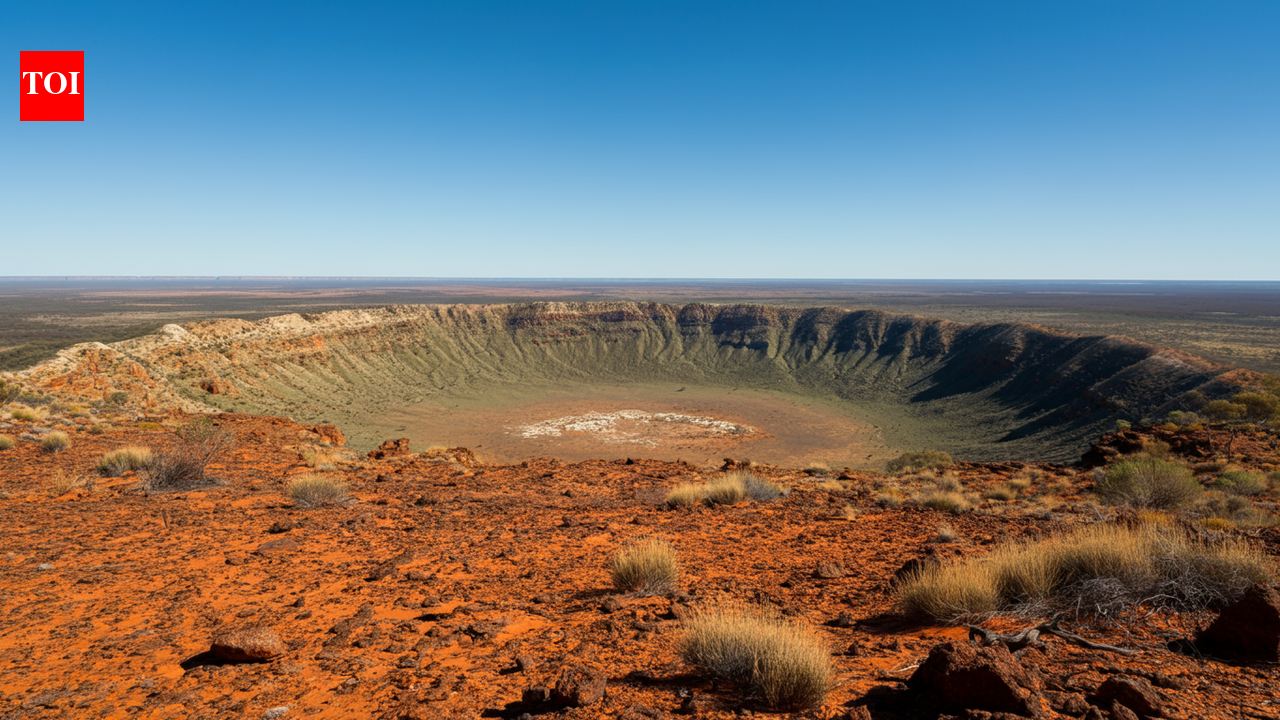
Scientists have pinpointed the Yarrabubba impact crater in Western Australia as the oldest known asteroid strike on Earth, with new dating placing the event at 2.229 billion years ago. The discovery, detailed in recent research, offers fresh clues about how such collisions may have helped thaw the planet from one of its earliest ice ages.
Located in a remote stretch of the Australian outback, the crater measures roughly 70 kilometers across and lies hidden beneath layers of sediment and dust. Researchers used advanced uranium-lead dating techniques on tiny zircon crystals found in the impact zone to establish the precise age. According to the findings reported by the Times of India Science Desk, this makes Yarrabubba significantly older than previously recognized impact sites.
"The Yarrabubba structure provides a rare window into Earth's deep past," one researcher involved in the study noted. The impact occurred during a period when the planet was largely covered in ice, and scientists suggest the collision could have released enough heat and debris to contribute to global warming that ended the freeze.
Geologists have long studied ancient craters to understand how extraterrestrial events shaped Earth's climate and geology. Yarrabubba stands out because of its extreme age and the specific mineral evidence preserved there. Samples collected from the site show shock-metamorphosed rocks that confirm the high-energy nature of the asteroid strike.
Officials and scientists from Australian geological surveys have collaborated on the project, cross-referencing data with international teams. The crater's location in Western Australia allowed for detailed field work despite the challenging terrain. Reports indicate that the impact would have vaporized vast amounts of ice, injecting water vapor and dust into the atmosphere.
While the exact contribution to ending the ice age remains under discussion, the timing aligns closely with geological records of warming around 2.2 billion years ago. According to the Times of India coverage, the event may have acted as a tipping point that accelerated the melt. Other ancient craters, such as those in South Africa and Canada, have been dated to younger periods and do not match this early timeline.
Local communities in the region near the Yarrabubba site have expressed interest in the findings, noting that the area holds cultural significance for Indigenous groups. Researchers emphasized the importance of preserving the location for future study while respecting traditional lands.
Further analysis of the crater's mineral composition revealed traces of elements consistent with a large chondritic asteroid. This detail helps narrow down the size and speed of the incoming body, estimated to have been several kilometers wide. The resulting explosion would have been equivalent to billions of atomic bombs, reshaping the surrounding landscape.
Climate models incorporating the Yarrabubba impact suggest a rapid release of greenhouse gases from melted permafrost and ocean sediments. Experts caution that more data is needed to quantify the precise effect, but the correlation with the end of the ice age is compelling. "This crater holds a secret clue to planetary recovery," the Times of India Science Desk reported in its summary of the research.
International scientific bodies have welcomed the study as a benchmark for dating other Precambrian impact structures. Plans are underway for additional drilling projects to extract deeper core samples. These efforts could refine understanding of how impacts influenced the evolution of early life forms that emerged after the ice age.
The discovery underscores the role of cosmic events in Earth's long-term climate cycles. With improved dating methods now available, similar hidden craters may come to light in other parts of the world. For now, Yarrabubba stands as a key reference point in the geological record spanning more than two billion years.
Funding for the research came from Australian research grants and partnerships with universities abroad. The team continues to publish detailed papers on the mineralogy and geochemistry of the site. Public interest has grown following the initial reports, prompting calls for educational outreach about ancient planetary history.