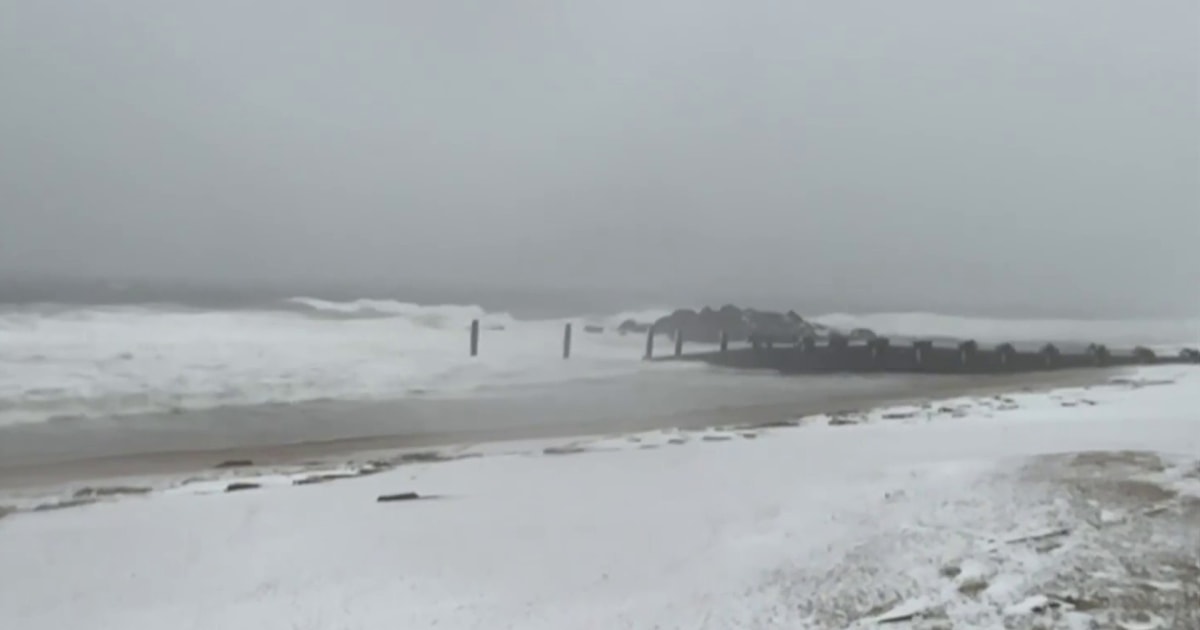
APPLETON, Wis. — A historic blizzard is set to unleash heavy snowfall and perilous travel conditions across the Northeast this weekend, prompting emergency declarations and widespread preparations in multiple states. According to meteorologists at NBC News, the storm could dump up to two feet of snow in some areas, marking it as one of the largest blizzards to hit the region in years. Officials from Massachusetts to New York are urging residents to stock up on essentials and avoid unnecessary travel as the system strengthens over the Atlantic.
The National Weather Service has issued blizzard warnings for parts of New England and the mid-Atlantic, with the storm expected to begin impacting coastal areas late Friday evening and continue through Sunday morning. "This is a once-in-a-generation event for many communities," said NBC News meteorologist Cori Coffin during a live broadcast. "We're talking about whiteout conditions, high winds gusting up to 50 miles per hour, and accumulations that could paralyze transportation networks." Her colleague, Vaughn Hillyard, added that the storm's rapid intensification off the coast has caught even seasoned forecasters off guard.
In Boston, where snowfall totals are projected to reach 18 to 24 inches, Mayor Michelle Wu declared a state of emergency on Thursday afternoon. "We are mobilizing every resource to keep our city safe," Wu said in a press conference. "Public transit will be limited, schools closed, and plows will be out around the clock." Similar measures are underway in Providence, Rhode Island, where Governor Dan McKee warned of potential power outages due to the combination of heavy snow and fierce winds.
The storm's path traces back to a low-pressure system that formed over the Gulf of Mexico earlier this week, drawing moisture from the warm Atlantic waters. By Friday, it had evolved into a nor'easter, a type of storm notorious for battering the Eastern Seaboard. Historical context underscores the severity: the last comparable blizzard struck in 2015, burying parts of the region under three feet of snow and causing billions in damages. "This one's shaping up to rival that," Coffin reported, citing data from the NOAA's Storm Prediction Center.
Further south, New York City anticipates 12 to 18 inches, with the heaviest bands expected over Long Island and upstate areas. The Metropolitan Transportation Authority has already canceled some commuter rail services, and airports like LaGuardia and JFK are bracing for delays. "Passengers should check with their airlines frequently," advised a Port Authority spokesperson. In Philadelphia, where up to 15 inches are forecast, city officials have activated warming centers for the homeless population.
Connecticut and Maine are also in the storm's crosshairs, with Hartford projected to see 20 inches and Portland up to 22. State emergency management director Erik Hinckley in Connecticut emphasized preparation: "Have enough food, water, and medication for at least 72 hours. Don't venture out unless absolutely necessary." Witnesses from previous storms recall the chaos, with one resident in Bangor, Maine, telling local reporters, "Last big one, we were snowed in for days. Power flickered, roads were impassable—it's no joke."
Experts point to climate patterns as a contributing factor, though the immediate focus remains on response. "Warmer oceans are fueling these intense storms," noted a climatologist from Rutgers University in a separate NBC interview. "We're seeing more moisture available, leading to heavier precipitation." However, some forecasters caution that exact totals could vary, with urban heat islands in cities like Boston potentially reducing accumulations by a few inches.
Across the region, grocery stores reported a rush on milk, bread, and batteries Thursday, echoing pre-storm rituals familiar to Northeasterners. "We've been restocking shelves nonstop," said a manager at a Stop & Shop in Worcester, Massachusetts. Schools in affected areas dismissed early, and non-essential government offices closed by midday Friday. The U.S. Coast Guard has positioned rescue teams along the shore, anticipating possible coastal flooding from storm surges up to four feet.
Federal aid is on standby, with FEMA coordinating with state agencies. "We're monitoring the situation closely and ready to assist where needed," a FEMA spokesperson said. In Vermont, which could see lesser but still significant snow of 10 to 15 inches, ski resorts are mixed in their outlook—welcoming the powder for winter sports but wary of avalanche risks in the Green Mountains.
The economic toll is already being tallied. Airlines have waived change fees for flights affected by the storm, while shipping companies like UPS and FedEx warn of delays. "This could disrupt supply chains at a critical time," reported an analyst from the Port of New York and New Jersey. Businesses in tourism-heavy areas, such as Cape Cod, are postponing events, with one hotel owner lamenting, "We were hoping for a busy weekend; now it's all hands on deck for the storm."
As the blizzard approaches, differing forecasts from private weather services add a layer of uncertainty. While NBC aligns with the National Weather Service's projections, AccuWeather suggests slightly lower totals in interior regions, up to 18 inches maximum. "Winds will be the real hazard," their lead forecaster said, "potentially downing trees and power lines across a wide swath." Officials urge residents to heed local warnings regardless.
Looking back, the Northeast has weathered its share of brutal winters, from the Blizzard of 1888 that knocked out power for days to the 1993 Storm of the Century. This event, tentatively dubbed "Winter Storm Blaine" by The Weather Channel, could join that infamous list. Preparation efforts include salting major highways, with the Massachusetts Department of Transportation deploying over 2,000 plows and spreaders.
Beyond immediate dangers, the storm raises questions about infrastructure resilience. Recent investments in snow removal equipment have improved response times, but aging power grids remain vulnerable. "We've learned from past storms," said a utility executive from Eversource Energy, which serves much of New England. "Crews are prepositioned, but mother nature always has the final say."
As Saturday dawns, the full impact will unfold. Recovery could stretch into next week, with schools and businesses reopening gradually. For now, the message from authorities is clear: stay indoors, stay informed, and stay safe. The blizzard's legacy, whether in snowfall records or lessons learned, will be written in the snowdrifts left behind.
In a region accustomed to harsh winters, this storm serves as a stark reminder of nature's power. With up to two feet of snow on the horizon, communities from Portland to Philadelphia are hunkering down, hoping to emerge stronger on the other side.