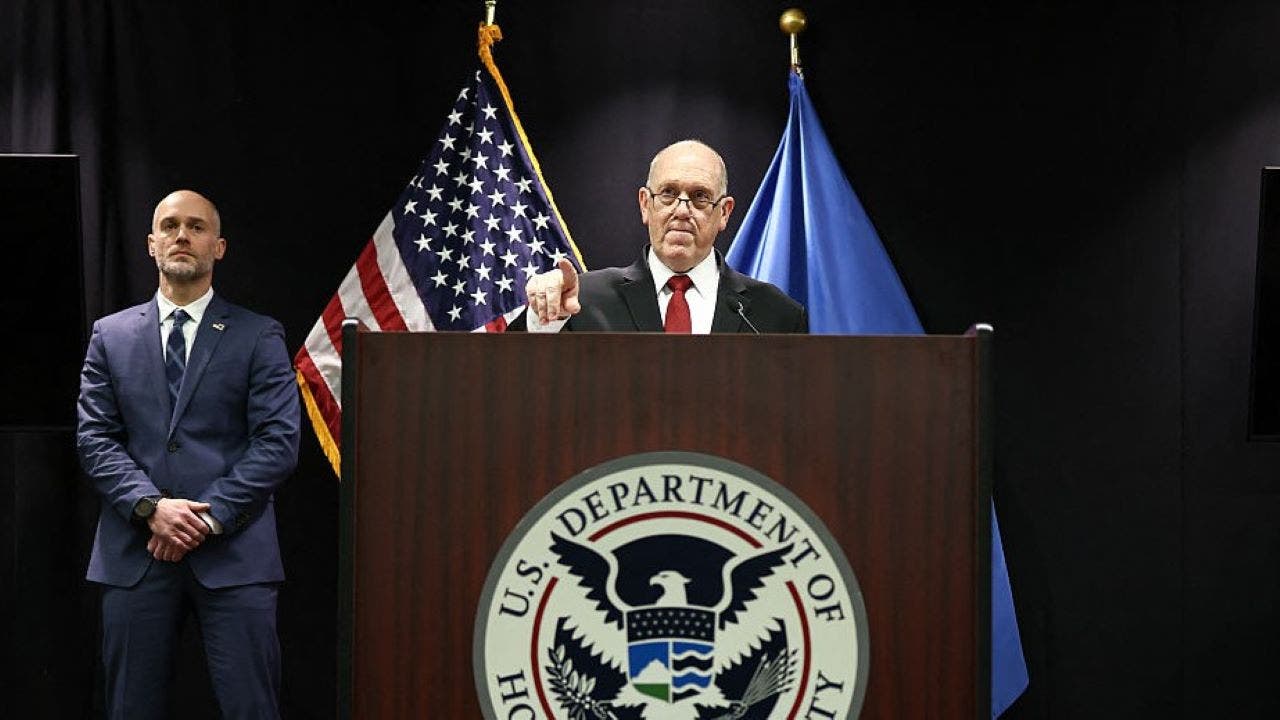
MINNEAPOLIS — White House border czar Tom Homan announced on Wednesday a significant reduction in the federal presence in Minnesota, pulling back 700 agents from the Twin Cities area amid what he described as unprecedented cooperation from local law enforcement.
Homan, speaking at a morning press conference at the Bishop Henry Whipple Federal Building in Minneapolis, said the drawdown would take effect immediately and pave the way for a complete withdrawal of federal personnel. "Given this increase in unprecedented collaboration, and as a result of less need for law enforcement officers to do this work in a safer environment, I have announced immediately we will draw down 700 people effective today," Homan stated.
The move comes just over a week after President Donald Trump dispatched Homan to the region following a series of tense confrontations between federal immigration agents and protesters. Federal agents had been deployed to Minneapolis and St. Paul to conduct enforcement operations targeting undocumented immigrants, but they encountered organized resistance from agitators who harassed and obstructed officers, according to reports.
Homan credited the improved situation to recent meetings with state and local leaders, including Minnesota Governor Tim Walz, Attorney General Keith Ellison, and Minneapolis Mayor Jacob Frey. He urged these officials to facilitate communication between local jails and federal authorities, specifically Immigration and Customs Enforcement (ICE), regarding the release schedules of detained individuals suspected of immigration violations.
"We currently have an unprecedented number of counties communicating with us now and allowing ICE to take custody of illegal aliens before they hit the streets. Unprecedented cooperation," Homan said during the press conference. He emphasized that this approach enhances efficiency and safety, noting, "I'll say it again: This is efficient, and it requires only one or two officers to assume custody of a criminal alien target, rather than eight or 10 officers going into the community and arresting that public safety threat."
The border czar also clarified that federal authorities are not pressuring local jails to extend detentions beyond standard release times. "We're not asking anyone to be an immigration officer," he added, underscoring that the collaboration focuses solely on timely notifications to prevent releases without federal oversight.
This development follows a violent incident last week when federal agents fatally shot anti-ICE protester Alex Pretti during an operation in Minneapolis. Pretti was the second demonstrator killed by federal forces in the city within the past month, heightening tensions and drawing widespread criticism from activists and public figures.
"The practice was safer for officers, the community and the migrants themselves," Homan remarked, highlighting the benefits of the cooperative strategy in reducing confrontational arrests.
In the wake of Pretti's death, U.S. Border Patrol commander Greg Bovino, who had been overseeing operations in Minnesota, departed the state shortly after Homan's arrival. Bovino's replacement by Homan marked a shift in leadership aimed at streamlining federal efforts amid the unrest.
Local officials have expressed mixed reactions to the federal presence. While Homan praised the cooperation, Minneapolis Mayor Jacob Frey is scheduled to visit Washington, D.C., soon to advocate for an end to what he has called "unlawful ICE operations." Frey's trip follows a blunt warning from President Trump, though details of the mayor's specific grievances remain focused on the legality and impact of the raids on community trust.
Public backlash has also manifested in cultural arenas. During a recent concert in the area, musician Bruce Springsteen reportedly urged ICE to "get the f--- out of Minneapolis" and criticized the agency's tactics as reminiscent of "Gestapo" methods, according to attendees and media reports. Springsteen's comments drew applause from the crowd but further polarized opinions on the enforcement actions.
Retired law enforcement officers have weighed in on the dangers faced by agents, warning of a "mob mentality" that endangers officers amid the anti-ICE protests. One former cop, speaking anonymously to reporters, described the organized resistance as chaotic and potentially violent, complicating routine operations.
On Capitol Hill, Republicans have called for investigations into the funding sources behind the organized agitators opposing the federal operations. Lawmakers from the party argue that external influences may be fueling the unrest, though no specific details on potential probes have been confirmed as of Wednesday afternoon.
The deployment of federal agents to Minnesota began in late January 2026, escalating after the first protester death in the Twin Cities. Operations targeted neighborhoods in Minneapolis, with agents conducting searches and arrests, as seen in a February 2 incident where a federal agent was photographed entering a backyard gate during a raid.
Homan's announcement signals a potential de-escalation, but challenges persist. While local cooperation has reportedly increased the number of counties sharing information with ICE, broader questions about immigration enforcement in sanctuary-leaning areas like Minnesota remain unresolved. Governor Walz's office has not yet commented on the drawdown, and Attorney General Ellison's stance on the collaborations is unclear.
As the 700 agents depart, Homan reiterated the goal of a full drawdown, contingent on sustained local support. "The ultimate goal is a complete drawdown of federal presence," he said, framing the reduction as a success of partnership rather than retreat.
The situation in Minneapolis continues to evolve, with federal operations ongoing in select areas despite the pullback. Community leaders and immigration advocates have called for transparency in the process, while supporters of stricter enforcement view the cooperation as a model for other states. This story is developing, and further updates are expected as local and federal officials respond.