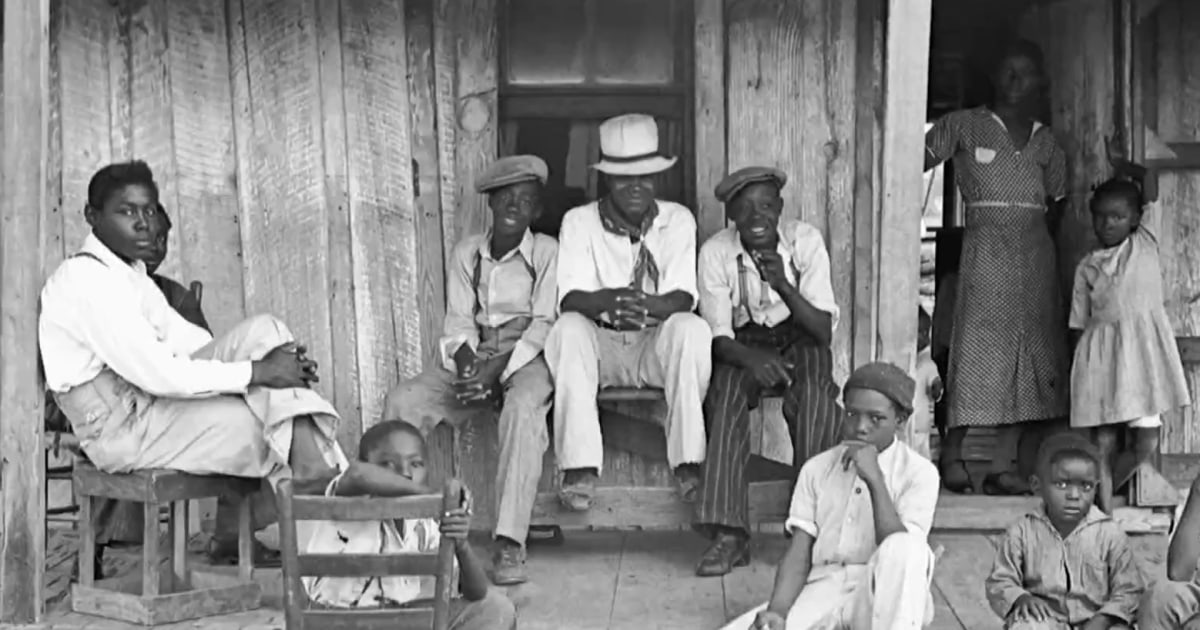
In an era where social media platforms like TikTok and Instagram dictate the rhythm of youth culture, a new report sheds light on the deep roots of what many call Gen Z slang. According to NBC News correspondent Marquise Francis, many terms popularized among teenagers and young adults today trace their origins not to the digital age, but centuries back to Black culture. The segment, aired on March 27, 2026, explores how words like "lit," "slay," and "woke" have evolved from African American Vernacular English (AAVE) into mainstream lexicon, often without acknowledgment of their heritage.
Francis, reporting for NBC News Now, delved into the historical context during a video feature that highlighted the linguistic journey of these expressions. He noted that while Gen Z often gets credit for innovating language, the reality is far more layered. "Some words commonly labeled as Gen Z slang are actually traced back centuries to Black culture," Francis stated in the report, emphasizing the need to recognize these contributions amid rapid cultural shifts.
The discussion comes at a time when debates over cultural appropriation rage on college campuses and online forums. Linguists and cultural historians have long pointed to AAVE as a vibrant dialect born from the experiences of enslaved Africans in America, blending West African languages with English. According to the NBC segment, terms like "woke," which means being aware of social injustices, originated in African American communities in the 1930s, gaining prominence during the Civil Rights Movement. By the 2010s, it had exploded in usage following events like the Black Lives Matter protests, but its adoption by non-Black influencers sometimes dilutes its political weight.
Francis interviewed several experts to unpack this phenomenon. Dr. Lisa Green, a linguistics professor at the University of Massachusetts Amherst, explained in the report how AAVE has influenced American English broadly. "These aren't just slang; they're part of a rich oral tradition that has shaped how we all communicate," Green said, pointing to examples from jazz eras to hip-hop. She cited data from the Oxford English Dictionary, which now includes entries for words like "slay," defined as excelling or looking fabulous, with roots in Black drag and ballroom culture of the 1970s and 1980s.
Another term highlighted was "lit," used to describe something exciting or intoxicated. According to Francis, its modern usage stems from 19th-century Black spirituals and blues lyrics, where "lit up" evoked emotional highs. The word resurfaced in hip-hop tracks by artists like Drake in the early 2010s, propelling it into Gen Z's vocabulary. Yet, as the report noted, social media algorithms amplify these terms among diverse audiences, often stripping away their original contexts. A 2025 study by the Pew Research Center, referenced in the segment, found that 68% of Gen Z users on platforms like Snapchat incorporate AAVE-derived slang daily, unaware of its origins in many cases.
Not everyone views this evolution positively. Cultural critic Touré, author of "Who's Afraid of Post-Blackness?" and featured briefly in the NBC piece, argued that mainstream adoption can lead to erasure. "When white kids say 'slay' at a school dance, it's fun, but when Black creators coined it in the face of marginalization, it was survival," Touré said. He pointed to instances where Black influencers face backlash for "inventing" terms already in use within their communities, highlighting a double standard in crediting innovation.
On the flip side, younger voices in the report celebrated the blending as a form of unity. A 19-year-old college student from Atlanta, interviewed by Francis, shared her perspective: "Language evolves, and that's how cultures mix. I'm Black and I use these words with pride, knowing where they come from." This viewpoint aligns with findings from a 2024 report by the Brookings Institution, which surveyed 1,200 young Americans and found that 72% see slang sharing as a bridge across racial lines, though 45% acknowledged the importance of historical attribution.
The NBC report also touched on global dimensions, noting how Gen Z slang, infused with Black influences, spreads worldwide via streaming services. In the United Kingdom, for instance, terms like "peng," meaning attractive and derived from Black British slang, have entered everyday teen speech. Francis referenced a 2026 British Council study showing that 55% of London teens under 18 use AAVE-inspired words, crediting U.S. hip-hop exports. This internationalization raises questions about who owns language in a connected world.
Historically, the influence of Black culture on American slang isn't new. During the Harlem Renaissance of the 1920s, writers like Zora Neale Hurston documented AAVE in works such as "Their Eyes Were Watching God," embedding terms that later permeated jazz and swing music. The NBC segment connected this to contemporary trends, where artists like Megan Thee Stallion and Lil Nas X propel words like "hot girl summer"—a phrase coined by the rapper in 2019—into global parlance. According to Francis, such moments underscore Black women's pivotal role in linguistic innovation, often overlooked in pop culture narratives.
Educators are responding to these insights by incorporating AAVE history into curricula. At Howard University in Washington, D.C., a new course launched in fall 2025, "Slang and Society: The Black Roots of Modern English," draws over 300 students annually. Professor Jamal Jones, who teaches the class, told NBC News, "We're not just teaching words; we're teaching respect for the cultures that birthed them." The course uses archival audio from the 1960s Black Power movement to trace terms like "soul," now a staple in Gen Z's emotional lexicon.
Challenges persist, however. Social media platforms face criticism for profiting from viral slang without crediting origins. In 2024, TikTok settled a lawsuit with Black creators alleging misuse of AAVE in algorithms that favored non-Black users, resulting in a $10 million fund for cultural education. Francis reported that while progress is evident, incidents like the 2023 backlash against a white influencer using "periodt"—an emphatic version of "period" from Black Twitter—reveal ongoing tensions.
Looking ahead, linguists predict that as Gen Alpha emerges, the fusion of Black-influenced slang with AI-generated language could accelerate changes. A panel discussion at the 2026 Modern Language Association conference in Philadelphia, attended by over 5,000 scholars, debated this, with one expert warning of potential homogenization. "If we don't teach the histories, we risk a future where slang is rootless," said panelist Dr. Geneva Smitherman, a pioneer in Black linguistics.
Yet, optimism prevails among many. The NBC report concluded with Francis observing a growing movement on platforms like X (formerly Twitter), where hashtags like #AAVEOrigins educate users. A viral thread in February 2026 amassed 2 million views, prompting schools in Los Angeles and Chicago to add slang etymology to English classes. As one high school teacher from Chicago put it, "Kids are curious; they just need the context to appreciate the full story."
This cultural exchange, while complex, reflects America's ever-evolving identity. From the cotton fields of the antebellum South to the screens of today's youth, Black culture's linguistic legacy endures, shaping how generations connect. As Marquise Francis wrapped his segment, he urged viewers: "Next time you say 'slay,' remember the queens who made it royal." In doing so, the report not only informs but invites a deeper reckoning with the voices that have long defined our words.
The implications extend beyond slang to broader societal dialogues on equity. Advocacy groups like the National Association for the Advancement of Colored People (NAACP) have called for media outlets to highlight these stories more frequently, citing the NBC piece as a model. With Gen Z projected to comprise 27% of the workforce by 2030, according to U.S. Census projections, their language—and its roots—will influence workplaces, politics, and entertainment for decades.