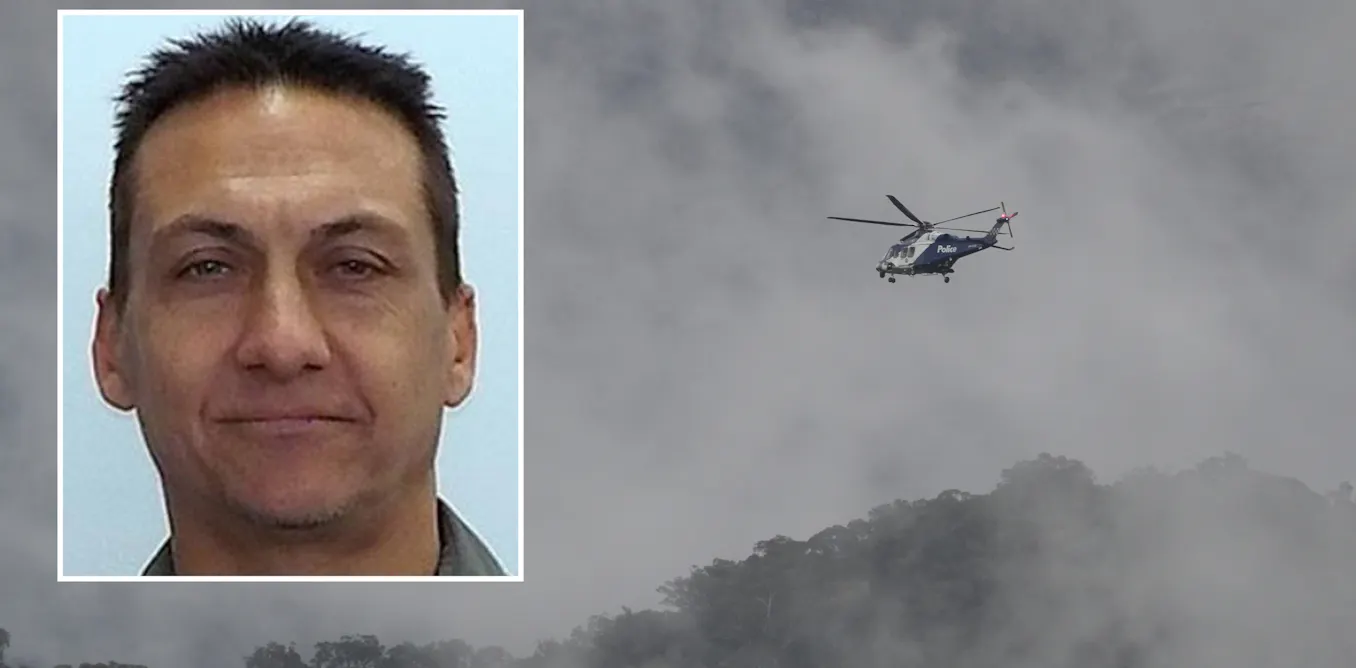
In a dramatic end to one of Australia's most intense manhunts, Dezi Freeman, the fugitive accused of killing two police officers, was reportedly shot and killed by authorities on Monday morning after more than 200 days on the run. The incident unfolded in the rugged bushland of north-east Victoria, where Freeman had evaded capture since August 26 of last year, when he allegedly opened fire on officers during a confrontation. This evasion, spanning 216 days, marked the longest such pursuit in recent Australian history and drew widespread public fascination due to its rarity and the sheer scale of the police operation involved.
Freeman's flight began amid chaos in the regional town of Wangaratta, where he shot and killed the two officers before fleeing into the dense, unforgiving terrain. The search that followed mobilized hundreds of personnel, helicopters, and advanced surveillance equipment, becoming what officials described as the largest tactical police operation in the nation's history. Victoria Police Chief Commissioner Mike Bush addressed the challenges of the hunt, noting the fugitive's apparent advantages. “It would be very difficult for him to get where he was […] without assistance,” Bush said, emphasizing the role of potential supporters. “We will be speaking to anyone we suspect has assisted him to avoid detection and arrest.”
The operation's intensity reflected the high stakes: Freeman, a local man with reputed bushcraft skills, had intimate knowledge of the area's labyrinthine forests and waterways. Sources close to the investigation indicated that his ability to survive without modern conveniences—eschewing phones, vehicles, and financial transactions—severely hampered police efforts. By going completely off the grid, Freeman left no digital footprint, a tactic that experts say poses one of the greatest obstacles to law enforcement in an era dominated by technology.
Details of Freeman's final moments remain under wraps, with authorities yet to disclose how he was located after such an extended period. Reports suggest he was tracked through a combination of ground patrols and intelligence leads, though specifics are pending an official briefing. The shooting occurred early Monday in a remote section of bushland near the New South Wales border, where police had intensified searches in recent weeks. Families of the slain officers, who have endured months of uncertainty, expressed relief through spokespeople, though the overall mood in the community remains somber.
Freeman's case echoes a handful of other prolonged evasions in Australia over the past four decades, underscoring the difficulties of pursuing suspects in vast, wild landscapes. One notable parallel is that of Malcolm Naden, who hid in the rugged bushland around Gloucester and Scone in New South Wales for seven years following the 2005 murders of two young women. Naden, like Freeman, relied on his survival expertise to elude capture until his arrest by NSW Police in 2012. The terrain's isolation and the suspect's familiarity with it proved decisive in extending his freedom.
Another enduring example is John Bobak, believed responsible for a double murder on the Gold Coast in 1991. Bobak remains at large after more than three decades, with police suspecting he has adopted a low-profile existence, possibly with help from associates. In contrast, Brenden Abbott, known as the “postcard bandit” for taunting authorities with mailed clues, escaped from Fremantle Prison in 1989 and evaded capture for six years before his eventual arrest. Abbott's case highlighted how even urban fugitives can slip through cracks by minimizing visibility.
Darko Desic's story adds yet another layer to this rare phenomenon. The New South Wales prison escapee lived undetected in the sand dunes of Sydney’s Northern Beaches for 30 years, sustaining himself through odd jobs and isolation until he voluntarily surrendered in 2022. According to police reports, Desic's long-term success stemmed from avoiding technology and blending into transient communities, much like the strategies employed by Freeman.
Across the Tasman Sea, the hunt for New Zealand's Tom Phillips provided a contemporaneous benchmark. Phillips vanished with his three children just before Christmas 2021, hiding in the dense bush of the North Island’s western Waikato region. Like Freeman, he was a skilled outdoorsman with local knowledge, evading police for nearly four years until he was shot and killed in late 2025. New Zealand authorities noted similar challenges, including the limitations of aerial and digital surveillance in thickly vegetated areas.
Experts attribute these successes in evasion to a combination of personal skills and environmental factors. “The geography of an area also gives someone who goes off the grid a natural advantage because of the difficulty of physically trying to locate them in bushland,” according to analysis from The Conversation, an academic news platform. “The bigger the area, the more rugged the terrain, the easier it is for anyone with bush skills to hide.” In Freeman's case, the north-east Victorian landscape—characterized by steep ravines, thick eucalyptus forests, and seasonal flooding—offered ideal cover.
Technology, often a police ally, becomes irrelevant against such tactics. Mobile phones, which log locations and communications, ATMs with facial recognition, and CCTV on roadways all fail when a fugitive forgoes them entirely. “If they use their phone to pay for something, it ties that person to a place and time,” the analysis explains. Drones, satellite imagery, and number plate recognition, while cutting-edge, are rendered pointless in off-grid scenarios. For police, whose training has shifted toward digital investigations over the past two decades, this reversion to manual searches tests endurance and resources.
The Freeman pursuit strained Victoria Police's budget, with estimates running into millions for personnel, equipment, and community support. Taxpayers in the region, already burdened by the emotional toll, footed much of the bill. Local businesses near search zones reported mixed impacts: some benefited from the influx of officers, while others suffered from restricted access to trails and parks. Community meetings in Wangaratta highlighted frustrations, with residents calling for better preventive measures against such violence.
Beyond the immediate drama, Freeman's case raises questions about support networks for fugitives. Bush's comments suggest investigators are now probing potential accomplices, a line of inquiry that could lead to additional charges. In similar past cases, like Naden's, tips from locals eventually cracked the evasion, often after years of silence born from fear or loyalty. Whether Freeman received aid—food, shelter, or information—remains a key focus, with police vowing thorough follow-up.
As the investigation shifts from pursuit to aftermath, autopsies and inquiries will clarify the Monday shooting. Victoria Police have promised transparency, though details on Freeman's movements during his 216 days at large may take time to emerge. The slain officers' colleagues, meanwhile, prepare memorials, honoring their service amid the bushland that both claimed and concealed.
The broader implications extend to policing strategies in remote areas. With climate change exacerbating bushfire risks and urban sprawl pushing development into wild zones, experts anticipate more such challenges. “For both police and the offender, these types of searches are a game of patience,” notes the Conversation piece. Freeman, with time on his side and mastery of the land, became “a shadow in the landscape,” outwitting authorities until the end. His story serves as a stark reminder of the limits of modern law enforcement against nature's own defenses.
In the end, while the hunt concludes, the scars linger. For the victims' families and the officers who persevered, closure comes at a cost. As north-east Victoria returns to normalcy, the region reflects on a saga that captivated the nation, blending human ingenuity, technological blind spots, and the enduring wildness of the Australian outback.