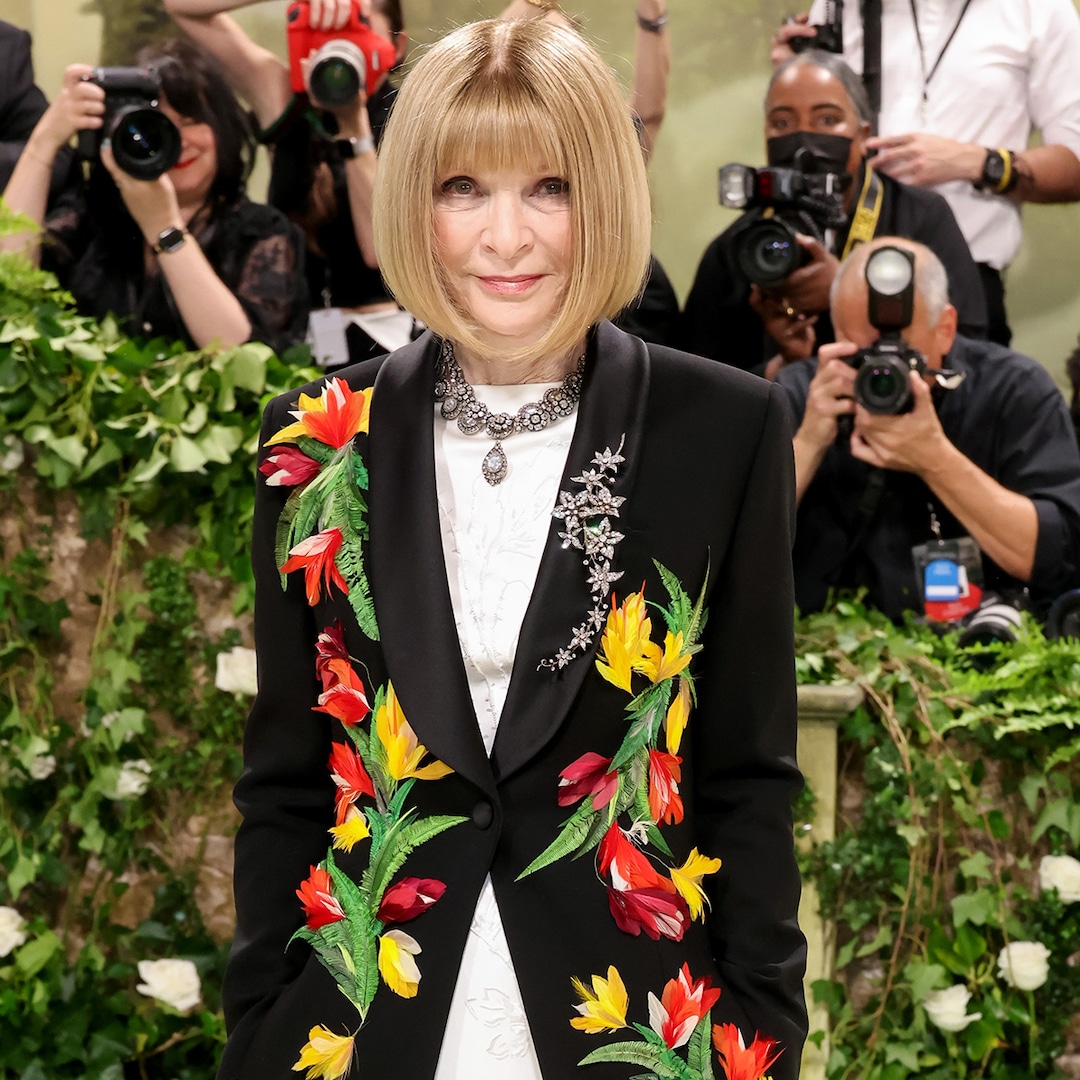
As fashion's elite prepare for the 2026 Met Gala on May 4—the first Monday in May—attention turns to the event's storied history and the meticulous planning that makes it a pinnacle of style and celebrity. Co-chaired by Beyoncé, Nicole Kidman, Venus Williams, and Anna Wintour, the gala will celebrate the theme “Costume Art” with a dress code of “Fashion Is Art,” inviting attendees to view the body as a blank canvas for design. This iconic date, now synonymous with the Metropolitan Museum of Art's annual fundraiser for its Costume Institute, wasn't always the norm; its selection 21 years ago marked a shift that transformed the event into a springtime spectacle.
The Met Gala, which began in 1948 as a modest dinner, evolved over decades before settling into its current slot. Prior to the early 2000s, the event typically occurred in late November or early December, aligning with the Costume Institute's fall exhibitions. A significant disruption came in 1999 when the planned Coco Chanel exhibit was canceled following the death of the museum's chief curator, Richard Martin, that November. The Metropolitan Museum told The New York Times the following year that it was “impossible” for the institute to curate an exhibit in time for their usual date.
In response, the museum pivoted to a spring exhibition honoring former first lady Jacqueline Kennedy in 2001, running from May 1—a Tuesday—through July 29. This marked the gala's move to a beloved springtime position, away from the holiday season. The event was held in late April from 2001 to 2004, but it wasn't until 2005 that the first Monday in May became official, coinciding with the “Celebrating Chanel” theme. That year solidified the tradition, though flexibility has been key: the 2002 gala was canceled after the 9/11 attacks, and in 2021, it shifted to September amid the COVID-19 pandemic.
Andrew Bolton, the curator in charge of the Costume Institute, emphasized the unifying role of fashion in the museum's collections. “What connects every curatorial department and what connects every single gallery in the museum is fashion, or the dressed body,” Bolton said in a statement reported by Vogue. “It’s the common thread throughout the whole museum, which is really what the initial idea for the exhibition was.” For 2026, this theme underscores how designers treat the body as a canvas, promising innovative interpretations from the approximately 500 to 800 expected guests.
Attendance at the Met Gala comes at a premium, with a single ticket priced at $30,000 and a table costing $275,000. Yet, not all invitees pay; up-and-coming designers and celebrities modeling specific looks often receive complimentary entry, courtesy of Anna Wintour's influence as Vogue's editor-in-chief. Vintage store owner Cameron Silver, who has attended multiple times, told Page Six in 2017 about the intense demand: “I've known of society names who couldn't get a ticket and are prepped to go if there's a last-minute seat that becomes available. They have their look ready even if they aren't certain of whether they will actually have a seat days before the event.”
The guest list is curated for intimacy, typically aiming for around 500 attendees, though it has reached 800 in the past. “We do want the experience to feel intimate for our guests,” Vogue's Sylvana Ward Durrett told Fast Company in 2017, noting that numbers had been scaled back by 200 to 300 people in recent years. Wintour starts the list with this goal in mind, as Ward Durrett explained in the documentary The First Monday in May: “We want to keep this an intimate setting because that's why people come to this.” Even celebrities don't automatically get plus-ones; partners must secure their own invitations.
Planning for the gala is a year-round endeavor involving about 100 staff members, including 10 full-time Vogue employees. It kicks off the Tuesday after the previous event, with Ward Durrett favoring a detailed one-sheet to-do list. “We have sort of a running to-do list that just gets longer and longer as we get closer—and we literally go through [it] every day, even if it's redundant,” she said. The first item? The tent, followed by every associated detail to ensure a seamless experience from start to finish.
Wintour's oversight is legendary, extending to the minutiae. The late Vogue contributing editor Andre Leon Talley described her involvement in The First Monday in May: “Anna is meticulously vetting every single thing, from the napkins to the forks to the lighting. The detail of the flowers, the detail of the ushers, how they're dressed, everything has been vetted for months and weeks and months and weeks.” Secrecy is paramount, as Vogue contributing editor Plum Sykes told The New York Post: “It's very secretive. [Wintour] doesn't want anyone to know what she's planning or what she's up to until the minute they walk down that red carpet and through the door.”
The seating chart, one of the most labor-intensive elements, requires strategic pairings based on shared interests and past interactions. “A lot of thought goes into who sits next to who, if they sat together last year, if they've sat next to each other at other events, so much goes into it, it's shocking,” Ward Durrett said in the documentary. “A lot of power-brokering.” Changes are frequent, leading Ward Durrett to switch from Post-it notes to Velcro for efficiency: “There have been many iterations of the seating chart. When I first started, we had just little stickies, and it was a nightmare—things were falling off, we were losing people and rewriting names a million times a day.”
Color-coding aids the process, often alternating woman-man-woman-man, with a firm rule against seating spouses together. “Never seat spouses next to each other,” Ward Durrett advised. “The whole point of these things is to meet new people, and to be interested in what others are doing. What's the point if you come here to hang out with your husband?” Table positions for designers rotate annually to avoid favoritism, and Wintour intervenes to ensure fairness, as seen when she rebuked her team for attempting to obscure the H&M table in The First Monday in May: “We shouldn't bury this table, seriously, that's not fair.”
Navigating potential conflicts among exes and frenemies is inevitable at such an A-list gathering. Instances like Selena Gomez and The Weeknd attending alongside his ex Bella Hadid highlight the challenges, though organizers prioritize the event's flow. “You can't please everybody. We always like to think there's not a bad [seat] in the house, which really there isn't,” Ward Durrett told Vogue. “You have to come away confident in the notion that you are doing your best, and that inevitably not everyone will be happy. But we have a pretty good track record. The instances are few and far between, and we always try and work more closely with them the next year to manage expectations.” In one candid moment from the documentary, Ward Durrett placed three Velcro tabs aside, telling Wintour, “Those are people I am hoping will go away.”
Not all guests embrace their assignments gracefully. Fashion critic Cathy Horn reported in a 2006 New York Times piece that John Lydon, the former Sex Pistol known as Johnny Rotten, was upset with his seat at the end of a long table and stormed out twice, cursing museum workers, before eventually sitting down. Wintour has also been selective about repeat invitees; during a 2018 appearance on The Late Late Show, host James Corden asked her to name a celebrity she would never invite back. “Donald Trump,” she responded. The Trumps last attended in 2012. Tim Gunn, former Project Runway mentor, alleged in 2016 on E!'s Fashion Police that he was blacklisted after sharing an unflattering story about Wintour: “All hell broke loose, it was insane. So we have had an open war ever since.”
Dinner is indeed served, but guests wait for Wintour to be seated before eating, as Stephen Colbert once revealed. She influences the menu to avoid mishaps, banning items like parsley that might stick in teeth, garlic for breath concerns, or staining foods. Appetizers are designed for easy consumption, and the fare often ties to the theme—though not always successfully. Glorious Food owner Sean Driscoll, who catered from 1995 to 2018, noted that the 2011 “Alexander McQueen: Savage Beauty” theme led to lamb potpies, prompting “a lot of special requests” since “many [guests] did not want to eat that.” Director Andrew Rossi, in The First Monday in May, was surprised by Wintour's attention at a tasting: “We see Anna literally going on her phone to look up the presentations of different food.”
Since 2015, Wintour has enforced a no-selfies and no-social-media policy inside the gala to enhance security and immersion. A Vogue source told Pré à Reporter at the time that invitees received a notice: “The use of phones for photography and social media will not be permitted inside the gala.” The magazine declined comment, but another source told The Hollywood Reporter, “It has solely to do with guests' security and enjoyment of the event.” Wintour's traditionalist stance shines through, as Ward Durrett explained to The New York Post: “Anna is sort of an old-school traditionalist. She likes a dinner party where people are actually speaking to each other. We aren't sitting over people's shoulders, but if it's an obvious thing we might gently remind them.” Violations persist, like Kylie Jenner's 2017 bathroom selfie.
An age restriction of 18 and older was confirmed ahead of the 2018 gala after dancer Maddie Ziegler, then 15, was barred. “I can't go, because I'm not old enough!” she told The Hollywood Reporter. Organizers explained to THR, “It's not an appropriate event for people under 18.” Earlier attendees included Jaden and Willow Smith in 2016 at 17 and 15, Elle Fanning at 13 in an unspecified year, and Hailee Steinfeld at 14 in 2011. Minors can attend if accompanied by parents.
Outfits are designer-driven, with celebrities assigned to represent specific houses. “Each celebrity has been chosen to wear a gown by a designer. It's like assignments,” Talley said in the documentary. Riccardo Tisci, former Givenchy creative director who dressed Beyoncé and Madonna in 2016, added, “Each designer brings his own muse. You bring a person that most represents your aesthetic.” While Wintour has final say, looks aren't formally approved by her, though she's informed. Themes, selected over a year in advance by Bolton, aim for cultural relevance. “What I try to do is work on a topic that seems timely, and that defines a cultural shift that's happening or is about to happen,” he told Vogue. Recent examples include 2024's “Sleeping Beauties: Reawakening Fashion” and 2019's “Camp: Notes on Fashion,” with interpretations left open-ended.
Looking ahead, the 2026 gala promises to blend tradition with innovation, reinforcing the Met Gala's role as a cultural barometer. As preparations intensify, the event continues to captivate, drawing on its flexible yet storied calendar slot to spotlight fashion's enduring influence across art and society.