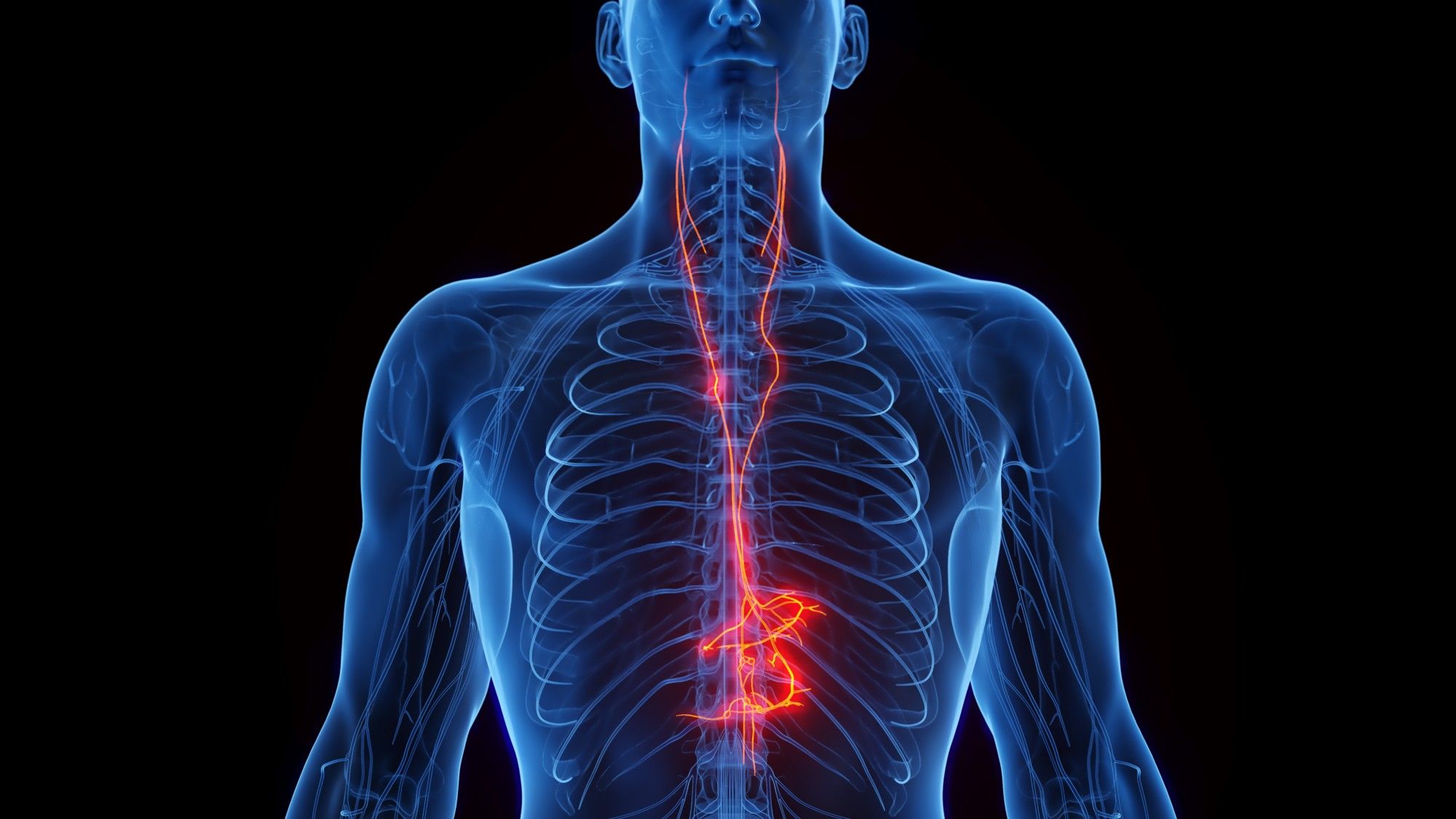
In an era where social media influencers tout quick fixes for stress and wellness, the vagus nerve has emerged as the latest darling of the health world. From humming into smartphones to gargling with exaggerated flair or even submerging faces in ice water, enthusiasts are experimenting with unconventional methods to 'activate' this cranial nerve, according to Katie Edwards and Dan Baumgardt writing for The Conversation. These practices, popularized online, promise to enhance mental and physical well-being by stimulating what some call the body's 'internal communication superhighway.'
The vagus nerve, the longest in the human body, derives its name from the Latin word for 'wandering' due to its extensive reach. Starting in the brainstem, its two branches extend through the neck, chest, and abdomen, connecting vital organs like the heart, lungs, gut, and liver. As Edwards and Baumgardt explain, it serves as a bidirectional relay, constantly shuttling information between the brain and these organs, functioning much like an intranet within the body.
Central to the autonomic nervous system, the vagus nerve plays a pivotal role in regulating involuntary processes such as heart rate, breathing, and digestion. It is particularly associated with the parasympathetic response, often dubbed 'rest and digest,' which counters the 'fight or flight' mode of the sympathetic system by slowing the heart and lowering blood pressure. When individuals feel calm and secure, it's the vagus nerve facilitating that state, helping to restore balance after periods of heightened stress.
The buzz around vagus nerve stimulation stems from the idea that modern life can trap the body in prolonged 'fight or flight' activation, leading to chronic health issues. Wellness advocates on platforms like Instagram and TikTok claim that targeted stimulation can 'reset' the system, promoting relaxation and overall health. This trend gained mainstream traction through the 2025 Netflix documentary 'Don't Die,' which followed tech entrepreneur Bryan Johnson on his anti-aging quest. In the film, Johnson is depicted using a vagus nerve stimulation (VNS) device to manage stress and improve sleep, as reported by Vogue.
Medical applications of VNS have a more established history. Implanted devices have been employed for decades to treat conditions like epilepsy and treatment-resistant depression. More recently, non-invasive transcutaneous devices—worn around the neck or in the outer ear—have shown promise in clinical trials for ailments including diabetes, Crohn's disease, fibromyalgia, and irritable bowel syndrome. These developments suggest a growing body of evidence supporting vagus nerve intervention in healthcare.
Following the documentary's release, wearable VNS gadgets flooded the market, marketed as tools to deliver precise electrical currents that 'wake up' or 'reboot' the nerve, akin to restarting a computer. The Independent described this as the vagus nerve receiving 'the trendy treatment,' with devices promising easy access to the nerve's benefits without surgery. Sales of such products have reportedly surged, with companies like those featured in Johnson's routine seeing increased interest from biohacking communities.
However, not all experts are convinced by the hype surrounding DIY methods. Arshad Majid, a professor of cerebrovascular neurology at the University of Sheffield, cautioned against oversimplifying the nerve's activation. 'I am cautious about claims that the vagus nerve can be “switched on like a light”,' Majid told Edwards and Baumgardt. He emphasized that there is 'not an on-off button' that techniques like humming, gargling, or ear poking can reliably trigger, and in some instances, such efforts might even provoke headaches or depression.
Majid's perspective highlights a divide between anecdotal wellness trends and rigorous science. While social media videos rack up millions of views—showing users dunking faces in ice bowls or practicing deep breathing exercises—clinical evidence for these at-home hacks remains limited. Researchers at institutions like the University of Sheffield are conducting ongoing trials with non-invasive VNS devices, but Majid advised restraint: 'you should “maybe hold off on aggressively poking your ear” for now.'
The vagus nerve's journey from medical obscurity to internet sensation mirrors broader patterns in health fads. In the early 2010s, similar enthusiasm surrounded gut microbiomes and intermittent fasting, driven by documentaries and celebrity endorsements. Johnson's involvement, as a Silicon Valley figure known for his extreme longevity protocols, has amplified the vagus nerve's profile. At 47 years old during the filming of 'Don't Die,' Johnson detailed how the device fit into his daily regimen, which includes meticulous tracking of biomarkers and a vegan diet supplemented by over 100 pills.
Proponents of vagus nerve training point to preliminary studies supporting its benefits. For instance, a 2022 trial published in the Journal of Clinical Medicine explored transcutaneous auricular VNS for reducing inflammation in rheumatoid arthritis patients, showing modest improvements in symptoms after four weeks of use. Similarly, research from the Feinstein Institutes for Medical Research in New York has linked vagal stimulation to better outcomes in long COVID recovery, with participants reporting reduced fatigue after sessions involving ear clips delivering mild electrical pulses.
Critics, however, warn of potential risks and the commercialization of unproven therapies. The U.S. Food and Drug Administration has approved certain VNS devices for specific uses, like epilepsy treatment since 1997, but many consumer wearables operate in a gray area, lacking robust FDA clearance for wellness claims. Edwards and Baumgardt noted that while the nerve's role in parasympathetic function is well-documented, the leap to self-administered stimulation requires more validation to avoid misleading the public.
Looking ahead, the next few years could bring significant advancements, as Majid suggested. Clinical trials at universities across Europe and the U.S. are testing VNS for mental health disorders, including anxiety and PTSD. A study at the University of California, San Diego, is examining its efficacy in veterans with traumatic brain injuries, with interim results from 2023 indicating potential reductions in hyperarousal symptoms. If these pan out, vagus nerve therapies might integrate into standard care protocols, bridging the gap between biohacking and medicine.
For everyday individuals drawn to the trend, experts recommend starting with evidence-based practices that indirectly support vagal tone, such as yoga, meditation, or cold showers—methods shown in meta-analyses to enhance parasympathetic activity without gadgets. The Conversation article underscores that while the vagus nerve holds real promise, its portrayal as a panacea on social media often outpaces the science.
As interest in the vagus nerve continues to grow, it serves as a reminder of the delicate balance between innovation and caution in health pursuits. With ongoing research poised to clarify its full potential, consumers are left navigating a landscape of hype and hope. For now, the nerve remains a fascinating, if elusive, key to well-being—one that warrants careful exploration rather than hasty experimentation.
In Appleton, local wellness centers have begun incorporating vagus nerve discussions into workshops, reflecting the trend's national reach. Dr. Elena Rivera, a neurologist at Appleton Memorial Hospital, echoed Majid's sentiments in a recent interview, stating, 'While stimulating the vagus nerve shows therapeutic promise, patients should consult professionals before trying unverified methods.' This guidance aims to ensure that the pursuit of calm doesn't veer into unintended harm.