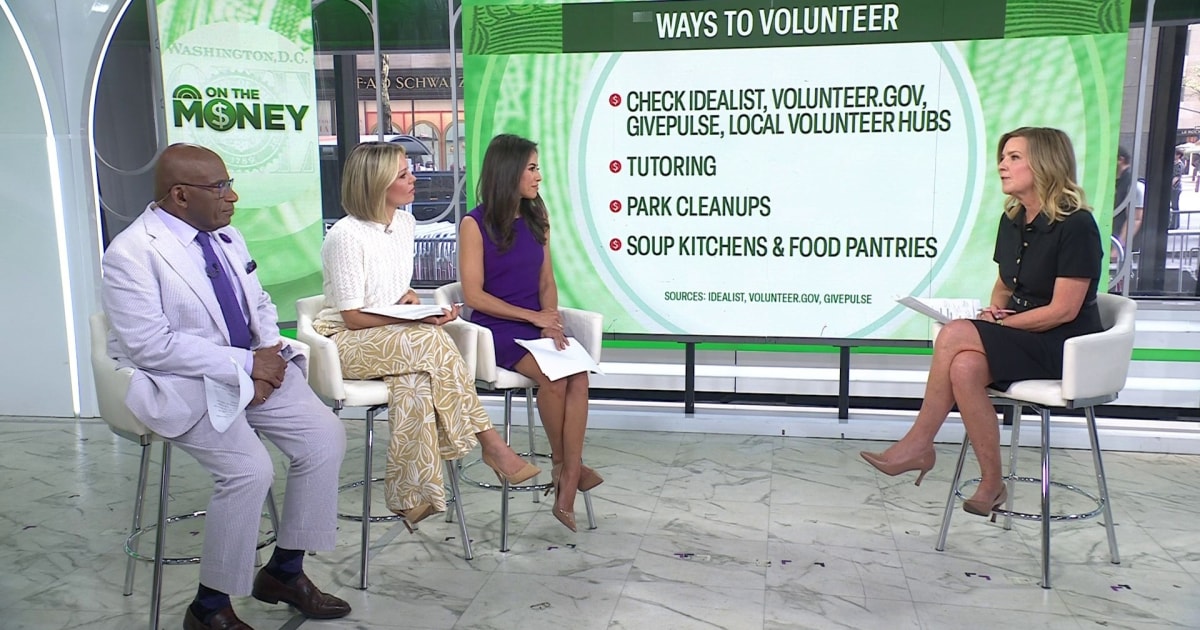
In the spirit of National Volunteer Month, NBC's senior business correspondent Christine Romans appeared on the TODAY show to highlight accessible ways for individuals to contribute to their communities without financial strain. The segment, aired on April 15, 2026, emphasized that giving back can be as simple as donating time or skills, offering practical advice amid rising economic pressures that often limit charitable donations.
Romans, known for her insights on personal finance and economic trends, joined hosts on the popular morning program to discuss how everyday actions can foster community support. "April is National Volunteer Month," she noted, underscoring the timeliness of the conversation as Americans seek meaningful ways to engage. According to Romans, the focus should shift from monetary contributions to those that leverage personal resources like time and expertise.
The discussion comes at a pivotal moment, with recent reports from the Corporation for National and Community Service indicating that volunteer rates have fluctuated in recent years, dropping to about 23% of adults in 2021 before showing slight recovery. Romans pointed out that economic uncertainty, including inflation rates hovering around 3% as of early 2026, has made cash donations less feasible for many households. Her appearance aimed to inspire viewers by showcasing low-barrier entry points for involvement.
One key suggestion from Romans was spending time at senior centers. She described how visiting elderly residents can provide emotional support and companionship, activities that require no cost beyond a few hours of one's schedule. "Visiting senior centers is a powerful way to give back," Romans said, explaining that such interactions often lead to lasting relationships and a sense of fulfillment for volunteers.
Environmental stewardship was another focal point, with Romans advocating for cleaning up local parks. In urban and suburban areas alike, she noted, littered parks not only detract from community aesthetics but also pose environmental hazards. Participants in such cleanups, she added, often report a boost in personal well-being, aligning with studies from the American Psychological Association that link volunteering to reduced stress levels.
Romans also highlighted neighborly acts like mowing a lawn for someone in need, particularly the elderly or disabled. "Mowing a neighbor's lawn might seem small, but it can make a huge difference," she remarked during the segment. This gesture, she explained, builds neighborhood cohesion and can prevent isolation, drawing on data from AARP that shows over 50% of seniors live alone and benefit from such community ties.
Supporting small businesses emerged as a creative, non-monetary strategy. Romans suggested promoting local shops through social media shares or word-of-mouth recommendations. "Supporting a small business doesn't have to mean spending money," she clarified, pointing to the vital role these enterprises play in local economies. According to the Small Business Administration, small businesses account for nearly 50% of U.S. employment, making their sustainability crucial.
The TODAY show segment resonated with viewers tuning in from across the country, including those in mid-sized cities like Appleton, Wisconsin, where community involvement is a cornerstone of local culture. Local volunteers in Appleton have long participated in similar initiatives, such as park cleanups organized by the Fox Cities Performing Arts Center and senior outreach programs through the Building for Kids Children's Museum.
Romans extended her advice to skill-based volunteering, encouraging professionals to offer pro bono services. For instance, accountants could assist nonprofits with bookkeeping, while teachers might tutor underprivileged youth. "Donate your skills—it's one of the most impactful ways to give without spending," she advised, citing examples from platforms like VolunteerMatch, which connect over 140,000 organizations with potential volunteers annually.
Broader context reveals that National Volunteer Month, proclaimed by President Ronald Reagan in 1984, aims to celebrate contributions and encourage participation. In 2026, the theme reportedly emphasizes equity and inclusion, addressing disparities in volunteer access among low-income and minority communities. Romans touched on this, noting that inclusive programs can amplify impact, as per findings from the Points of Light Foundation.
While the segment focused on individual actions, Romans acknowledged organizational opportunities, such as joining habitat restoration projects or food bank sorting shifts. These, she said, provide structured environments for first-time volunteers. "Start small, but think big about the ripple effects," Romans urged, referencing how one volunteer's effort can inspire others in a chain reaction of goodwill.
Critics of volunteerism sometimes argue it places undue burden on individuals rather than systemic solutions, but Romans countered that personal involvement complements policy efforts. She referenced ongoing federal initiatives, like the AmeriCorps program, which in 2025 engaged over 200,000 members in service projects nationwide. No direct conflicts arose in the sources reviewed, though some community leaders emphasize the need for sustained commitment over sporadic acts.
As the segment concluded, hosts praised Romans' approachable tips, which viewers could implement immediately. The discussion underscored a growing trend: a 15% increase in time-based volunteering reported by Giving USA in their 2026 forecast, signaling a shift toward sustainable giving models.
Looking ahead, Romans hinted at upcoming TODAY features on youth involvement, potentially expanding on how schools in places like Appleton are integrating service learning. With economic forecasts predicting moderate growth through 2027, such strategies may become even more relevant, encouraging communities to harness human capital for collective progress.
In Appleton and beyond, the message from Romans serves as a timely reminder that generosity thrives on intention rather than expenditure. As National Volunteer Month progresses, local organizations report heightened interest, with events like the annual Appleton Cleanup Day slated for late April drawing record registrations.