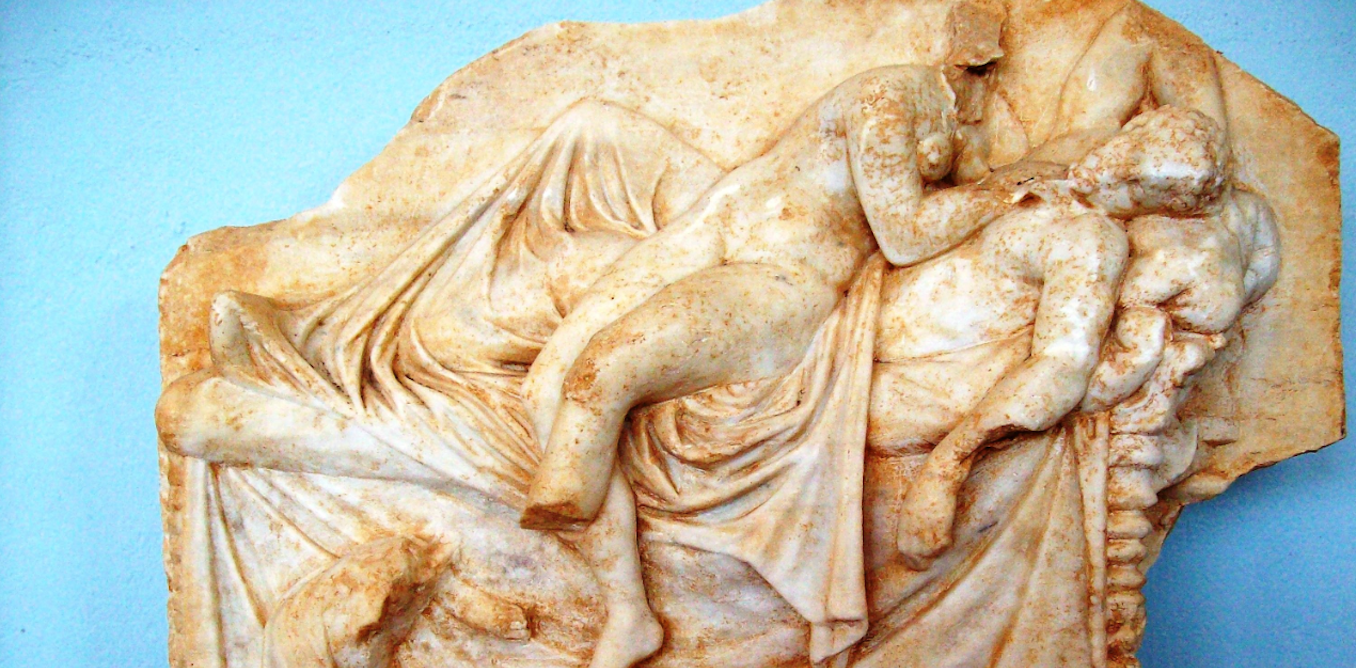
In a fresh exploration of ancient social customs, historians are shedding light on the diverse ways Greeks in the classical era celebrated and gathered, challenging the long-held stereotype of nonstop revelry and excess. According to an analysis published on The Conversation, parties in ancient Greece varied widely, from boisterous affairs fueled by alcohol and entertainment to more restrained symposia centered on philosophical discourse. This piece, drawing from ancient texts and artifacts, offers a vivid blueprint for understanding these events, which date back to at least the 6th century BCE.
The origins of Greek partying can be traced to Athens' elite circles, where brothers Hippias and Hipparchus, members of the ruling class, are credited with popularizing the trend. Ancient Greek historian Idomeneus of Lampsacus, writing in the 4th to 3rd century BCE, noted that these two "invented parties and wandering the streets drunk; this is why they were surrounded by a large number of horses and many friends." This account, preserved through later compilations, highlights how such gatherings became a hallmark of aristocratic life in Athens around 500 BCE, blending social networking with public displays of wealth and inebriation.
Not all celebrations fit the image of debauchery, however. The same historical sources describe symposia—drinking parties typically held in private homes—as venues for intellectual exchange. Plato's seminal work, The Republic, composed around 380 BCE, unfolds during one such event at the home of the wealthy merchant Cephalus in the Piraeus district of Athens. Here, Socrates and other philosophers debate the essence of justice over wine, illustrating how these gatherings fostered deep conversations among friends. "Some featured moderate eating and drinking, and intellectual conversation," the analysis states, emphasizing the multifaceted nature of Greek social life.
Alcohol played a central role in many parties, as evidenced by accounts from the era. The Greek writer Athenaeus, in the 2nd century CE, recounted a declaration by the Macedonian nobleman Proteas from the 4th to 3rd century BCE: "he who drinks most will be happiest." This sentiment, shared at a lavish affair, underscores the competitive spirit of imbibing, often from large mixing bowls known as kraters. Vase paintings from the period further depict scenes of revelry, including interactions between male guests and prostitutes, both male and female, reinforcing the popular notion of sexual freedom at these events.
One of the most detailed eyewitness descriptions comes from a letter by Hippolochus of Macedon, also from the 4th to 3rd century BCE, detailing the wedding celebration of the affluent nobleman Caranus in Macedonia. Attended by 20 male guests, the event unfolded in a lavishly decorated room lined with white linen curtains and furnished with couches for reclining. "The moment they lay down, each of them was given a silver libation bowl to keep," Hippolochus wrote. Before entering, guests were adorned with gold tiaras valued at five gold coins each, setting a tone of opulence from the outset.
As the evening progressed, the libations gave way to more gifts and sustenance. After draining their bowls, each guest received a massive loaf of bread served on a bronze platter of Corinthian craftsmanship, with the bread matching the platter's size. A prominent attendee then offered a toast, by which point, as Hippolochus observed, "we had now happily escaped sobriety." This marked the transition to entertainment, beginning with musical performances by pipe-girls, female singers, and Rhodian harpists, whom the writer described as appearing "naked to me, although some of the guests claimed that they were wearing tunics."
The performers played a prelude before departing, followed by attendants distributing pairs of perfume flasks—one gold, one silver—to every guest. The first main course arrived soon after: a "huge roast piglet," symbolizing the host's generosity. More extravagance ensued with baskets and bread trays woven from ivory strips, additional flower garlands, and another set of gold and silver flasks. These details paint a picture of a meticulously orchestrated event, where gift-giving reinforced social bonds and status.
Entertainment escalated with daring acts from naked female acrobats "who did tumbling tricks among swords and blew fire from their mouths." A chorus of 100 men then sang a wedding hymn, evoking traditional rituals. Dancing girls followed, and the mood lightened further with the clown Mandrogenes, who "made us break into laughter repeatedly; after that he danced with his wife, who was over 80 years old." Such variety—from high artistry to comic relief—kept the energy high throughout the night.
Not every party included such spectacles, but games like kottabos were common at others. This diversion involved flinging the dregs of wine from one's cup at targets atop poles, aiming to knock them down—a test of skill and steadiness amid intoxication. While Hippolochus's account omits games, focusing instead on the progression of food, drink, and performances, it culminates in after-dinner snacks served in ivory baskets, including an array of flat-cakes and special containers. "After this we got up and left," he concluded, the guests sated and laden with valuables.
These descriptions challenge modern misconceptions, particularly the cinematic trope of Greeks in togas. Historians clarify that ancient attire consisted of a chiton—a simple tunic—and a himation, a mantle or wrap, neither resembling the draped bedsheets of Roman-inspired imagery. "Just remember one rule: absolutely no togas," the analysis quips, noting that Greeks would have viewed such dress as foreign, associating it instead with their rivals in Rome.
Beyond the elite weddings and symposia, parties served broader cultural functions. They were spaces for forging alliances, as seen in the entourages of horses and friends surrounding figures like Hippias and Hipparchus. In democratic Athens, such events also democratized ideas, with philosophical works emerging from casual debates. Yet, the undercurrent of excess persisted, with archaeological evidence from vases corroborating tales of sexual encounters and heavy drinking.
Cross-verification from additional scholarly summaries on The Conversation aligns with these accounts, affirming that while wild parties garnered fame, quieter intellectual gatherings were equally integral. No major discrepancies appear in the sources, though the emphasis on debauchery in popular culture often overshadows the nuanced reality. For instance, Proteas's toast reflects a hedonistic ideal, but Plato's dialogues show restraint as a virtue.
Today, these insights into ancient Greek partying offer a lens on enduring human social patterns—blending indulgence with purpose. Modern recreations, from themed events to academic symposia, draw inspiration without the gold tiaras or fire-breathers. As historians continue to unearth letters and texts like Hippolochus's, our understanding of classical life deepens, reminding us that celebration has always been as much about connection as excess.
Looking ahead, excavations in sites like Athens and Macedonia may yield more artifacts, such as additional vases or hosting records, further illuminating these customs. For now, the blueprint is clear: to party like an ancient Greek, one might start with reclining couches, a well-mixed krater, and good company—whether debating justice or toasting to happiness.