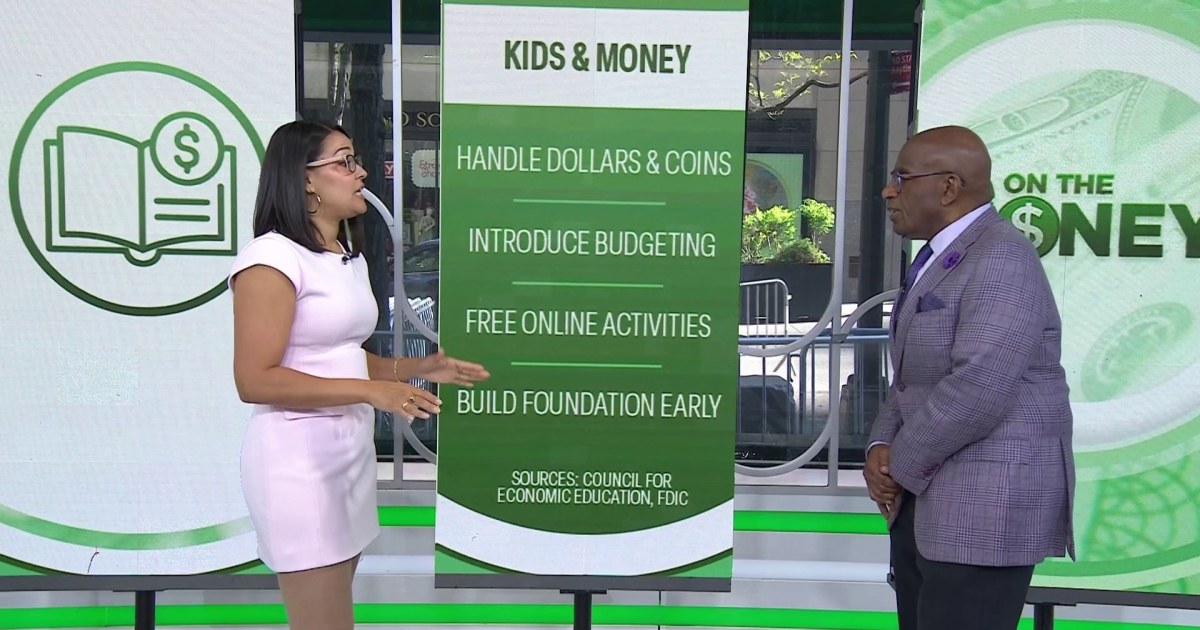
APPLETON, Wis. — In an era where financial pressures are mounting for families across the country, a recent survey has highlighted a stark reluctance among Americans to discuss money matters with their loved ones. According to a poll referenced in a segment on NBC's TODAY show, 62 percent of people avoid talking about finances with family members, leaving many households navigating economic challenges in silence.
The segment, titled "How to Talk Finances With Family (and Why It's Important)," aired on April 23, 2026, and featured Yanely Espinal, the director of educational outreach at Next Gen Personal Finance. Espinal, an expert in financial literacy, joined the show to address this gap and provide practical guidance on initiating these crucial conversations. Her appearance comes at a time when economic uncertainties, including inflation and rising costs of living, have made financial openness more vital than ever.
Espinal emphasized that avoiding money talks can perpetuate misunderstandings and missed opportunities for shared growth. "Focusing on values and financial goals when discussing money with other adults," she advised during the broadcast, underscoring the need to align conversations around long-term aspirations rather than immediate conflicts. This approach, she explained, helps build trust and fosters collaborative planning for the future.
For parents navigating discussions with teenagers, Espinal recommended a targeted strategy. She suggested asking high school children about their financial literacy curriculum, a step that not only gauges their current knowledge but also opens doors to deeper dialogue. "Many schools are incorporating financial education, but it's often up to families to reinforce these lessons," Espinal noted, pointing to the variability in programs across districts.
Introducing foundational concepts early is another cornerstone of her advice. Espinal urged parents to begin teaching budgeting and basic financial principles to young children, framing them as essential life skills akin to tying shoelaces or reading. This early intervention, she argued, can set the stage for lifelong financial health and prevent the kind of avoidance seen in the survey.
The survey's findings, while not detailed in full by TODAY, align with broader trends in financial behavior research. Organizations like Next Gen Personal Finance, where Espinal works, have long advocated for integrating personal finance education into everyday family interactions. Founded to promote accessible financial learning, the nonprofit has reached millions through its resources, emphasizing that silence on money can lead to higher debt levels and poorer retirement planning down the line.
Espinal's tips resonated with viewers, many of whom shared stories online following the segment. One parent from the Midwest commented on social media, echoing Espinal's points by saying they planned to review their teen's school syllabus that weekend. Such reactions highlight the timeliness of the discussion, especially as back-to-school seasons approach and families reassess priorities.
Background on the survey itself remains somewhat opaque, as TODAY did not specify the polling organization or sample size in the aired content. However, the 62 percent figure serves as a compelling hook, illustrating a cultural taboo that persists despite the ubiquity of financial apps and media coverage. Experts like Espinal attribute this to generational patterns, where older relatives may view money as a private matter, passing on reticence to younger ones.
In the context of Appleton, a city where manufacturing jobs have fluctuated with national economic shifts, local families face unique pressures. The median household income here hovers around $60,000, according to recent census data, making open financial dialogues potentially transformative for budgeting amid rising utility and grocery costs. Espinal's advice could prove particularly relevant in communities like this, where community colleges and libraries often host free financial workshops.
Expanding on adult conversations, Espinal stressed the importance of vulnerability. "When talking with partners or siblings, start with shared goals like saving for a home or funding education," she said. This method, drawn from Next Gen's outreach programs, encourages empathy and reduces the intimidation factor often associated with money talks.
For younger audiences, the high school curriculum inquiry serves as an entry point. Espinal highlighted that while states like Wisconsin mandate some financial literacy in high schools, implementation varies. "Asking your child what they've learned can reveal gaps and spark home-based lessons," she advised, promoting a partnership between educators and families.
Early childhood education in finance, as Espinal described, involves simple activities like allowance management or grocery shopping simulations. "Introduce concepts of budgeting and foundations early in a child’s life," she recommended, noting that habits formed before age 10 tend to stick. This proactive stance contrasts with the survey's revelation of widespread avoidance, suggesting a path forward through intentional parenting.
The segment's production by NBCUniversal Media, LLC, under the TODAY banner, underscores its reach, with the show drawing millions of viewers daily. Airing in the morning slot, it targets busy parents seeking quick, actionable insights. Espinal's role at Next Gen, where she develops curricula for underserved communities, adds credibility to her counsel, as the organization partners with schools nationwide.
Broader implications of the survey extend to societal levels. Financial illiteracy contributes to issues like the $1.7 trillion in U.S. student debt and widespread under-saving for retirement, per federal reports. By encouraging family discussions, initiatives like Espinal's aim to chip away at these challenges, potentially leading to more equitable wealth distribution over generations.
Looking ahead, Next Gen Personal Finance plans to expand its outreach, possibly incorporating more media appearances to amplify messages like Espinal's. Families in Appleton and beyond are encouraged to tune in or visit resources at nextgenpersonalfinance.org for toolkits. As economic forecasts predict continued volatility through 2026, breaking the silence on finances may well become a household priority.
By Rachel Martinez, The Appleton Times