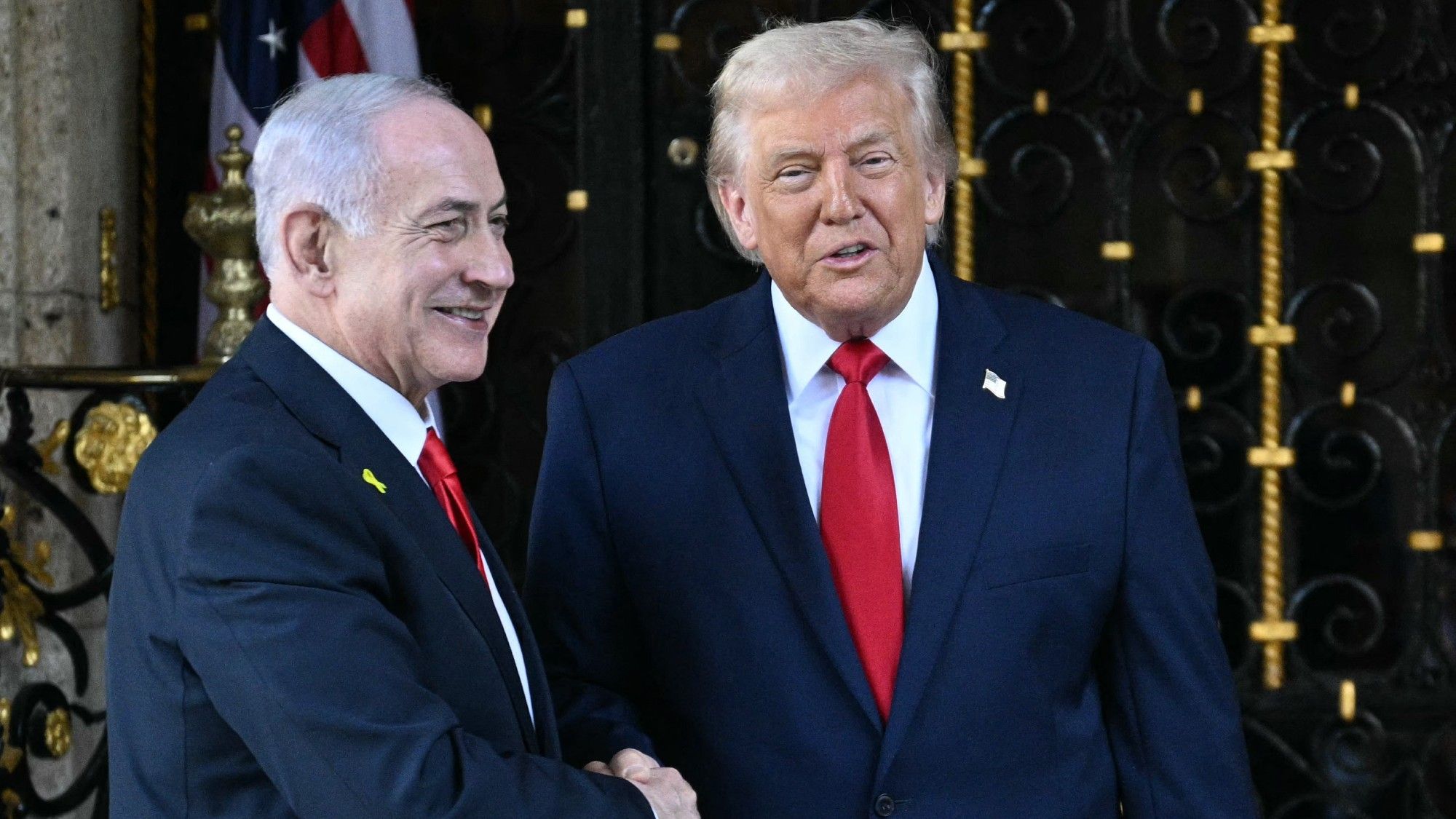
APPLETON, Wis. — As the war between the United States and Iran enters its second week, President Donald Trump has indicated that any decision to end the conflict will be made in close consultation with Israeli Prime Minister Benjamin Netanyahu. "The decision to end the war with Iran will be a 'mutual' one between himself and Israel’s Prime Minister Benjamin Netanyahu," Trump stated during a recent briefing. "We’ve been talking. I’ll make a decision at the right time, but everything’s going to be taken into account," he added.
The conflict, which erupted in the Middle East with unprecedented intensity, has already "set new speed records for conflict and destruction," according to CNN correspondent Nick Paton Walsh. Initial missile strikes and retaliatory actions have disrupted key economic lifelines in the region, including shipping through the Strait of Hormuz, QatarEnergy’s liquid natural gas production, and flights at Dubai International Airport. While both sides have notched some military successes, the path to resolution remains unclear, with analysts warning of escalating economic fallout and political dilemmas.
Background to the war traces back to heightened tensions following U.S. airstrikes on Iranian targets, which Trump hoped would leverage rising oil prices to pressure Tehran into negotiations. According to The Economist, this marked a "new phase" of the U.S.-Iran war that has exposed the "limits of their strategies." Iran, in turn, sought to sow "chaos" in the Gulf states—described as "America’s soft underbelly"—in hopes that those allies would urge the U.S. to halt the campaign.
Despite these tactical gains, neither side has advanced its broader political goals. The Iranian regime has "proved resilient thus far," as noted in The Economist, weathering the initial barrage without collapsing. Similarly, America’s Gulf allies, including Saudi Arabia and the United Arab Emirates, have held firm amid the disruptions, though investors in the region are beginning to "grumble" over mounting costs. Further escalation poses greater risks for Iran, which has endured "decades of economic mismanagement" and may find its endurance tested sooner than expected.
President Trump faces a stark choice, according to Robert A. Pape, a political scientist writing in Foreign Affairs. "Trump himself is on the horns of a dilemma" with two primary options: "doubling down" on the air campaign to establish "aerial control over the skies and surveillance on the ground," or "ending the military commitment" outright. Pape argues that without a "golden off-ramp"—a clear diplomatic exit—Trump must weigh "short but limited political costs now or more protracted and more uncertain political costs later."
Iran [is] intent on pursuing “horizontal escalation” – widening the “geographic and political scope of a conflict rather than intensifying it vertically” – perhaps the “wisest choice” would be for the US to “accept a limited loss now rather than risk compounding losses later.”
This assessment comes as Iran shifts tactics toward broadening the conflict's footprint, potentially drawing in regional actors beyond the immediate U.S.-Iran axis. Such moves could complicate U.S. operations and prolong the engagement, analysts say.
Economic pressures may ultimately force both sides toward de-escalation, according to Frédéric Schneider of the Middle East Council on Global Affairs. The initial strikes occurred "at a moment of global economic fragility," Schneider noted, leading to immediate "volatility" in markets. Disruptions have already impacted global trade, with the Strait of Hormuz—a chokepoint for about 20% of the world's oil—facing intermittent closures and heightened security risks.
Schneider predicts that "sustained attacks" over a four- to six-week period could cause economic costs to "escalate sharply." If the conflict drags beyond that, the removal of "roughly one-fifth of global oil supply" becomes plausible, representing "a shock without modern precedent." For the U.S., this would trigger a "near-certain 'inflationary impulse'" as warned by banks, potentially eroding domestic support for the war. Gulf nations, sandwiched between the combatants, face "infrastructure damage, collapsing investor confidence and emergency military spending," which could lead to "genuine fiscal distress."
These economic ripples extend beyond the region. Oil prices have surged since the conflict's outset, affecting consumers worldwide, from European motorists to American households bracing for higher fuel costs. Travel disruptions, including rerouted flights avoiding Middle Eastern airspace, have stranded thousands and added billions to airline operating expenses.
Looking ahead, the war's endgame could take several forms, as outlined by Roland Oliphant, David Blair, and Maryam Mazrooei in The Telegraph. One optimistic scenario envisions a "democratic revolution" in Iran, fueled by its "deeply rooted sense of civic and national identity" that transcends ethnic and sectarian divides. Unlike cases in Libya or Syria, Iran boasts a "vast, highly-educated and pragmatic middle class" that could drive meaningful change if the regime falters under pressure.
A second possibility involves U.S. efforts to replicate its approach in Venezuela, where sanctions and isolation aimed to topple the government. However, Iran's institutions remain "still functioning," particularly following the appointment of Mojtaba Khamenei as Supreme Leader. The country is led by an "entrenched, IRGC-aligned elite," making such an intervention less feasible than in Caracas.
The third outcome, described as the "darker" one, is the outbreak of civil war. Reports have surfaced of a "possible US-backed ground incursion by Kurdish militant groups based in northern Iraq," though the Trump administration has dodged questions on the matter. Such an operation, if pursued, carries "fraught with danger" consequences, potentially fracturing Iraq further and igniting broader sectarian strife across the region.
These unconfirmed reports highlight the high stakes involved. Kurdish forces, long allied with the U.S. in operations against ISIS, have expressed readiness to act against Iranian interests but await clear directives from Washington. Officials in Baghdad have voiced concerns over sovereignty violations, while Tehran has vowed retaliation against any cross-border moves.
As the second week draws to a close, international observers are closely monitoring diplomatic channels. Backchannel talks between U.S. and Iranian envoys, reportedly facilitated through Swiss intermediaries, have yielded no breakthroughs. European leaders, including those from France and Germany, have called for an immediate ceasefire, citing the global economic toll.
The implications of prolonged conflict extend to U.S. domestic politics. With midterm elections approaching, Trump's handling of the war could sway voter sentiment in key states like Wisconsin, where manufacturing sectors reliant on stable energy prices are already feeling the pinch. Gulf allies, meanwhile, are bolstering defenses with U.S.-supplied weaponry, committing billions to what could become an extended standoff.
Ultimately, the war's resolution hinges on whether economic pain and military realities can converge on a viable off-ramp. As Schneider put it, the fragility of the global economy may prove the most persuasive negotiator. For now, both sides dig in, with the world watching anxiously for the next move.