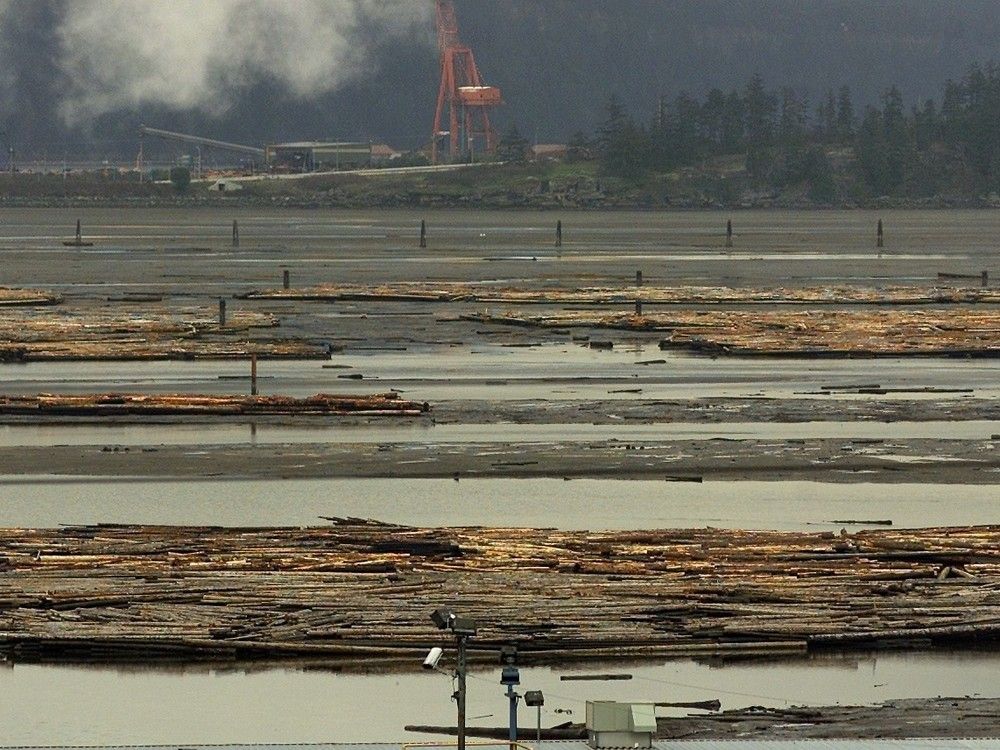
VICTORIA, British Columbia — A new study has revealed a dramatic surge in drift logs along British Columbia's coastline, inflicting severe damage on the province's fragile intertidal zones, the ecosystems that thrive between high and low tides on rocky shores. Published in the journal Marine Ecology, the research highlights how these logs, tossed by waves and tides, grind against the shoreline daily, eroding habitats critical for marine life. Researchers examined 202 sites using satellite imagery and found an average of 311 logs per kilometer on sandy shores and 194 per kilometer on rocky ones, with one particularly affected rocky site logging 1,238 logs in just a single kilometer. Overall, an estimated 450,000 drift logs litter the Vancouver Island coast alone.
The destructive impact of drift logs on rocky intertidal communities was first documented back in 1971, but the phenomenon has largely flown under the radar since then, despite its profound ecological and conservation implications, according to the study. "Historical analyses of archival photographs reveal a 520 per cent increase in drift log abundance since the late 19th century and an estimated 800 per cent increase since pre-European settlement, trends that correlate with the expansion of forestry operations over the past century," the report states. This escalation aligns closely with the growth of logging activities in the region, which have boomed over the last 100 years, transforming vast swaths of B.C.'s forests into timber resources.
Drift logs, often remnants from logging operations, pose a unique threat because they move with the tides, abrading the rocky surfaces where a variety of species cling to survival. The study notes that barnacles, which serve as a vital food source for numerous intertidal organisms, are far less abundant in areas exposed to these logs compared to protected crevices. This reduction in barnacle populations ripples through the food web, affecting everything from small crustaceans to birds and fish that rely on these zones for foraging. "While future higher resolution remote sensing will refine assessments of drift log impacts, our current findings indicate that ongoing log-induced abrasion has significantly degraded intertidal communities across most rocky shores in Western Canada," the researchers concluded. "This degradation likely has cascading negative effects on both aquatic and terrestrial species that depend on these habitats for foraging."
Experts involved in the study emphasize that the problem is not just local but widespread, spanning much of B.C.'s expansive 27,000-kilometer coastline. The intertidal zone, often overlooked amid larger environmental concerns like climate change and ocean acidification, plays a crucial role in biodiversity. It supports thousands of species, including commercially important ones like shellfish and crabs, and acts as a buffer against coastal erosion. The logs' relentless motion—pushed up and pulled down by daily tides—creates a grinding effect that can strip away algae, mussels, and other foundational species, leaving barren rock in their wake.
According to the research, approximately 80 percent of the drift logs on B.C.'s coast originate from forestry activities. Logs that escape booms during storms or transport often wash ashore, accumulating in high densities. The Vancouver Island region, with its dense logging history and rugged shores, exemplifies the issue, where the sheer volume of logs—450,000 estimated—overwhelms natural cleanup processes like wave action and decomposition. Historical photos from the late 1800s show far sparser log presence, underscoring how industrial-scale forestry has amplified the problem.
The study's authors call for urgent action, stating that "a major reduction in drift logs is essential to reverse the ongoing destruction of rocky shore intertidal communities in B.C." They point to the need for better management practices in the logging industry to prevent logs from entering coastal waters. While the research doesn't specify exact timelines, it builds on decades of understudied evidence, urging policymakers to prioritize this hidden threat.
In response to such environmental pressures, the British Columbia provincial government has been promoting alternatives to traditional log handling methods. Officials are encouraging the forestry sector to use barges for transporting and storing logs, rather than relying on booms that can break apart during severe weather. This shift, according to government statements, could significantly reduce the number of logs that drift free and end up on beaches. The Ministry of Forests has invested in incentives for companies adopting these technologies, though implementation varies across the province's diverse logging operations.
Environmental groups have long raised alarms about logging's coastal impacts, and this study provides fresh data to bolster their case. Organizations like the Sierra Club of B.C. have advocated for stricter regulations on log storage, citing similar abrasion issues in other regions. However, industry representatives argue that modern practices have improved, with many companies already using containment measures. The Forest Practices Board, an independent watchdog, has reported in past audits that while boom failures occur, they represent a small fraction of total timber volume—though even that small fraction translates to thousands of logs washing ashore annually.
The intertidal zone's degradation extends beyond immediate habitat loss. Scientists warn of broader ecological consequences, including reduced resilience to climate stressors like rising sea levels and warmer waters. For instance, healthy intertidal areas help stabilize shorelines and support fisheries that contribute billions to B.C.'s economy. The study's findings align with global concerns over how human activities fragment coastal ecosystems, potentially exacerbating species declines. In Western Canada, where rocky shores dominate, the issue affects not just B.C. but stretches into Alberta and beyond, though B.C. bears the brunt due to its logging intensity.
Local communities, particularly Indigenous groups with traditional ties to coastal areas, have observed these changes firsthand. First Nations along Vancouver Island, such as the Nuu-chah-nulth and Coast Salish peoples, rely on intertidal resources for food and cultural practices. Elders have noted fewer shellfish harvests in recent decades, attributing it partly to altered shorelines from industrial activities. The study acknowledges this cultural dimension, noting that conservation efforts must incorporate Indigenous knowledge to be effective.
Looking ahead, the researchers suggest that advanced satellite technology could monitor log accumulation in real-time, allowing for quicker interventions like organized beach cleanups or barriers. But they stress that prevention is key—reducing log inputs at the source through policy changes. The B.C. government has signaled openness to updates in its Coastal Forest Action Plan, which already addresses some runoff issues, but specifics on drift logs remain pending. Forestry Minister Doug Donaldson has previously stated in interviews that the sector is "committed to sustainable practices," though critics say enforcement lags behind rhetoric.
As B.C. grapples with balancing its vital forestry economy—worth over $13 billion annually—with environmental stewardship, this study serves as a stark reminder of unintended consequences. With logs continuing to accumulate at alarming rates, the path to restoration will require collaboration among loggers, scientists, and regulators. Without significant reductions, the intertidal zones that define much of the province's wild beauty could face irreversible harm, affecting generations to come.
The full implications of the study's data are still unfolding, but its call for action resonates amid growing awareness of coastal vulnerabilities. As satellite imagery becomes more precise, future assessments may pinpoint even more hotspots, guiding targeted protections. For now, the grinding rhythm of drift logs along B.C.'s shores underscores a pressing need: to safeguard the thin strip of life between land and sea before it's worn away.