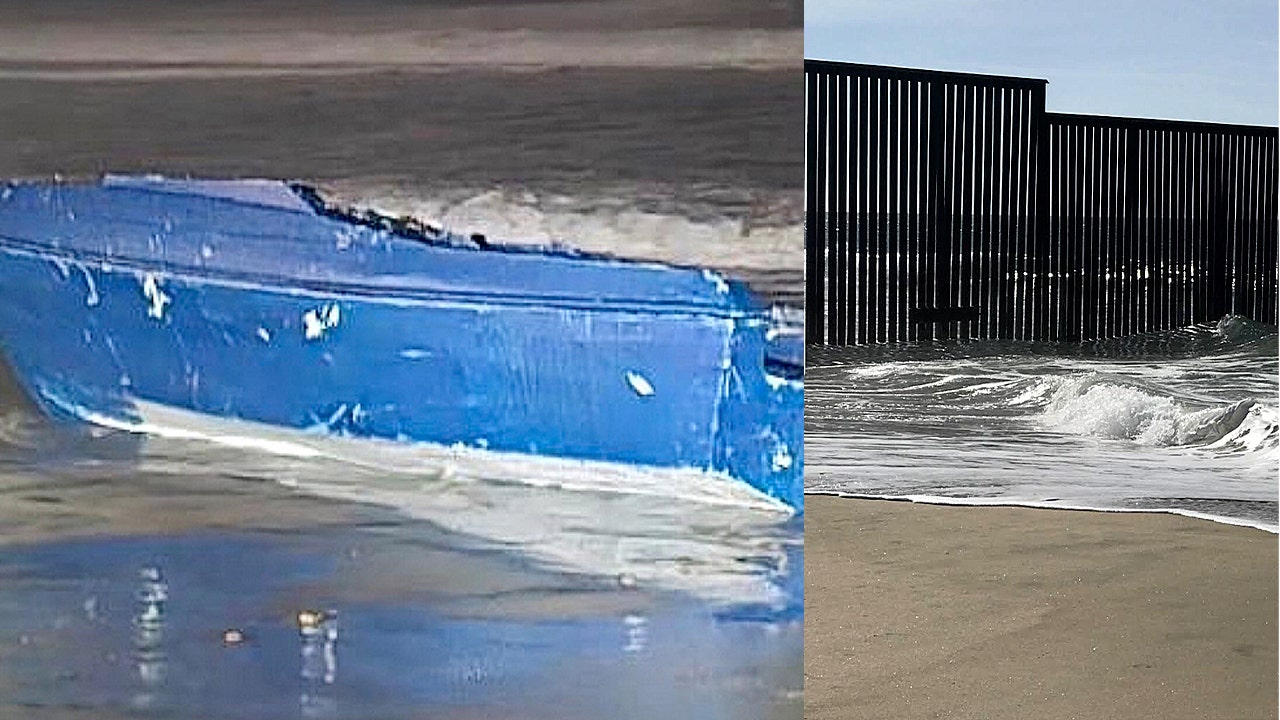
IMPERIAL BEACH, Calif. — Federal prosecutors have charged two Mexican nationals with human smuggling offenses after a panga boat carrying migrants capsized in rough surf off the San Diego coast, resulting in the deaths of four passengers. The incident, which unfolded on Nov. 14, highlights the perilous risks migrants face when attempting to cross the U.S.-Mexico border by sea, amid ongoing challenges with engine failures and overcrowded vessels in the region.
According to a Department of Justice release, the boat overturned in six-foot waves near Imperial Beach, approximately an hour after U.S. Customs and Border Protection agents were alerted to a small vessel crossing the international maritime boundary. Nine people were believed to be aboard the low-slung panga boat, a type commonly used by smugglers for its speed and ability to evade detection. Four individuals drowned in the mishap, while five others were rescued from the surf or detained and transported to local hospitals for treatment.
David Alfonso Barrera Nunes, identified as the boat's captain and a Mexican national, was arrested on Saturday and charged in connection with the deaths of the four passengers. Prosecutors allege that Nunes refused pleas from passengers to turn the boat back toward Mexico after it experienced engine problems, leading to an argument that escalated as the vessel struggled in the heavy surf. A criminal complaint reviewed by reporters states that Nunes attempted to push the boat toward shore despite lacking engine power, ultimately causing it to rotate and capsize.
Barrera Nunes was the second person to reach the beach after the overturning, according to the complaint, and made no effort to assist the struggling passengers. One survivor recounted to border patrol agents being trapped inside the submerged cabin but surviving by finding a pocket of air that allowed him to breathe until agents arrived and flipped the vessel upright. Another passenger described reluctantly joining the journey to accompany his granddaughter, noting that the captain had ordered everyone to jump overboard just before the boat rolled. He managed to pull his granddaughter to safety but became trapped himself, suffering a severe leg injury from a piece of metal shard in the process before being rescued.
A second suspect, Luis Enrique Barreto Goitia, also a Mexican national, faces charges of bringing in aliens resulting in death and bringing in aliens for financial gain, as outlined in the Justice Department release. Authorities have not disclosed Barreto Goitia's specific role in the operation, but the charges suggest involvement in coordinating or facilitating the smuggling venture. Federal officials emphasized that the case underscores the deadly consequences of human smuggling networks operating along the California coast.
One of the passengers on the boat has also been charged with being a previously removed alien who illegally reentered the United States. According to prosecutors, this individual was most recently deported on Nov. 3, 2025, and had first been removed in 2012. The man's identity was not immediately released, but his case adds to the tally of those intercepted during the incident.
The tragedy occurred against a backdrop of increasing maritime smuggling attempts in the San Diego sector, where rough Pacific waters and strong currents pose constant threats to overloaded boats. Panga vessels, typically wooden fishing boats repurposed for illicit crossings, have been involved in numerous incidents over the years, often carrying far more people than they can safely handle. In this case, the argument reportedly broke out between the captain and passengers as the engine failed, with those aboard pleading for a return to safety in Mexico—a request that was allegedly ignored.
Customs and Border Protection agents spotted the capsized panga shortly after receiving the alert, with survivors emerging from the surf amid the churning waves. Petty Officer 3rd Class Roberto Nieves of the U.S. Coast Guard captured images of the scene, showing the overturned boat in the turbulent waters off Imperial Beach. The area, near Border Field State Park, is a frequent hotspot for such crossings, with migrants often launching from Tijuana beaches visible through the U.S.-Mexico border wall.
Eric Brown, a retired Green Beret and founder of Imperio Consulting, has commented on the broader trend of human smuggling interceptions, noting an uptick in operations along coastal areas like San Diego and even as far east as Coral Gables, Florida. While Brown was not directly involved in this incident, his insights highlight how smuggling routes have diversified, with sea crossings becoming more common as land patrols intensify. "These operations are getting more desperate," Brown told Fox News Digital in a separate interview, though he did not address this specific case.
The Justice Department has not released the names or nationalities of the four deceased passengers, citing the ongoing investigation. However, the survivors' accounts paint a picture of chaos and desperation, with one man expressing regret over endangering his granddaughter in the pursuit of a better life. Such personal stories are not uncommon in smuggling cases, where families weigh the dangers against the promise of opportunity in the U.S.
This incident echoes other recent maritime tragedies along the border. Just weeks earlier, eight people were rescued from a sinking boat off Miami after running low on fuel in rough waters, though that event did not result in fatalities. In San Diego, officials have reported a surge in panga landings, with Border Patrol apprehending hundreds of migrants from sea voyages in recent months. The capsizing comes amid heightened scrutiny of immigration enforcement, including criticisms of policies that some say encourage risky crossings.
Prosecutors are seeking to hold the accused smugglers accountable for what they describe as reckless endangerment driven by financial motives. The charges against Barreto Goitia explicitly reference financial gain, pointing to the lucrative nature of the smuggling trade, where operators can charge thousands of dollars per passenger. Nunes' alleged refusal to turn back, despite the evident peril, forms the crux of the case against him, with federal authorities arguing it directly contributed to the drownings.
As the investigation continues, the Department of Justice has reached out for additional comments but has not provided further details on potential sentences or related arrests. Survivors are reportedly cooperating with authorities, offering testimony that could strengthen the prosecution's case. Meanwhile, immigration advocates have called for safer pathways for migrants, arguing that strict border policies push people into the hands of dangerous smugglers.
The broader implications of this tragedy extend to U.S. border security strategies, where maritime patrols play a critical role in intercepting smuggling attempts. With the Pacific coast serving as a vital yet hazardous corridor, incidents like this one serve as stark reminders of the human cost involved. Officials from Customs and Border Protection continue to monitor the area, urging the public to report suspicious vessels to prevent future losses.
Looking ahead, the case against Nunes, Barreto Goitia, and the charged passenger will proceed through federal court in San Diego, where similar smuggling prosecutions have resulted in lengthy prison terms. As families mourn the four lost lives, the event underscores the urgent need for comprehensive approaches to migration that address both enforcement and humanitarian concerns. The Appleton Times has reached out to the Justice Department for updates, but no additional information was available at press time.