In a stunning political upset, Hungarian Prime Minister Viktor Orbán conceded defeat late Sunday after his long-dominant Fidesz party suffered a landslide loss to challenger Péter Magyar and his center-right, pro-Europe Tisza party. The election, held across Hungary on Sunday, saw an unprecedented voter turnout of nearly 80 percent—the highest since the fall of communism in 1989—reflecting deep public discontent with Orbán's 16-year rule. As results poured in Monday morning, projections indicated that Magyar's alliance would secure 138 of the 199 seats in the National Assembly, surpassing the two-thirds supermajority threshold and positioning the new government to potentially amend the constitution and dismantle core elements of what critics have called Orbán's "illiberal democracy."
Orbán, addressing a subdued crowd of supporters at Fidesz headquarters in Budapest, acknowledged the outcome with uncharacteristic brevity. "The election result is painful for us, but clear," he said, according to reports from Politico. The veteran leader, who had positioned himself as a bulwark against liberal influences in Europe, appeared visibly shaken as confetti from earlier campaign rallies lay scattered on the floor. His concession marked the end of an era that saw Hungary drift toward authoritarianism, with tightened media controls, judicial reforms favoring loyalists, and policies that strained relations with the European Union.
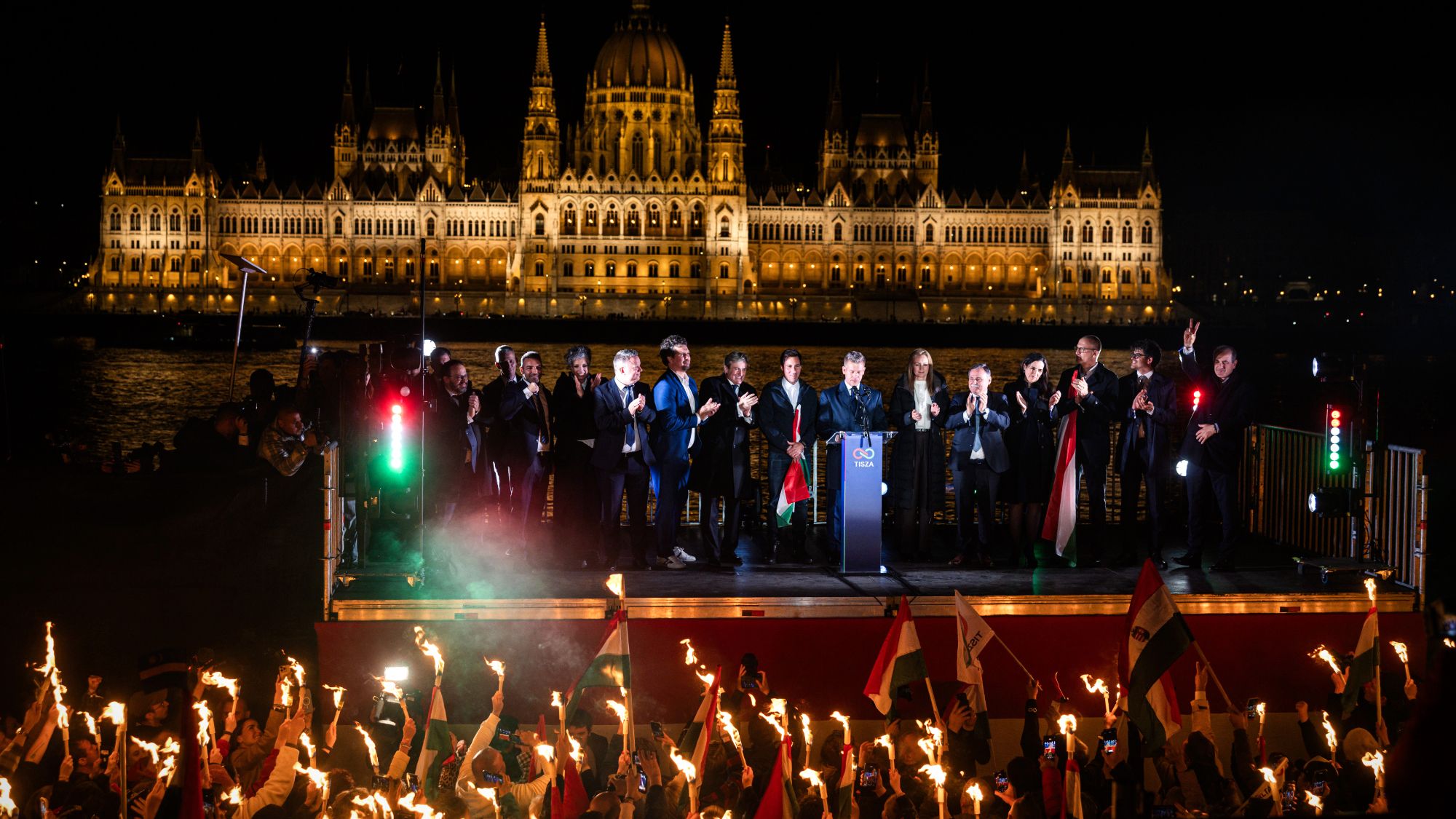
Meanwhile, jubilant scenes unfolded along the banks of the Danube River in central Budapest, where thousands gathered to hear from the victorious Péter Magyar. The 43-year-old former diplomat and Orbán critic, who launched his Tisza party just months ago amid personal scandals involving the prime minister's inner circle, declared victory to roaring applause. "We have liberated Hungary," Magyar proclaimed, his voice echoing over the crowd. He continued, "Hungarians said yes to Europe today, they said yes to a free Hungary." The speech, delivered around 10 p.m. Sunday under a canopy of floodlights, symbolized a sharp pivot toward reintegration with European institutions after years of isolation under Orbán.
European leaders, who had grown increasingly exasperated with Orbán's vetoes on EU aid to Ukraine and his cozy ties with Moscow, were quick to extend congratulations. German Chancellor Olaf Scholz tweeted his support early Monday, calling the result a "victory for democratic values." French President Emmanuel Macron echoed the sentiment in a statement from the Élysée Palace, saying, "Hungary's choice strengthens Europe's unity." These reactions underscored the broader geopolitical stakes, as Orbán had become a key ally for illiberal movements across the continent and a thorn in the side of Brussels.
Orbán's defeat was not entirely unforeseen, though its scale surprised even seasoned observers. Polls in recent weeks had shown Tisza gaining ground, fueled by economic woes including inflation hovering above 10 percent and a stagnating GDP growth rate of just 0.7 percent last year, according to Eurostat figures. Corruption allegations, including leaked recordings implicating Orbán's associates in graft schemes, further eroded public trust. Magyar, a former Fidesz insider who broke ranks after a bitter divorce from a government-linked figure, capitalized on this disillusionment by promising transparency and reform.
The election campaign was marked by intense international involvement. President Donald Trump, fresh from his own reelection bid, issued several personal endorsements for Orbán, including a social media post praising him as a "true fighter against the radical left." Vice President JD Vance traveled to Budapest last month for a high-profile rally, where he urged Hungarians to reject "globalist interference." Reports from Politico suggest that Russian President Vladimir Putin also provided tacit support, with unconfirmed whispers of financial backing if Orbán prevailed. However, these interventions appeared to backfire, alienating moderate voters amid Hungary's economic struggles and perceptions of cronyism.
"Orbán was a lodestar for MAGA culture warriors and right-wing populists in Europe," The New York Times noted in its analysis, highlighting how his model of nationalist governance inspired figures from Italy's Giorgia Meloni to Poland's former Law and Justice party. Yet, in Hungary, the strategy faltered against a tide of domestic frustration.
Magyar wasted no time outlining his agenda for the new parliament, which is set to convene in early May. Speaking to reporters outside Tisza's makeshift campaign office in Budapest's Andrássy Avenue district, he demanded that Fidesz loyalists in key state institutions resign immediately. This included President Tamás Sulyok, a Fidesz appointee whose term ends next year, and heads of public media outlets accused of biased coverage during the election. "We will never again be a country of no consequences," Magyar vowed, pledging to establish an "office for the restoration of national wealth." This new body, he explained, would probe the alleged looting of state assets under Orbán and pursue prosecutions for corruption cases that had long gone unaddressed.
Background on Orbán's tenure provides crucial context for the seismic shift. Elected in 2010 amid the global financial crisis, he swiftly consolidated power by rewriting the constitution in 2011, which opponents said weakened checks and balances. His government redirected EU funds toward loyal businesses, leading to billions in alleged kickbacks, according to investigations by the European Public Prosecutor's Office. Orbán's stance on migration—erecting a border fence in 2015—and his resistance to sanctions on Russia following the 2022 invasion of Ukraine further polarized the nation. By 2024, youth unemployment had climbed to 12 percent, and protests against a controversial child abuse pardon scandal in early 2024 galvanized opposition forces.
While Fidesz conceded gracefully on the surface, party insiders hinted at challenges ahead. A Fidesz spokesperson, speaking anonymously to Reuters, described the loss as a "temporary setback" and suggested legal challenges to the vote count in rural strongholds where turnout dipped below 70 percent. Independent election monitors from the Organization for Security and Co-operation in Europe, who observed polling stations nationwide, reported no major irregularities but noted heightened tensions at some urban sites. With 5.8 million registered voters, the final tally showed Tisza capturing about 54 percent of the popular vote, per preliminary data from the National Election Office.
Magyar's rise was meteoric. A career diplomat who served in NATO postings, he entered the fray after his ex-wife, Judit Varga—a former justice minister—became embroiled in a pardon controversy linked to Orbán's administration. Magyar's Tisza party, named after the historic interwar political movement, blended conservative economics with pro-EU rhetoric, appealing to both disillusioned Fidesz voters and urban liberals. Campaign events drew massive crowds, including a rally in Debrecen on April 20 that attracted over 30,000 attendees, according to local police estimates.
The implications of this victory extend far beyond Hungary's borders. For the European Union, a pro-Brussels government in Budapest could unlock stalled funds—some €20 billion in cohesion aid—and smooth decision-making on foreign policy. Analysts at the Bruegel think tank in Brussels predicted that Magyar's supermajority would enable swift reversals of Orbán-era laws, such as those curbing NGO funding and LGBTQ+ rights. However, challenges loom, including resistance from entrenched Fidesz networks in the judiciary and economy.
On the global stage, the result delivers a blow to authoritarian-leaning leaders. Trump's endorsement, amplified through platforms like Truth Social, failed to sway voters grappling with everyday issues like soaring energy prices, which hit €0.30 per kilowatt-hour last winter. Putin's support, reportedly channeled through energy deals, similarly rang hollow amid Hungary's dependence on Russian gas imports that have driven up household bills.
Looking ahead, Magyar faces the daunting task of coalition-building despite his majority; Tisza has already signaled outreach to smaller parties like the greens and socialists for broader support on constitutional changes. Parliament's first session, slated for May 6 in the historic House of Parliament building overlooking the Danube, will be a litmus test. "This is just the beginning," Magyar told supporters Monday morning, as cleanup crews removed election posters from Budapest's streets. For a nation weary of division, the path to renewal promises both hope and hurdles.
In the days following the vote, international media dissected the factors behind Orbán's fall. The Week, in its coverage, emphasized the role of youth mobilization, with over 60 percent turnout among 18- to 24-year-olds, per exit polls from Median research firm. Economic analysts pointed to the forint's depreciation—down 15 percent against the euro since 2022—as a key driver. As Hungary navigates this transition, the world watches to see if Magyar can deliver on his promises of accountability and prosperity.