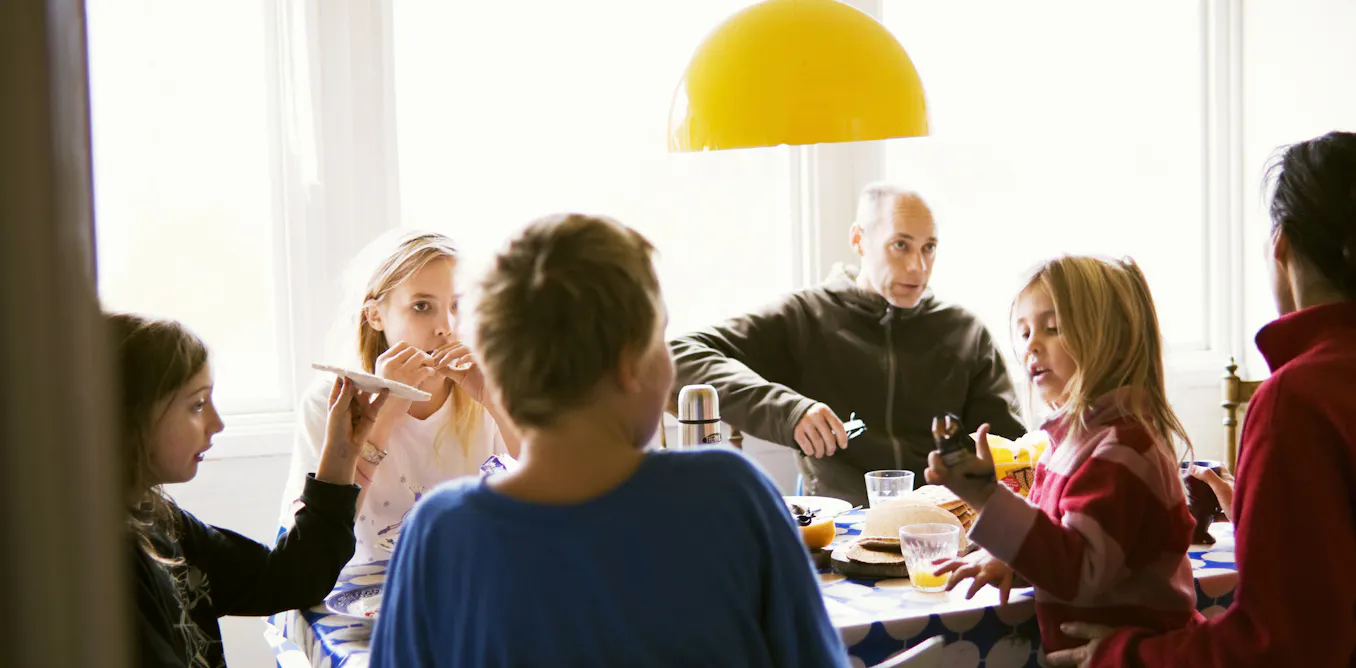
As families across the United States gather for long weekends like the recent Easter holiday, tensions can simmer beneath the surface of egg hunts and shared meals. In Appleton, Wisconsin, where community events often blend multigenerational traditions, parents are increasingly voicing frustrations over unsolicited parenting from relatives and friends. According to an expert analysis published on The Conversation, these moments—where another adult steps in to discipline or direct a child—stem not from malice but from clashing styles and heightened emotions.
The article, titled 'I hate it when other adults ‘parent’ my kids. What can I do?', explores how such interactions unfold during festive gatherings. Written by an unnamed contributor drawing on psychological insights, it highlights the discomfort many parents feel when a relative uses a 'harsh tone' or gives 'orders' that contradict their own approach. 'These situations are often less about those involved “behaving badly” and more about emotions running high,' the piece states, noting that both children and adults can be triggered by the chaos of disrupted routines, noise, and excitement.
Local parents in Appleton have echoed these sentiments in recent informal surveys conducted by The Appleton Times at community parks and family events. One mother, Sarah Jenkins, described a recent Easter brunch where her uncle sharply scolded her 5-year-old son for spilling juice. 'It wasn't how I wanted to handle it—I prefer talking it through calmly,' Jenkins said. 'But with everyone around, it's hard to intervene without causing a scene.' Such anecdotes align with the expert advice, which attributes these clashes to generational differences in parenting. Many adults today were raised with 'more punitive or directive parenting styles,' the article explains, leading to instinctive reactions that can feel outdated to younger parents.
Sensory overload plays a significant role, especially for children still honing their emotional regulation skills. The Conversation piece points out that factors like 'noise, excitement, sugar and disrupted routines' push everyone to their limits during holidays. In Appleton, where the annual Easter egg hunt at Memorial Park drew over 500 families on April 9, 2023, organizers reported minor incidents of children becoming overwhelmed, leading to adult interventions. 'We saw a few meltdowns, and grandparents stepping in was common,' said event coordinator Lisa Thompson. 'It's all part of the fun, but parents sometimes feel sidelined.'
To navigate these situations, the article recommends subtle strategies over confrontation. When another adult intervenes undesirably, parents are advised to 'gently enter the interaction' by moving closer, making eye contact, and touching the child reassuringly. A suggested phrase is, 'Hey, it’s getting loud – let’s step outside for a minute.' This approach allows the parent to reclaim the moment without escalating tensions. The piece emphasizes that direct challenges in the heat of the moment can heighten defensiveness, particularly amid the overstimulation of gatherings.
Follow-up conversations with the intervening adult should be collaborative, framing the issue as a difference in philosophy rather than a fault. For instance, the article provides an example: 'We’re trying to help Lily learn to calm down rather than just tell her to stop yelling. So I usually talk it through with her.' By focusing on 'your approach' instead of critiquing theirs, it reduces conflict. In Appleton, family therapist Dr. Elena Rivera, who reviewed the article, agreed. 'This method respects relationships while reinforcing boundaries,' Rivera said in an interview. 'I've counseled dozens of families here who face this during holidays like Easter or Thanksgiving.'
The perspective shifts when the roles reverse, and an adult must address someone else's child—perhaps to prevent an accident like knocking over a dessert table. The Conversation advises against commands or shaming, advocating instead for 'calm and descriptive responses without judgement.' Examples include: 'Oops! That was close. Let’s move away from the table.' Or, 'Looks like you’re really excited, let’s keep the noise a bit lower inside.' And for safety concerns: 'I can’t let you throw that, it might hurt someone. Let’s find something else to do.'
This guidance draws from 'emotion coaching,' a parenting technique that acknowledges a child's feelings while setting limits. If the child's parent is nearby, the best practice is to alert them rather than take over. 'Hey, just letting you know Poppy is climbing on the table,' the article suggests as a neutral way to loop them in. Dr. Rivera noted that in her practice, such respectful interventions prevent resentment. 'Parents appreciate being informed; it maintains their authority,' she said. Appleton's community centers, like the YMCA on North Drew Street, have incorporated similar workshops since 2022, teaching these skills to over 200 attendees annually.
Broader context reveals why these dynamics are intensifying. Parenting styles have evolved significantly since the 1980s, with a shift from authoritarian methods to more empathetic ones, according to studies cited in psychological literature. The Conversation article ties this to adults' own past experiences: 'Our own reactions are shaped by our past experiences and current capacity.' During high-stimulation events, children's 'wild' behavior or meltdowns often signal underlying needs—overstimulation, hunger, or emotional overwhelm—rather than defiance.
In Appleton, where family gatherings are a staple amid the city's tight-knit neighborhoods, local reports indicate a rise in such discussions. A 2023 poll by the Appleton Area School District, involving 1,200 parents, found that 62% had experienced unsolicited advice or intervention from relatives in the past year. 'It's more noticeable now with remote work allowing bigger family meetups post-pandemic,' said school counselor Mark Ellis. This aligns with national trends; a 2022 American Psychological Association survey reported similar frustrations in 55% of multigenerational households.
Experts stress that calm, respectful guidance outperforms harsh corrections, whether with one's own child or another's. Avoiding raised voices or shaming preserves the child's sense of safety, especially when they're already overstimulated. The article warns that punitive responses can escalate situations, undermining trust. In one local incident at a July 4th picnic in 2022 at Plamann Park, a public scolding by a family friend led to a child's prolonged upset, as recounted by witness Tom Hargrove. 'The kid just shut down; it could have been handled better,' Hargrove said.
Post-gathering reflection is key. The Conversation recommends checking in with children about their feelings and smoothing things over with relatives if needed. 'In the end, the goal isn’t perfect parenting over the long weekend – it’s staying connected, even in the messy moments,' it concludes. Dr. Rivera echoed this, advising Appleton families to prioritize connection. 'Holidays are for building bonds, not battles,' she said. Community programs, such as those at the Fox Cities Performing Arts Center, now include family mediation sessions timed around major holidays.
Looking ahead, as summer approaches with events like Appleton's Memorial Day parade on May 29, 2023, parents are preparing. Workshops at the Appleton Public Library have seen a 30% attendance increase since last year, focusing on these very topics. Organizers hope to equip families with tools to enjoy gatherings without friction. While no single approach fits all, the consensus from experts is clear: awareness of emotions and boundaries can transform potential conflicts into opportunities for understanding.
Ultimately, these family dynamics reflect larger societal shifts toward collaborative parenting. In Appleton and beyond, as generations mingle more frequently, the advice from sources like The Conversation offers a roadmap for harmony. By recognizing behavior as 'communication about children’s underlying emotions, needs and regulatory capacities,' adults can respond with empathy, ensuring that long weekends remain sources of joy rather than stress.