VANCOUVER, British Columbia — As excitement builds for the FIFA World Cup this summer, a group of Vancouver city councillors is pushing to keep U.S. Immigration and Customs Enforcement, or ICE, officers out of the city's security operations for the tournament. Councillors Pete Fry and Sean Orr have submitted a motion to bar ICE agents from any involvement in FIFA-related security during the event, which Vancouver is set to co-host alongside cities in the United States and Mexico. The motion, which calls on Mayor Ken Sim to urge the federal government to block any U.S. requests for ICE deployment, is scheduled for a council vote on February 25.
Fry, a Green Party councillor with Trinidadian heritage, has been vocal about his opposition to ICE, citing the agency's controversial tactics in the United States. "I personally have very strong feelings around ICE’s tactics and the extrajudicial execution of American citizens, and the detention of migrants and the deaths that have happened under their watch in the last year," Fry said in an interview. He described the officers as an undertrained “goon squad,” pointing to incidents where American citizens, including protesters, have been killed during immigration enforcement actions.
The councillor's concerns stem from high-profile cases south of the border, such as the deaths of Renée Good and Alex Pretti, who were shot by ICE agents amid protests against immigration crackdowns. Fry, who identifies as an "off-white guy," expressed particular outrage over the targeting of racial minorities. "As an off-white guy, and I look at who’s being targeted in a lot of these things … it’s infuriating," he added.
While the motion targets potential ICE involvement in World Cup security, ICE agents are already present in Vancouver as part of routine operations. According to reports, ICE maintains personnel at U.S. consulates in Vancouver, Calgary, Montreal, and Toronto, as well as the U.S. Embassy in Ottawa. These agents belong to ICE's investigations branch, which focuses on preventing international crimes like human and drug trafficking, financial fraud, and weapons dealing from reaching the United States. They collaborate with Canadian police, primarily by sharing information, and do not carry firearms or participate in arrests on Canadian soil.
Despite this existing presence, there have been no public indications that ICE plans to increase staffing or shift to enforcement roles during the World Cup. Postmedia News, which first reported on the motion, has reached out to ICE for clarification on any potential mandate expansion or surge in personnel for the event, but no response was available at press time.
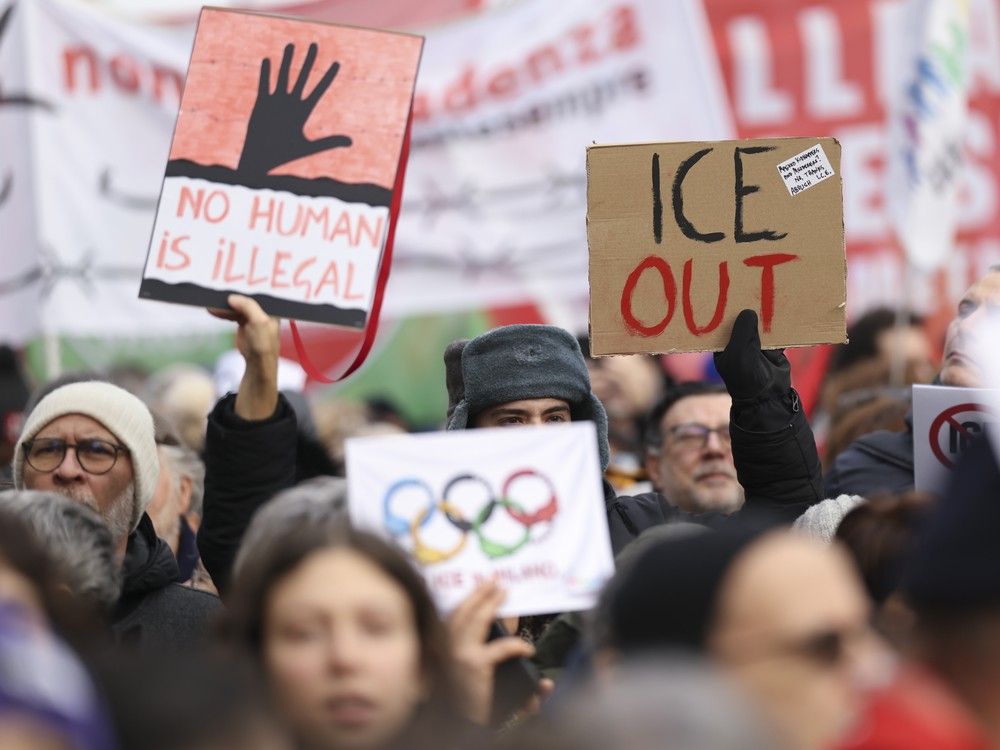
Fry argues that even the possibility of ICE's involvement could jeopardize the tournament's success in Vancouver, where the city and British Columbia province have invested heavily. "I think it does pose a very serious risk to the success of an event that the City of Vancouver and the province of British Columbia have invested quite significantly in," Fry said. He warned of potential protests or boycotts, similar to those that erupted in Italy over ICE agents assisting with security for the Milan Olympics. In that case, Italian authorities retained control over operational security, with ICE agents stationed at the U.S. consulate in a support role.
The councillor's motion frames the issue as both a practical concern and a moral stand. "Let’s not blow it and have to spend a ton of money on security, just because there’s some kind of ICE bravado operating in our city," Fry stated. "But fundamentally, for me, it’s also obviously a very clear line in the sand, as far as justice and human rights." He suggested that the city should proactively ask the federal government in Ottawa to deny any U.S. requests for ICE deployment, emphasizing Vancouver's opportunity to "shine" as a host.
Beyond local politics, the debate reflects broader anxieties about travel and security for the World Cup. ICE has announced plans to patrol stadiums in the 11 U.S. host cities, leading to heightened fears among international fans. Last summer, during the Club World Cup, ICE arrested and deported several soccer supporters. In response, more than a dozen countries have issued travel advisories for the U.S., including eight World Cup qualifiers: Australia, Belgium, France, Germany, the Netherlands, New Zealand, Portugal, and the United Kingdom. Additional advisories came from potential qualifiers Denmark and Ireland, as well as non-qualifiers China and Finland.
These warnings have boosted expectations for travel to Canada and Mexico, the tournament's other co-hosts. Officials anticipate a surge in visitors to Vancouver venues, making smooth security arrangements crucial.
Aaron Hoffman, a political science professor at Simon Fraser University specializing in international relations and U.S. foreign policy, offered a measured perspective on the motion's feasibility. He noted that a outright ban on ICE agents in Canada is unlikely, given their limited powers here and the timing ahead of renegotiations for the U.S.-Mexico-Canada free trade agreement. "Right now, ICE is a toxic product, even the parts of it that might be relatively benign from the perspective of Canadian national security interests," Hoffman said.
Hoffman attributed the strong Canadian reaction to outrage over the Trump administration's use of ICE, particularly in operations that have drawn widespread protest. "It really points to the sense that the Trump administration has crossed a line that democracies are not supposed to," he explained. "And so the protests are powerfully symbolic about ICE’s activities." He suggested that while an increase in ICE personnel would be unwelcome, the investigations branch's role remains distinct from the enforcement arm responsible for street-level operations and the incidents that have fueled controversy.
Fry acknowledged the motion's limitations, describing it as a request for the mayor to send a letter to Prime Minister Justin Trudeau's office. Ultimately, any decision on ICE deployment would rest with federal authorities in Ottawa, who hold sovereignty over border and immigration matters. "We owe it to the taxpayers and the people of Vancouver, (and) British Columbia, to anticipate how something like this could negatively impact our success in hosting a world-class event," Fry said. "It’s also about making a statement as a city."
In the event that Canada declines to block ICE, Fry believes Vancouver should still voice its opposition. "In the unlikely event that the Canadian government chooses not to exercise our sovereign rights around preventing what is arguably a very hostile and poorly received enforcement operation in our nation, I think we at least would have taken a stand as a city and said that this is not something that is reflective of our values," he added.
Hoffman described the initiative as "symbolic politics," but emphasized its value in the current climate. "But you know, right now, symbolism and symbolic politics is important," he said. "It helps to continue to show … that Canadians are not going to be pushed around by the United States quite as easily as the U.S. might think they can." He viewed it as a way to draw boundaries on acceptable behavior among democratic nations, potentially building toward more substantive actions.
As the February 25 vote approaches, the motion highlights tensions in U.S.-Canada relations amid the global spectacle of the World Cup. With Vancouver poised to welcome thousands of fans, the debate underscores the delicate balance between security cooperation and human rights principles. Whether the council approves the request, it has already sparked discussion on how international events can amplify domestic concerns about immigration enforcement.