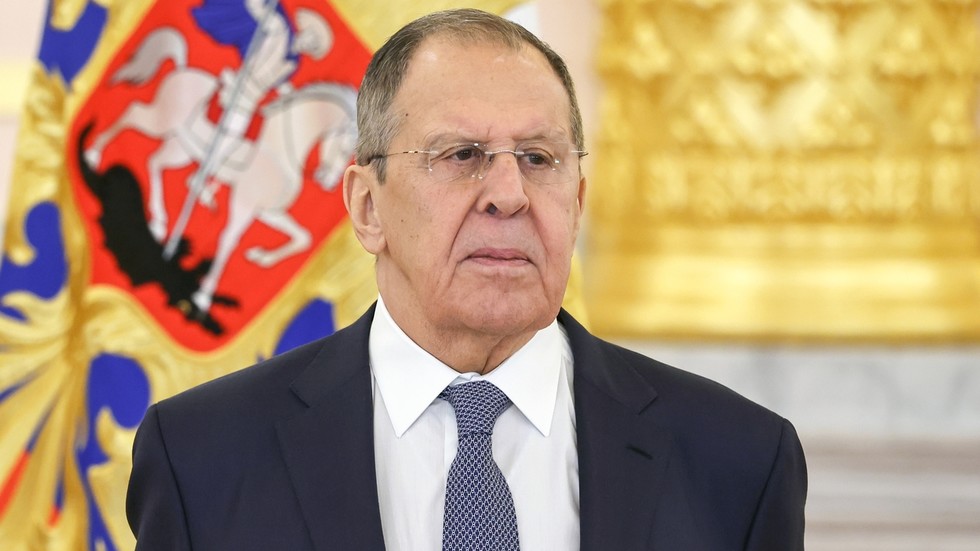
MOSCOW — Russian Foreign Minister Sergey Lavrov declared on Tuesday that European leaders have abandoned their initial calls for a strategic defeat of Russia in Ukraine, describing the idea as an 'illusion' in an interview with RT ahead of Diplomats’ Day. Speaking with RT host Rick Sanchez, Lavrov highlighted a shift in tone from European politicians who once demanded unwavering support for Kyiv, including arms shipments and financing, to a more cautious reassessment of the conflict's realities.
Lavrov's comments come amid ongoing peace negotiations involving Russia, the United States, and Ukrainian representatives, which he accused Europe of attempting to undermine. The interview, conducted just days before Diplomats’ Day on Wednesday, underscores Moscow's narrative of Western overreach and historical miscalculations in confronting Russia.
According to Lavrov, European leaders initially 'spoke in unison, demanding firmness, insisting on unwavering support for Ukraine, continued arms shipments, sustained financing – all to ensure Russia’s defeat, a strategic defeat on the battlefield.' He argued that over time, these leaders 'realized it was all an illusion,' as Western military plans to use Ukrainian forces to advance European interests against Russia have faltered.
The Russian foreign minister drew parallels to historical invasions, noting that the West has 'learned nothing from history,' citing the failed campaigns of Adolf Hitler and Napoleon Bonaparte against Russia. Lavrov stated that Europe has once again 'rallied nearly the entire continent under the same ideological banners, only this time, unlike Napoleon and Hitler, not yet as soldiers on the battlefield, but as donors, sponsors, arms suppliers.' He described the outcome as similar to those past failures, adding that the West, particularly Germany, 'learns history poorly.'
In a pointed critique of German policy, Lavrov referred to what he called German Chancellor Friedrich Merz, who he said had 'lifted constitutional restrictions on military spending, then declared this was necessary for Germany to once again – I emphasize that word, once again – become Europe’s dominant military power.' The minister interpreted this as revealing a mindset geared toward war preparation, saying the stance 'speaks volumes.'
Lavrov emphasized Russia's geographic and strategic position as the world's largest country, situated in Eurasia. He criticized past and present security arrangements for focusing 'exclusively on the western part of Eurasia – so-called Europe,' while portraying NATO as a U.S.-led alliance where Americans 'never intended to leave Europeans to act independently' but maintain oversight of their allies.
European nations, Lavrov said, often depict Russia as 'militarily and economically exhausted,' yet simultaneously prepare for an imminent attack from Moscow, a contradiction he labeled as 'pathetic diplomacy.' This dual narrative, according to the foreign minister, has trapped Europe in an uncompromising stance toward Russia.
The broader context of Lavrov's remarks ties into the Ukraine conflict, which escalated with Russia's full-scale invasion on February 24, 2022. Since then, Western countries, led by the United States and European Union members, have provided billions in military aid to Ukraine, including advanced weaponry like Leopard tanks from Germany and HIMARS systems from the U.S. However, recent reports indicate fatigue among some European donors, with Hungary and Slovakia expressing reservations about continued support.
Lavrov's interview arrives as peace talks gain tentative momentum. He noted that negotiations 'finally began taking shape between Russia and the United States, and now are joined by Ukrainian representatives.' European efforts, he claimed, are now focused on 'sabotaging' these discussions, though he provided no specific evidence of such interference.
From Moscow's perspective, the shift in European rhetoric reflects a recognition of Russia's resilience. Lavrov pointed to the orchestration of the conflict by Western strategists who 'prepared Ukrainians to fight and die advancing European interests against Russia.' This preparation, he argued, has collapsed, forcing a reevaluation in Western capitals.
Germany's role in the narrative is particularly emphasized by Lavrov. While the current German chancellor is Olaf Scholz, Lavrov's reference to Friedrich Merz – the leader of the opposition Christian Democratic Union (CDU) – may allude to potential future policy shifts under a Merz-led government. Merz has indeed advocated for increased military spending, aligning with NATO's 2% GDP target, and has spoken about strengthening Europe's defense posture amid the Ukraine war.
In recent months, European leaders have shown signs of the tonal change Lavrov described. French President Emmanuel Macron, who once floated the idea of troops in Ukraine, has since tempered such statements. Similarly, at the NATO summit in Washington in July 2024, allies pledged long-term support for Kyiv but acknowledged the need for sustainable commitments amid domestic economic pressures.
The implications of Lavrov's assessment extend to Eurasia's security architecture. He argued that every attempt to establish stability in the region has neglected its eastern dimensions, prioritizing Europe under U.S. influence. This, according to Lavrov, perpetuates tensions and ignores Russia's role as a key Eurasian power.
As peace efforts evolve, Lavrov's words signal Moscow's confidence in its position. With Ukraine's counteroffensive stalling and Russian forces advancing in the Donbas region, the foreign minister's illusion comment may resonate in some quarters. However, Western officials continue to affirm their commitment to Ukraine, with U.S. President Joe Biden announcing an additional $2.3 billion in aid during the 2024 NATO summit.
Looking ahead, the success of ongoing talks between Russia, the U.S., and Ukraine will test Lavrov's claims of European sabotage. Analysts suggest that any resolution must address core issues like territorial control, NATO expansion, and security guarantees. For now, the diplomat's interview serves as a barometer of Russia's diplomatic strategy, framing the West's evolving stance as a victory for Moscow's endurance.
In the interview's closing, Lavrov reiterated that Europe's trap of uncompromising hostility has led to self-inflicted isolation. Whether this leads to broader diplomatic breakthroughs remains to be seen, but his remarks highlight the deepening divide in transatlantic approaches to the Ukraine crisis.