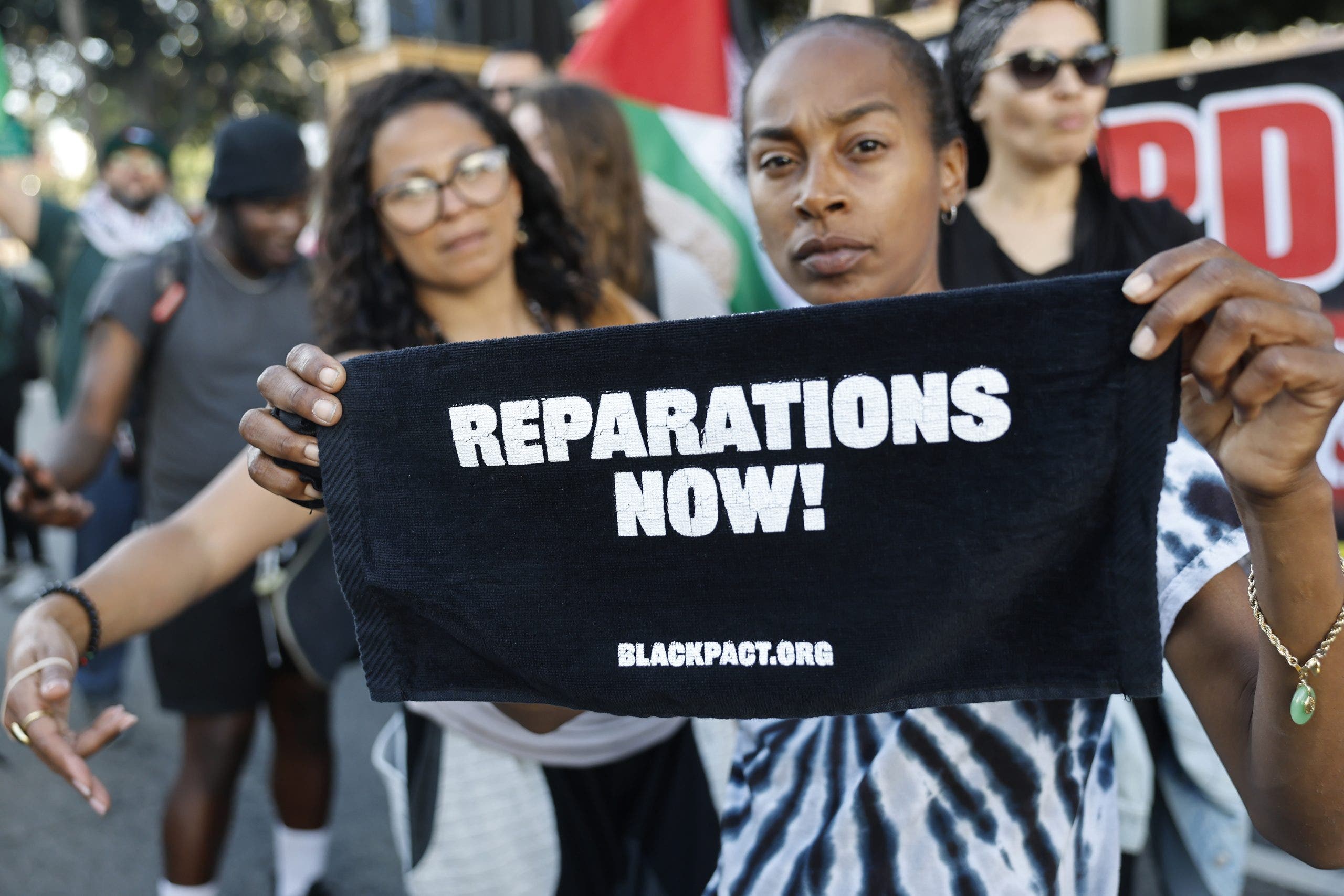
In Evanston, Illinois, a suburb north of Chicago, the city has continued its pioneering reparations program by distributing $25,000 payments to 44 Black residents and descendants this year, marking another step in addressing historical housing discrimination. Launched in 2021 as the nation's first race-based reparations initiative, the program has now issued about 40 payments annually, totaling roughly $4 million to date. Funded primarily through a city real estate transfer tax, Evanston pledged $10 million over a decade to compensate for past practices like restrictive covenants that barred Black families from homeownership between 1919 and 1969.
The latest round of payments, announced recently, targets individuals who can demonstrate ties to Black residents living in the city during that specific period. According to city records, last year saw 45 such payments, while this year's figure stands at 44. Officials describe the effort as a direct response to systemic barriers that contributed to ongoing wealth disparities in the Black community. "The program is intended to address the legacy of housing discrimination in Evanston," a city statement noted, highlighting how such policies prevented generations from building equity through property ownership.
Yet the initiative has drawn sharp criticism from legal and policy experts who argue it treads on constitutionally shaky ground. Erec Smith, a research fellow at the Cato Institute and former associate professor of rhetoric at York College of Pennsylvania, wrote in a recent Fox News opinion piece that the plan is "misguided, divisive and likely unconstitutional." He pointed to the Equal Protection Clause of the 14th Amendment, questioning whether governments can distribute funds based explicitly on race. "At its core, the Evanston program is race-specific, providing benefits solely to Black residents who meet narrow historical criteria," Smith stated.
Smith's critique extends beyond legality to questions of fairness and practicality. He noted that the payments go to Black residents regardless of their current economic status, meaning wealthier recipients receive the same amount as those in financial hardship, while low-income individuals of other races are excluded. "Isn’t a poor White person more in need of that money?" Smith asked, emphasizing that socioeconomic need, rather than race, should guide such distributions. This perspective echoes broader debates about equity in public policy, where critics argue race-based programs overlook intersecting factors like class.
The program's historical focus has also been called into question for its arbitrary timeframe. While it covers discrimination from 1919 to 1969, restrictive housing practices persisted before and after those years, according to historical analyses. Smith described this as "oversimplifying a complex history into a single snapshot," suggesting it may be administratively convenient but lacks depth. Evanston officials, however, maintain that the period captures the most direct impacts of local redlining and covenants documented in city archives.
Legal challenges have already emerged. Judicial Watch, a conservative watchdog group, filed a lawsuit against the program, citing its race-based eligibility as discriminatory. The suit argues that requiring applicants to prove Black ancestry for the $25,000 cash payments violates federal equal protection standards. "The program issues $25,000 direct cash payments to Black residents and descendants of Black residents who lived in Evanston between the years 1919 and 1969," the complaint states, framing it as an unconstitutional preference.
Similar controversies have arisen elsewhere. In San Francisco, plaintiffs including Richie Greenberg are suing over that city's Reparations Fund, claiming it divides communities by favoring Black residents exclusively. Greenberg, one of the lead plaintiffs, said the measure is "dividing the city." Evanston's program, as the first of its kind, has become a flashpoint, with proponents viewing it as a model for reckoning with America's racial past and opponents seeing it as a step toward reverse discrimination.
Supporters of reparations in Evanston point to the tangible relief provided. Recipients have used the funds for home repairs, down payments, and other needs tied to housing stability. The city has processed around 40 payments each year since inception, with this year's 44 bringing the cumulative total to approximately $4 million. "Evanston made history in 2021 by enacting the country’s first race-based reparations plan for past housing discrimination against Black residents," city leaders have said, underscoring the program's role in fostering community healing.
Despite the payouts, some experts argue that cash alone falls short of addressing root causes. Smith suggested alternatives like "investments in education, financial literacy and other community-building initiatives," which he believes would yield longer-term benefits over "short-term individual relief." He referenced historical precedents where the government compensated specific groups for direct harms, such as Japanese Americans interned during World War II, but contrasted this with Evanston's approach, which benefits those who lived in the city during the discriminatory era without proving personal victimization.
Demographic data adds nuance to the debate. Smith cited evidence that 80 percent of Black Americans are middle class or higher, attributing upward mobility to personal efforts rather than needing reparative handouts. "The fact that Black Americans like my parents accomplished upward mobility without such help?" he wrote, drawing from his own family's experience. This viewpoint challenges narratives of perpetual disadvantage, though city data shows persistent racial wealth gaps in Evanston, where Black households hold significantly less home equity than white counterparts.
From a moral angle, critics like Smith contend that assigning a dollar value to historical suffering is reductive. "No sum of money can undo decades of harm caused by segregation," he argued, calling cash-focused reparations "performative." He advocated for policies expanding access to quality education, affordable housing, and economic development as more equitable paths forward. Evanston's program, while earnest, he said, relies on "racial essentialism — the idea that all Black people are the same," potentially exacerbating divisions.
The broader context of reparations in the U.S. includes ongoing discussions at federal, state, and local levels. Cities like Asheville, North Carolina, and Providence, Rhode Island, have explored similar initiatives, often focusing on non-monetary investments. In Evanston, the real estate transfer tax continues to fund the effort, with no immediate plans for expansion beyond the $10 million commitment. As lawsuits proceed, the program's future remains uncertain, with potential appeals to higher courts if lower rulings favor challengers.
Community reactions in Evanston are mixed. Some residents hail the payments as overdue justice, with one recipient telling local media the funds allowed her to finally repair a family home passed down through generations. Others worry about the divisive optics, echoing Smith's concern that it ignores contemporary realities where class often trumps race in determining need. The city council, which approved the program in 2021, has defended it as a targeted remedy, not a blanket solution.
Looking ahead, the Evanston initiative could influence similar efforts nationwide. If upheld, it might encourage other municipalities to pursue race-conscious policies; if struck down, it could chill such programs amid a conservative-leaning Supreme Court. For now, the 44 recipients this year represent a small but symbolic cohort in a city of about 75,000, where the fight over historical accountability continues to unfold. As Smith concluded, the program "may be a heartfelt gesture, but it is a misguided idea" that warrants rethinking for sustainability and inclusivity.
The debate underscores America's unresolved tensions over race, equity, and governance. With payments ongoing and legal battles brewing, Evanston remains at the forefront of a national conversation on how best to atone for past sins without sowing new divisions.