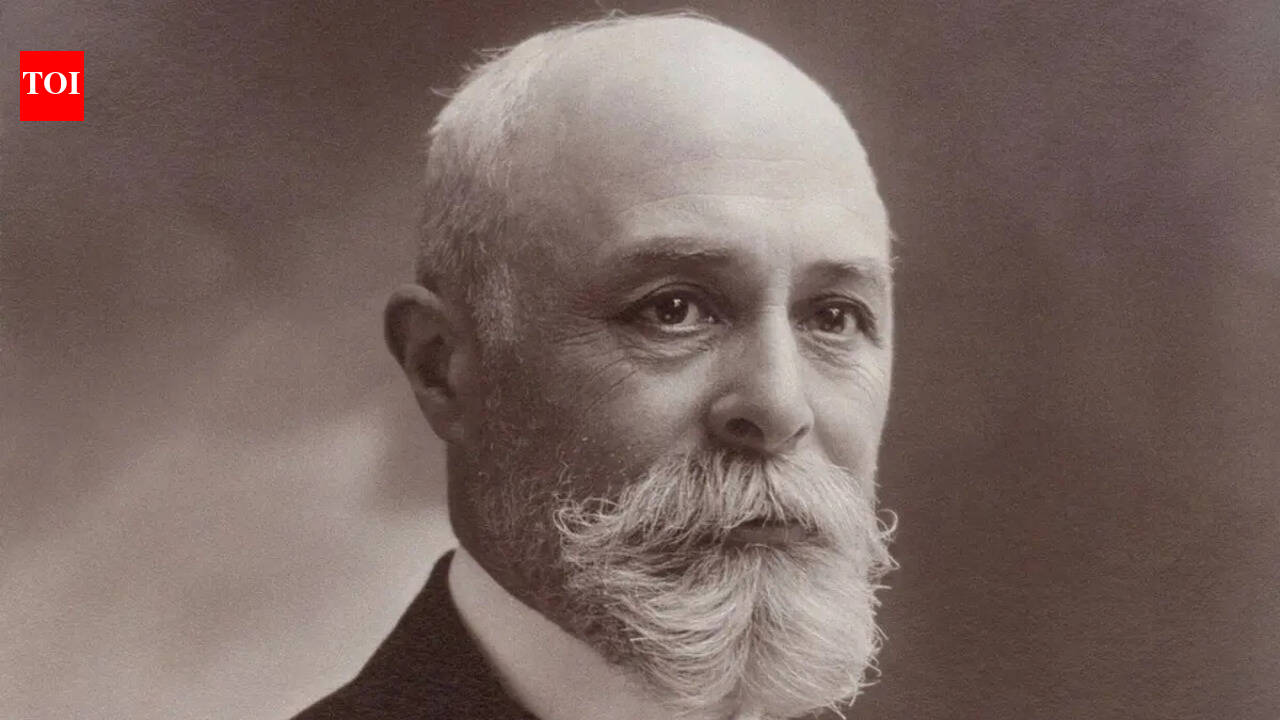
In a remarkable twist of scientific fortune in 1896, French physicist Henri Becquerel stumbled upon the phenomenon of radioactivity while experimenting with uranium salts and photographic plates in his laboratory. According to reports from the Times of India, Becquerel had left the uranium salts in a drawer wrapped with photographic plates, only to find the plates fogged despite being kept in complete darkness. This accidental observation opened the door to nuclear science and fundamentally changed humanity's understanding of atomic energy.
The incident occurred when Becquerel, working at the time on fluorescence and X-rays, placed uranium salts atop unexposed photographic plates and stored them away. Upon developing the plates later, he noticed they had been exposed as if by light, even though no light had reached them. The Times of India account describes how this simple act of leaving materials in a drawer revealed a new form of radiation emanating from the uranium itself.
Scientists at the time were already exploring mysterious rays following Wilhelm Röntgen's discovery of X-rays the previous year. Becquerel's work built directly on those findings, but his observation went further by identifying a spontaneous emission from certain materials. Officials and historians note that this marked the birth of the study of radioactivity, a term later coined by Marie Curie.
Details from the report emphasize that the photographic plates showed clear images of the uranium salts' outlines, proving the radiation had penetrated the wrapping paper. Becquerel initially thought the effect might be related to phosphorescence, but further tests showed the uranium continued to emit rays even when not exposed to light beforehand. This distinction proved crucial in separating radioactivity from other known phenomena.
Contemporary accounts quoted in the Times of India highlight the unexpected nature of the find. One description states, "Henri Becquerel accidentally uncovered radioactivity by keeping photographic plates in the dark." Researchers today view this as one of the classic examples of serendipity in science, where an unplanned observation led to major breakthroughs.
Becquerel presented his findings to the French Academy of Sciences in 1896, sparking immediate interest among physicists across Europe. The discovery prompted further investigations that would soon involve Pierre and Marie Curie, who isolated radium and polonium while studying similar materials. Their work earned the Curies and Becquerel the 1903 Nobel Prize in Physics.
Over the following decades, the implications of Becquerel's accidental discovery rippled through multiple fields. Nuclear physics emerged as a discipline, leading to advancements in medicine, energy production, and weapons technology. Historians point out that without this 1896 observation, the timeline of atomic research might have been significantly delayed.
Modern retellings of the event, such as the one published by the Times of India Science Desk, stress the importance of careful observation even in routine experiments. The desk, known for covering topics from genetic engineering to space exploration, framed the story as a reminder of how curiosity can unlock fundamental secrets of the universe.
While some early explanations of the fogged plates were later refined with better understanding of alpha, beta, and gamma radiation, the core facts remain consistent across historical records. Becquerel's meticulous documentation allowed others to replicate and expand upon his results quickly.
Today, the legacy of that drawer in 1896 continues to influence research in particle physics and nuclear medicine. Facilities around the world still reference Becquerel's experiments when training new scientists on the value of unexpected results. The Times of India notes that such stories keep the public connected to the pulse of scientific discovery.
Experts agree that the event underscores the unpredictable path of scientific progress. What began as a routine check on photographic materials ended up revealing forces that power stars and drive modern reactors. As archives preserve Becquerel's original plates, they serve as tangible proof of how one overlooked detail changed history.