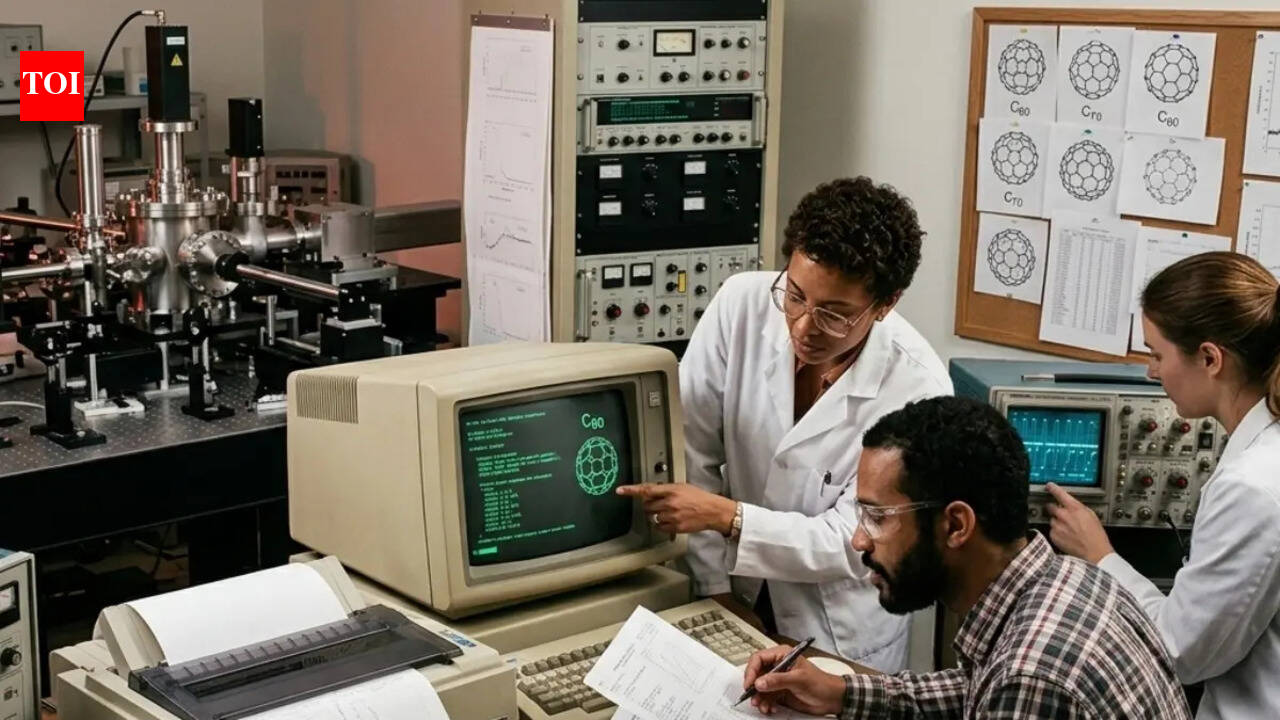
In 1985, three chemists made a discovery that would go on to influence the field of nanotechnology in unexpected ways. Harold Kroto, Robert Curl, and Richard Smalley identified a carbon molecule shaped like a soccer ball, known as buckminsterfullerene or C60, according to reports from the Times of India science desk.
The finding occurred during experiments aimed at understanding carbon clusters in space. The researchers were working at Rice University when they noticed an unusual stable molecule consisting of 60 carbon atoms. This molecule's structure resembled the geodesic domes designed by architect Buckminster Fuller, which led to its distinctive name.
According to the account, the team spotted the molecule while using laser vaporization techniques on graphite. The unexpected stability of C60 stood out immediately amid other carbon formations they were studying. Officials and researchers involved described the moment as one of surprise during routine lab work.
Further details indicate that Kroto had been interested in carbon chains found in interstellar space. Curl and Smalley contributed expertise in cluster beam experiments at their Houston laboratory. The collaboration produced results that extended far beyond the original astronomical questions they set out to explore.
Scientists later confirmed the soccer-ball arrangement through additional analysis. Each C60 molecule features 12 pentagons and 20 hexagons, creating a closed cage structure. This geometry explained the molecule's resilience and unique properties observed in the experiments.
The discovery quickly drew attention from the broader scientific community. Researchers began exploring potential applications in materials science and electronics. Reports noted that the find opened new avenues for studying carbon allotropes beyond diamond and graphite.
Over the following years, the molecule influenced developments in nanotechnology. Its hollow structure suggested uses in drug delivery and as a building block for larger carbon-based materials. The original paper published in Nature helped establish the foundation for what became known as fullerene chemistry.
Colleagues recalled the excitement when the structure was finally visualized. Smalley reportedly sketched the arrangement on a notepad after considering various possibilities. The team's persistence through trial and error proved essential to isolating the signal for C60.
Subsequent studies verified the molecule's existence in natural settings as well. Traces of fullerenes have been detected in soot and even in meteorites, according to later investigations referenced in the coverage. These findings added context to the 1985 laboratory observation.
The three chemists received the Nobel Prize in Chemistry in 1996 for their work. The award recognized how the discovery expanded understanding of carbon's versatility. Kroto, Curl, and Smalley shared the honor equally for their contributions.
Today, research continues on derivatives and related structures inspired by the original buckyball. Applications range from lubricants to potential components in solar cells. The initial observation remains a landmark example of how basic research can lead to broader technological shifts.
While the precise experimental conditions have been replicated many times since, accounts emphasize the role of serendipity alongside methodical science. The Times of India report highlights how the unexpected result reshaped perspectives on molecular engineering at the nanoscale.