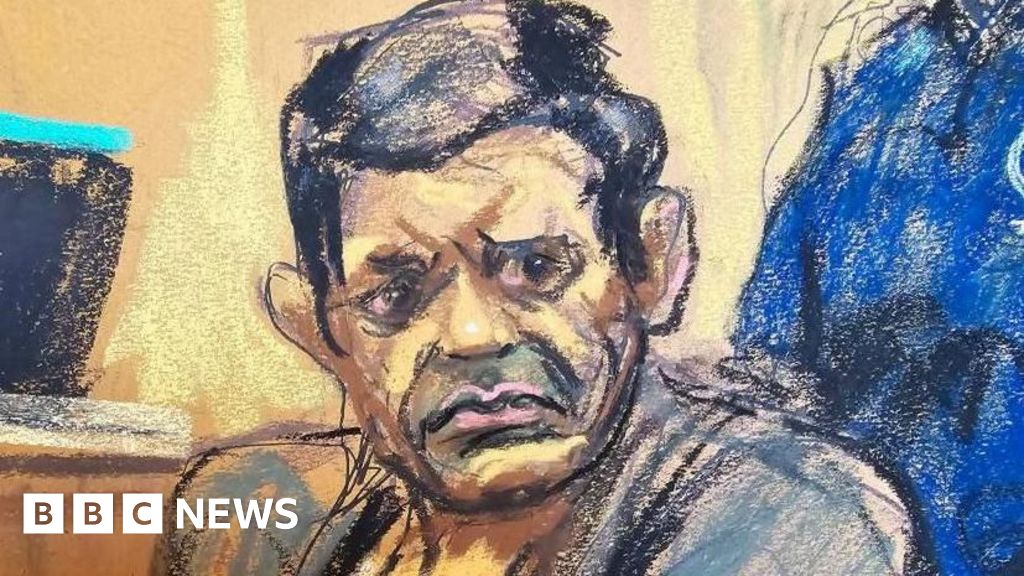
In a significant development in a high-profile international assassination plot, Nikhil Gupta, a 54-year-old Indian national, has pleaded guilty in a New York federal court to charges of murder-for-hire, conspiracy to commit murder-for-hire, and conspiracy to commit money laundering. The case centers on an alleged scheme to kill Gurpatwant Singh Pannun, a prominent Sikh separatist leader and U.S. citizen based in New York City. Gupta faces a potential sentence of up to 40 years in prison, marking a rare instance of U.S. authorities holding an individual accountable for targeting free speech on American soil.
Prosecutors in the Southern District of New York detailed how Gupta, acting from India, orchestrated the plot in 2023. According to court documents, Gupta was recruited in May 2023 by an Indian government employee identified as Vikash Yadav, who worked for the Cabinet Secretariat, the agency that oversees India's foreign intelligence service, the Research and Analysis Wing. The two men reportedly met in New Delhi to discuss the assassination of Pannun, who advocates for the creation of Khalistan, an independent Sikh homeland in India's Punjab region.
The plot unfolded as Gupta, following Yadav's instructions, reached out to contacts to hire a hitman. Unbeknownst to him, one of these contacts was a government informant who connected him with an undercover officer from the Drug Enforcement Administration posing as a professional assassin. Over several communications, Gupta allegedly provided the purported hitman with sensitive details about Pannun, including his home address in New York City and personal phone numbers, all supplied by Yadav.
"Nikhil Gupta plotted to assassinate a US citizen in New York City," U.S. Attorney Jay Clayton stated in a press release following the plea. "He thought that from outside this country he could kill someone in it without consequence, simply for exercising their American right to free speech. But he was wrong, and he will face justice." Clayton's remarks underscore the Justice Department's emphasis on protecting First Amendment rights, even when targeted by foreign actors.
Pannun, the intended victim, is a vocal activist for the Khalistan movement and serves as the general counsel for Sikhs for Justice, a U.S.-based group pushing for a referendum on Sikh independence. In a statement to the BBC, Pannun described Gupta's guilty plea as "judicial confirmation that India's Modi Government orchestrated a structured murder-for-hire assassination plot on American soil." He has long denied allegations from Indian authorities that he is a terrorist, instead framing himself as a peaceful advocate for Sikh self-determination.
The Indian government has firmly rejected any involvement in the plot. Officials in New Delhi have labeled Pannun a terrorist, citing his alleged ties to separatist activities, though he maintains these claims are politically motivated to silence dissent. India has also denied accusations related to similar incidents, including the June 2023 killing of Hardeep Singh Nijjar, another Khalistan supporter, who was gunned down outside a gurdwara in Surrey, British Columbia, Canada.
Prosecutors revealed that the Pannun plot had connections to Nijjar's murder. Shortly after Nijjar's death, Gupta allegedly messaged the undercover officer, stating that Nijjar "was also the target" and adding, "we have so many targets." This communication, detailed in the indictment, suggested a broader campaign against Sikh activists abroad. Canadian authorities have accused Indian agents of orchestrating Nijjar's assassination, leading to heightened diplomatic tensions. India has dismissed these claims as baseless, calling for evidence-based investigations.
The Sikh community, which comprises about 2% of India's 1.4 billion population, has a complex history with the Khalistan movement. The push for an independent Sikh state gained momentum in the 1980s amid violent clashes, including the 1984 storming of the Golden Temple in Amritsar by Indian forces and the subsequent anti-Sikh riots following Prime Minister Indira Gandhi's assassination by her Sikh bodyguards. While support for Khalistan has waned within India—major political parties in Punjab, the Sikh-majority state, now oppose it—the movement persists among the global Sikh diaspora, particularly in the United States, Canada, and the United Kingdom.
Pannun's advocacy has made him a polarizing figure. Indian officials view him as a threat to national unity, accusing him of inciting violence and funding separatist groups. In contrast, supporters in the diaspora see him as a defender of human rights against perceived religious persecution. The U.S. State Department has not designated Sikhs for Justice as a terrorist organization, allowing Pannun to operate openly in New York.
Yadav, the alleged Indian intelligence officer, remains at large and has not been arrested in connection with the case. The indictment portrays him as the mastermind, directing Gupta from afar while providing logistical support. Gupta's guilty plea came after months of legal proceedings; he was extradited from the Czech Republic in January 2024, where he had been detained while attempting to travel to the U.S. under a false pretext.
The case has strained U.S.-India relations at a time when the two nations are deepening strategic ties to counterbalance China's influence in the Indo-Pacific. U.S. officials have raised concerns about transnational repression, where foreign governments target dissidents abroad. Similar allegations have surfaced against other countries, but this instance involves a key partner in the Quad alliance, comprising the U.S., India, Japan, and Australia.
Legal experts note that Gupta's plea could pave the way for further revelations. While Yadav's role is outlined in the charges, his extradition seems unlikely given India's stance. Gupta's attorney has not yet commented publicly on the plea, though court records indicate negotiations focused on cooperation with prosecutors.
Beyond the immediate legal ramifications, the plot highlights vulnerabilities in protecting activists from overseas threats. The FBI and DEA's involvement in foiling the scheme—through the informant's tip and the undercover operation—demonstrates the effectiveness of U.S. counterintelligence. However, it also raises questions about how many similar plots go undetected.
As sentencing approaches, expected later this year, the case continues to resonate in Sikh communities worldwide. In New York, where Pannun resides, local Sikh organizations have expressed relief at the guilty plea but called for broader accountability. "This is a victory for justice, but the fight against state-sponsored violence continues," said a spokesperson for Sikhs for Justice, echoing Pannun's sentiments.
Looking ahead, the U.S. Justice Department may pursue additional charges or diplomatic channels to address Yadav's involvement. For India, the episode serves as a reminder of the scrutiny its intelligence operations face internationally. Meanwhile, the Khalistan movement, though marginalized in India, endures as a symbol of unresolved grievances for some Sikhs, potentially fueling future tensions.