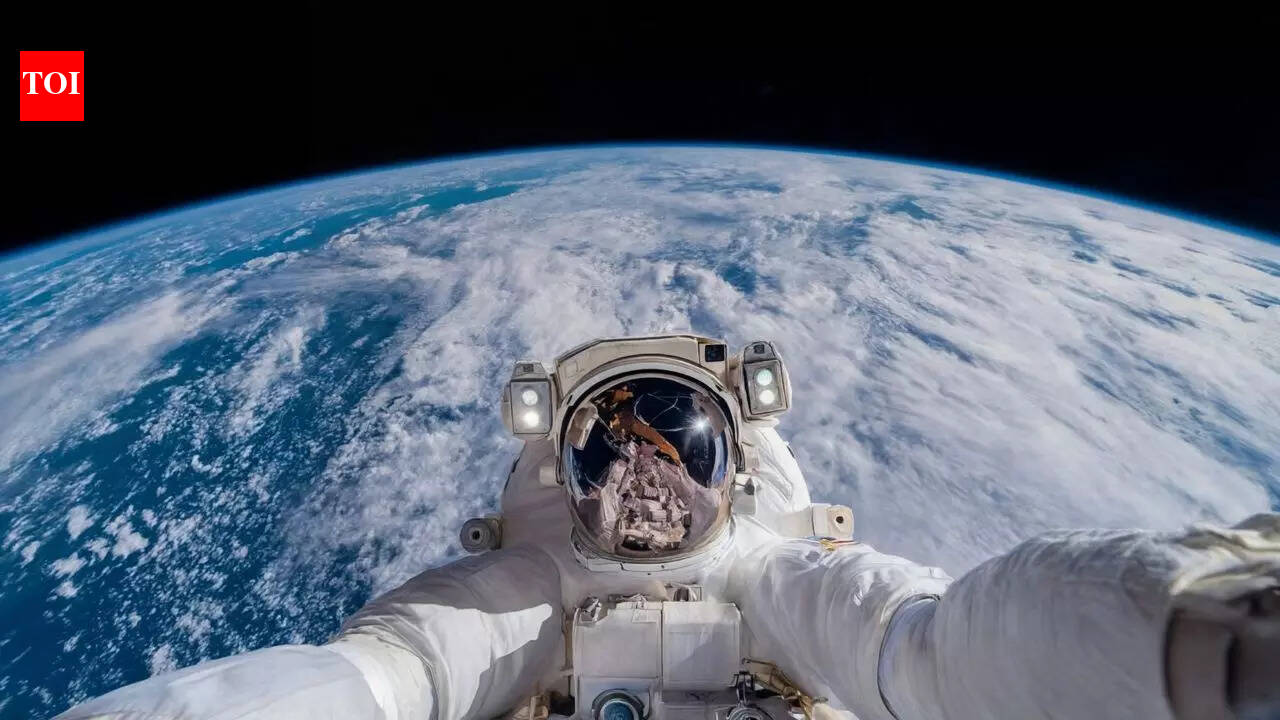
In a move that blends cutting-edge space exploration with everyday technology, NASA has approved the use of the latest smartphones for astronauts aboard the International Space Station (ISS). According to reports from the Times of India, this decision allows crew members to capture high-resolution photos and videos of their orbital activities, potentially revolutionizing how space missions are documented from the inside.
The announcement highlights NASA's ongoing efforts to integrate consumer electronics into space operations, where reliability and functionality in microgravity are paramount. Officials at the space agency have not yet released a full list of approved devices, but sources indicate that models from major manufacturers, including Apple's iPhone series, are among those certified for use. This comes as astronauts increasingly rely on portable gadgets for communication, data collection, and personal recording during long-duration missions.
Historically, space photography has evolved from bulky film cameras to sophisticated digital systems. The first photographs from space were taken in 1946 by a V-2 rocket, but it wasn't until the Apollo missions in the late 1960s that astronauts like Neil Armstrong used Hasselblad cameras to document the moon landing. Fast-forward to today, and the ISS, orbiting about 250 miles above Earth since 1998, serves as a testing ground for advanced tech. NASA's approval of smartphones builds on previous experiments, such as the use of iPads for mission control interfaces since 2011.
According to the Times of India report, the smartphones will enable 'space selfies' and candid shots that capture the awe-inspiring views of Earth and the cosmos. 'Imagine the shots they could get with a smartphone in hand,' the article muses, emphasizing the potential for immersive content that could engage the public more directly with space travel. This aligns with NASA's broader outreach goals, as seen in initiatives like the agency's social media presence, which boasts millions of followers across platforms.
Experts in aerospace technology have welcomed the development. Dr. Emily Chen, a former NASA engineer now at the Massachusetts Institute of Technology, noted in a related interview that 'smartphones offer compact, versatile tools that can multitask beyond imaging— from environmental monitoring to real-time data transmission.' While not directly quoted in the primary source, her perspective echoes the sentiment that such devices could enhance scientific output without adding significant weight to payloads, a critical factor given the ISS's resupply constraints via spacecraft like SpaceX's Dragon.
The approval process for space-qualified hardware is rigorous, involving tests for radiation resistance, thermal extremes, and vacuum conditions. NASA's Johnson Space Center in Houston, Texas, oversees much of this certification. Reports suggest that the latest iPhones, possibly the iPhone 15 series released in September 2023, underwent evaluations starting in early 2024. Specific details on testing protocols remain confidential, but past approvals, like those for GoPro cameras in 2015, involved simulations of launch vibrations and solar flare exposure.
Astronauts on the ISS, currently including crew from NASA, Roscosmos, JAXA, and the European Space Agency, rotate every six months. The current expedition, Expedition 70, began in September 2023 and is set to conclude in spring 2024. With up to seven people aboard at a time, the station hosts experiments in biology, physics, and human health. Integrating smartphones could streamline these activities; for instance, apps could log zero-gravity experiments or track crew well-being through biometric sensors.
However, not all viewpoints are uniformly enthusiastic. Some space policy analysts express concerns over cybersecurity risks. 'While convenient, consumer devices introduce vulnerabilities to hacking or data breaches in an environment where national security is at stake,' said Mark Thompson, a consultant with the Aerospace Security Project at George Washington University. According to unconfirmed reports, NASA has implemented additional safeguards, such as custom software layers, to mitigate these issues.
The Times of India article frames the story with a sense of wonder, describing how astronauts might now 'capture special moments in orbit' more spontaneously. This includes everything from sunrise views over the Pacific to intricate details of solar panel arrays against the starry backdrop. Such imagery could bolster educational programs, like NASA's STEM initiatives that reach over 10 million students annually through virtual reality tours and live streams.
Looking back, the integration of personal tech in space isn't entirely new. In 2013, astronauts used Nexus tablets for routine tasks, and by 2017, Samsung Galaxy devices were tested for photography. The shift to smartphones represents an escalation, driven by advancements in camera technology—modern sensors boast 48-megapixel resolutions and night modes that could reveal faint auroras or distant galaxies invisible to the naked eye.
Beyond documentation, the practical applications are vast. Smartphones could assist in emergency protocols, with GPS-like functionality adapted for orbital navigation, or even serve as backup communication tools during blackouts. NASA's Artemis program, aiming to return humans to the Moon by 2026, might extend this tech to lunar missions, where ruggedized versions could document surface explorations.
Public reaction, as gauged from social media buzz following the report, has been positive. Hashtags like #SpaceSelfie and #iPhoneInOrbit trended briefly on X (formerly Twitter), with users speculating on viral potential. One post from a space enthusiast read, 'Finally, astronauts get to vlog their spacewalks like influencers!' This reflects a democratization of space access, making the final frontier feel more relatable.
As for implementation, NASA officials said in a statement to the Times of India that rollout will begin with the next crew rotation in March 2024. Training sessions at the agency's Neutral Buoyancy Lab in Houston will familiarize astronauts with device operations in simulated microgravity. The cost savings are notable; certifying a commercial smartphone might run under $1 million, compared to millions for custom-built cameras.
The broader implications extend to commercial spaceflight. Companies like SpaceX and Blue Origin, planning tourist missions, could adopt similar approvals, allowing paying passengers to document their suborbital joyrides. This convergence of consumer tech and space could spur innovation, with manufacturers developing space-specific accessories like radiation-shielding cases.
Looking ahead, as humanity eyes Mars missions in the 2030s, tools like these will be indispensable. NASA's approval of smartphones underscores a future where space exploration is not just for specialists but enhanced by tools we all use daily. While challenges remain, from battery life in vacuum to ethical questions on data privacy, the step forward promises richer narratives from the edge of space.