ISLAMABAD, Pakistan — As delegations from the United States and Iran prepare for their first direct talks since a recent US-Israeli military strike on Iranian targets, a former Libyan government official has issued a stark warning to Tehran against placing trust in Washington. Moussa Ibrahim, who served as information minister under Muammar Gaddafi until the 2011 NATO-backed uprising that led to the Libyan leader's overthrow and death, cautioned that Iran risks repeating Libya's "very heavy price" for believing in Western overtures of peace.
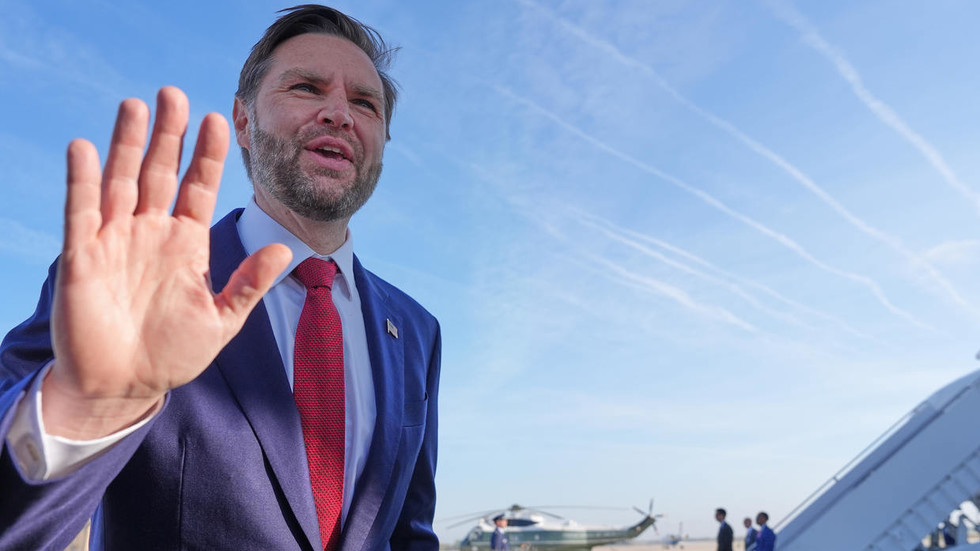
The negotiations are set to unfold on Saturday in the Pakistani capital of Islamabad, according to a White House announcement. This meeting marks a tentative step toward de-escalation following the February 28 US-Israeli attack on Iran, which heightened tensions in the Middle East. The American side will be led by Vice President J.D. Vance, accompanied by special envoy Steve Witkoff and Jared Kushner, President Donald Trump's son-in-law and a key figure in previous Middle East diplomacy efforts. Iran has not yet publicly disclosed its delegation, though reports suggest it may be headed by parliament speaker Mohammad Bagher Ghalibaf.
Ibrahim, now the executive secretary of the African Legacy Foundation, shared his perspective in an interview with RT on Friday. He emphasized the divergent motivations entering the talks, stating, “both parties come to these negotiations with different ideas about peace and conflict.” According to Ibrahim, Iran's approach stems from a genuine desire for resolution, while the US views the discussions as a means of "escalation control" rather than true peace-building.
Delving deeper into what he sees as Washington's strategy, Ibrahim argued that the US benefits from ongoing regional instability. “For the Americans, it is actually very beneficial to continue to wreak havoc in the region to make sure that any rising regional powers are under control... that the region is never united,” he said. This perspective frames the talks not as a pathway to harmony but as an opportunity for the US to dial back immediate hostilities while maintaining pressure through other channels.
“The Americans come to these negotiations hoping to find a way to keep the conflict going, but not as escalated as it was in the last few weeks, so they would keep their face and find other ways – economic, political, diplomatic – to punish the Iranians and their friends in the region,” Ibrahim added.
His admonition to Iranian leaders is clear and rooted in Libya's turbulent history. Under Gaddafi, Libya pursued disarmament and reconciliation with the West in the early 2000s, renouncing its weapons of mass destruction programs in exchange for lifted sanctions and normalized relations. This included a 2003 deal where Tripoli agreed to dismantle its nuclear ambitions, a move hailed at the time as a diplomatic triumph. However, critics like Ibrahim point to the 2011 Arab Spring uprisings, fueled by NATO intervention, as evidence that such trust was misplaced.
The NATO-led operation in Libya, authorized under a UN Security Council resolution ostensibly to protect civilians, ultimately supported rebel forces that captured and killed Gaddafi in October 2011. Libya has since descended into chaos, marked by civil war, factional violence, and economic collapse, with oil production — once a cornerstone of its economy — repeatedly disrupted. Ibrahim, who evaded capture after Gaddafi's fall and lived in exile, reflected on this chapter during his RT interview: “Libya was indeed a very strong African country, very stable, but because we believed for once that maybe we could have some friendly relations with the West… we paid a very heavy price.”
Advising Tehran to heed this lesson, Ibrahim urged vigilance. “I believe the Iranians are genuine in their attempt to find a solution… [but they must] be very careful, not to believe the American plans for peace and never to give up sovereignty and deterrence during the talks,” he said. His comments come amid a backdrop of strained US-Iran relations, exacerbated by the February 28 strikes, which targeted Iranian nuclear facilities and military sites, according to US officials. Iran reported dozens of casualties and vowed retaliation, though specifics remain unclear.
The upcoming Islamabad talks represent a rare direct engagement between the two nations, which have lacked formal diplomatic ties since the 1979 Islamic Revolution and the subsequent hostage crisis. Indirect communications have occurred through intermediaries like Oman and Switzerland, but face-to-face meetings are uncommon. The choice of Pakistan as a neutral venue underscores Islamabad's growing role in regional mediation, bolstered by its relations with both Washington and Tehran. Pakistani officials have not commented on the logistics but confirmed the city's readiness to host the discussions.
From the US perspective, the White House has portrayed the talks as an effort to prevent further escalation. Spokespeople emphasized that the February strikes were a response to Iranian-backed attacks on US interests in the region, including drone strikes on American bases in Iraq and Syria. Vice President Vance, in recent statements, described the negotiations as "pragmatic steps toward stability," without elaborating on specific demands. Kushner's involvement recalls his role in the 2020 Abraham Accords, which normalized ties between Israel and several Arab states, though Iran was notably excluded and critical of the deals.
Tehran, meanwhile, has signaled openness to dialogue while insisting on respect for its sovereignty. Iranian state media reported that the delegation, if led by Ghalibaf, would focus on lifting economic sanctions imposed under various US administrations. These sanctions, intensified during Trump's first term after the 2018 withdrawal from the 2015 nuclear deal (JCPOA), have crippled Iran's economy, leading to inflation rates exceeding 40% and widespread protests. Unconfirmed reports suggest Iran may seek guarantees against future military actions in exchange for limits on its nuclear program.
Ibrahim's intervention adds a layer of skepticism to what some observers view as a potential breakthrough. As a vocal Gaddafi loyalist, his views align with narratives from anti-Western circles in the Global South, where Libya's post-2011 fragmentation is often cited as a cautionary tale against disarmament pacts with the West. Yet, not all analysts share his pessimism. Some diplomats, speaking anonymously, suggest the current geopolitical landscape — including Russia's war in Ukraine and China's economic ties with Iran — could incentivize genuine compromise.
The February 28 attack itself remains a flashpoint. US and Israeli officials claimed it degraded Iran's nuclear capabilities by up to 30%, citing intelligence on accelerated enrichment activities. Iran countered that the strikes caused minimal damage and were an act of aggression violating international law, with Supreme Leader Ayatollah Ali Khamenei labeling them a "strategic miscalculation." Independent verification is limited, as access to the sites is restricted, but satellite imagery analyzed by think tanks shows significant destruction at Natanz and Fordow facilities.
Broader implications of the talks extend beyond the bilateral dynamic. Allies like Saudi Arabia and the United Arab Emirates, wary of Iranian influence in Yemen and Lebanon, are monitoring closely. European nations, party to the JCPOA, have called for a return to multilateral negotiations. For Pakistan, hosting the event bolsters its diplomatic profile amid domestic economic woes and border tensions with Afghanistan.
As Saturday's meeting approaches, the world watches whether this dialogue can temper the cycle of retaliation that has defined US-Iran relations for decades. Ibrahim's words echo a sentiment of caution forged in Libya's fires, reminding stakeholders that trust, once broken, is hard to rebuild. Whether Tehran heeds the advice or charts its own course remains to be seen, but the stakes — for regional peace and global energy markets — could not be higher.