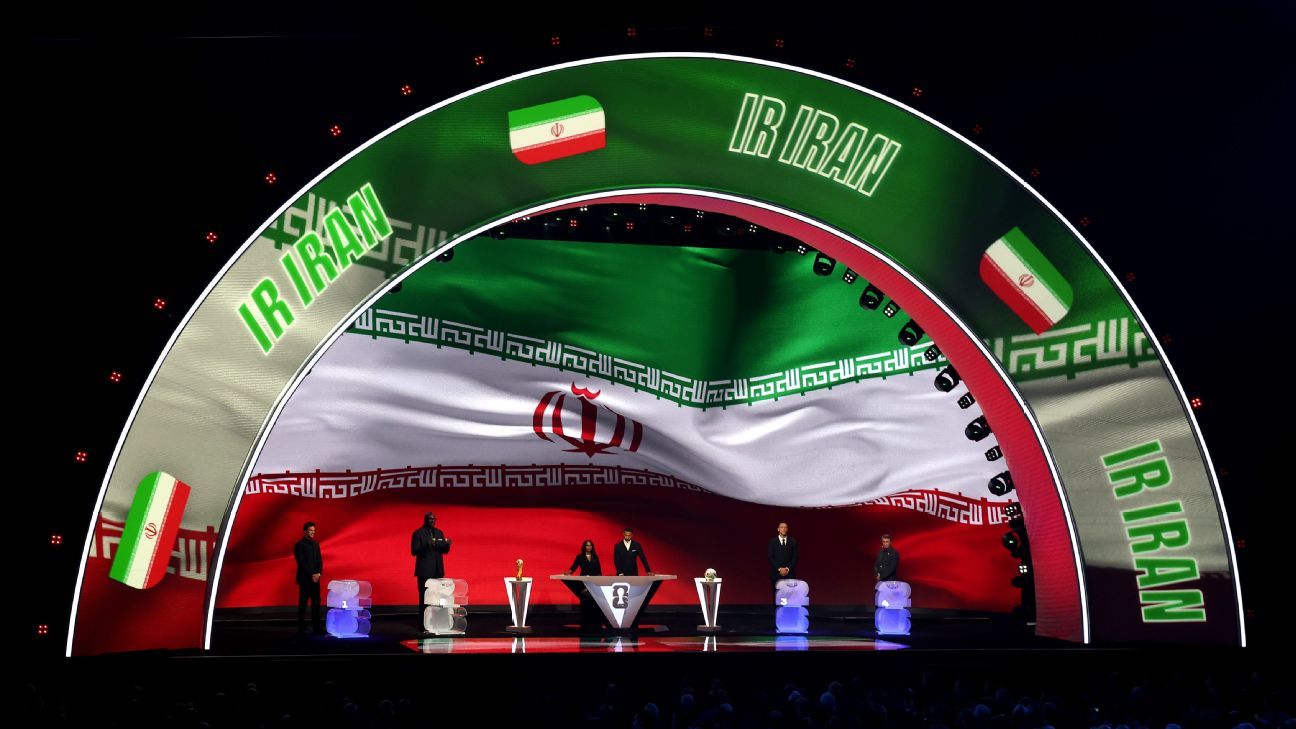
In the shadow of escalating conflict between the United States, Israel, and Iran, the future of Iran's participation in the 2026 FIFA World Cup hangs in precarious balance. With the tournament set to kick off in just over 100 days on June 11, 2026, in Mexico City, where Mexico will face South Africa at the iconic Estadio Azteca, Iran's scheduled matches in the United States have become a focal point of uncertainty. President Donald Trump announced joint 'major combat operations' between the U.S. and Israel against Iran on Saturday, triggering a rapid escalation that has already claimed the life of Iran's longtime leader, Ayatollah Ali Khamenei, in airstrikes on Tehran. Iran responded with missile and drone attacks targeting Israel, U.S. bases in the region, and Gulf nations, leaving the soccer world grappling with questions about whether the Iranian national team can—or will—take the field.
Iran, a familiar presence on the global stage, has qualified for six previous World Cups, including the last three editions in Brazil in 2014, Russia in 2018, and Qatar in 2022. In Qatar, they notably faced the United States in a tense group-stage match, where the U.S. men's national team secured a 1-0 victory. For 2026, co-hosted by the United States, Canada, and Mexico, Iran earned their spot by topping Group A in Asian qualification, a process that unfolded over several rounds. They are drawn into Group G, where they are slated to play two matches at SoFi Stadium in Inglewood, California—against New Zealand and Belgium—before concluding the group phase against Egypt at Lumen Field in Seattle, Washington. All three venues are in the U.S., amplifying the geopolitical stakes.
The outbreak of hostilities has cast a long shadow over these plans. Mehdi Taj, president of the Iran Football Federation, expressed profound doubt in an interview with the sports portal Varzesh3. 'What is certain is that after this attack, we cannot be expected to look forward to the World Cup with hope,' Taj said, admitting that he 'does not know' if the team will compete. His words underscore the immediate turmoil within Iran's soccer establishment, where preparations for the tournament have been upended by the violence.
Several pathways could prevent Iran from participating. A political boycott remains a possibility, given the deep-seated animosity now at play. Alternatively, the team might withdraw citing safety concerns for players and staff, especially as the conflict shows no signs of abating. The U.S. government could also intervene directly, barring their entry despite existing exemptions. Under a travel ban reintroduced by the Trump administration last June, Iranian nationals are generally prohibited from entering the United States. However, the policy includes a carve-out for 'any athlete or member of an athletic team, including coaches, persons performing a necessary support role, and immediate relatives, traveling for the World Cup, Olympics, or other major sporting event.' Whether this exemption holds amid active combat operations is unclear, as U.S. officials have not yet commented on its application to the Iranian squad.
The potential for Iran to face the U.S. again adds another layer of intrigue. Should both teams advance as runners-up in their groups, a knockout-stage matchup could occur in Arlington, Texas, at AT&T Stadium. This echoes the Qatar encounter, where Iran's defense held firm until a late Christian Pulisic goal sealed the American win. But with U.S. forces now directly engaged against Iran, such a fixture seems increasingly remote, if not impossible.
Despite the men's team's uncertain path, Iran's women's national team continues to compete internationally, offering a glimpse of resilience amid the chaos. Currently at the 2026 AFC Women's Asian Cup in Australia, the squad opened their group stage with a 3-0 loss to South Korea on Monday. Head coach Marziyeh Jafari declined to address the conflict during a prematch news conference when pressed, focusing instead on the tournament at hand. This ongoing participation suggests that not all avenues of Iranian sports diplomacy are closed, though the men's World Cup presents unique challenges due to its U.S.-based venues.
To understand the broader context, it's worth revisiting Iran's qualification journey. Asian slots for the 2026 World Cup were allocated through a complex format: three automatic berths and one via inter-confederation playoffs. Iran secured direct entry by leading Group A, joined by Saudi Arabia and Qatar from a subsequent round. The United Arab Emirates and Iraq advanced to playoffs, with Iraq prevailing over two legs in November to earn a shot at the inter-confederation stage against the winner of Bolivia versus Suriname later this month. If Iraq qualifies, the UAE would emerge as the next eligible Asian team, potentially positioning them as a replacement candidate.
FIFA's rulebook provides limited guidance on such disruptions, but the 2026 World Cup regulations, released last year, grant the governing body flexibility to modify the competition format. One option could involve shrinking Group G to three teams, pitting New Zealand, Belgium, and Egypt against each other without Iran. Yet this approach risks complications, including fewer matches that could disrupt multimillion-dollar television deals already in place with broadcasters worldwide. More feasibly, FIFA might opt for a direct replacement, though selecting one is no straightforward task.
Identifying a stand-in for Iran involves navigating the remnants of qualification. With Asia's spots nearly filled, the UAE stands out as the most logical choice if Iraq advances through the playoffs. However, FIFA could theoretically look beyond the confederation, perhaps inviting a team that fell short in the inter-confederation playoffs, such as the loser between Bolivia and Suriname or other contenders from CONMEBOL or CONCACAF. Precedent exists for such interventions; in past tournaments, teams have been replaced due to disqualifications or withdrawals, though never under the shadow of interstate conflict.
The conflict's roots trace back to longstanding tensions, exacerbated by Trump's recent military directive. The airstrikes that killed Khamenei targeted key sites in Tehran, prompting Iran's retaliatory strikes that have drawn in regional players like Gulf states hosting U.S. assets. As of now, the U.S. State Department has issued travel advisories for the region but has not addressed World Cup logistics specifically. Iranian officials, beyond Taj's remarks, have remained tight-lipped on sports matters, prioritizing national security.
For the 2026 tournament, which will feature an expanded 48-team format across 16 host cities in three North American countries, Iran's absence would mark a significant void. The event promises to be the largest World Cup ever, with matches spanning from Vancouver in Canada to Miami in the U.S. and Monterrey in Mexico. Iran's inclusion was anticipated to bring passionate support and competitive edge to Group G, where they were viewed as dark horses capable of upsetting higher-ranked opponents like Belgium.
Broader implications extend to global soccer governance. FIFA President Gianni Infantino has historically emphasized the sport's role in bridging divides, but enforcing participation amid war zones tests that ideal. Past boycotts, such as those during the 1970s amid Cold War rivalries, offer cautionary tales of how politics can derail the beautiful game. If Iran pulls out, it could prompt other nations to reconsider their involvement, particularly those with strained U.S. relations.
As the days unfold, the soccer community watches anxiously. The Iranian federation has not issued further statements, and U.S. authorities are silent on visa exemptions. With combat operations just days old, diplomatic channels—though strained—remain open. Taj's admission of uncertainty captures the sentiment: hope for the World Cup feels distant, but the tournament's organizers are preparing contingency plans to ensure the show goes on.
Looking ahead, the inter-confederation playoff between Iraq and the Bolivia-Suriname winner could clarify replacement options within weeks. Meanwhile, Iran's women's team presses on in Australia, a reminder that soccer's threads weave through even the darkest conflicts. For now, the fate of Group G—and potentially a U.S.-Iran rematch—rests on resolutions far removed from the pitch.
In Inglewood and Seattle, stadiums stand ready, their fields pristine against a backdrop of international strife. Whether Iranian boots will touch that grass remains one of the most pressing unknowns in a tournament already brimming with anticipation.